Can You Spot the Sneaky 997 Hidden Among All These 995s?
Your eyes are scanning rows and rows of numbers, all looking identical at first glance. Somewhere in this sea of 995s, there's a rebel a single 997 trying to blend in with the crowd. Think you can find it in just 8 seconds? Most people can't, but those with genuinely sharp vision spot it almost instantly. The clock's ticking, and your brain's pattern recognition system is about to get the workout of the day.
This isn't just another time-waster scrolling through your feed. These visual puzzles actually reveal something fascinating about how your brain processes information. Ready to put your observation skills to the test?
The 8 Second Challenge That's Stumping Everyone
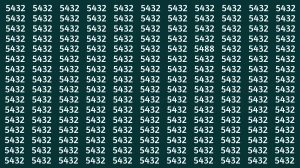
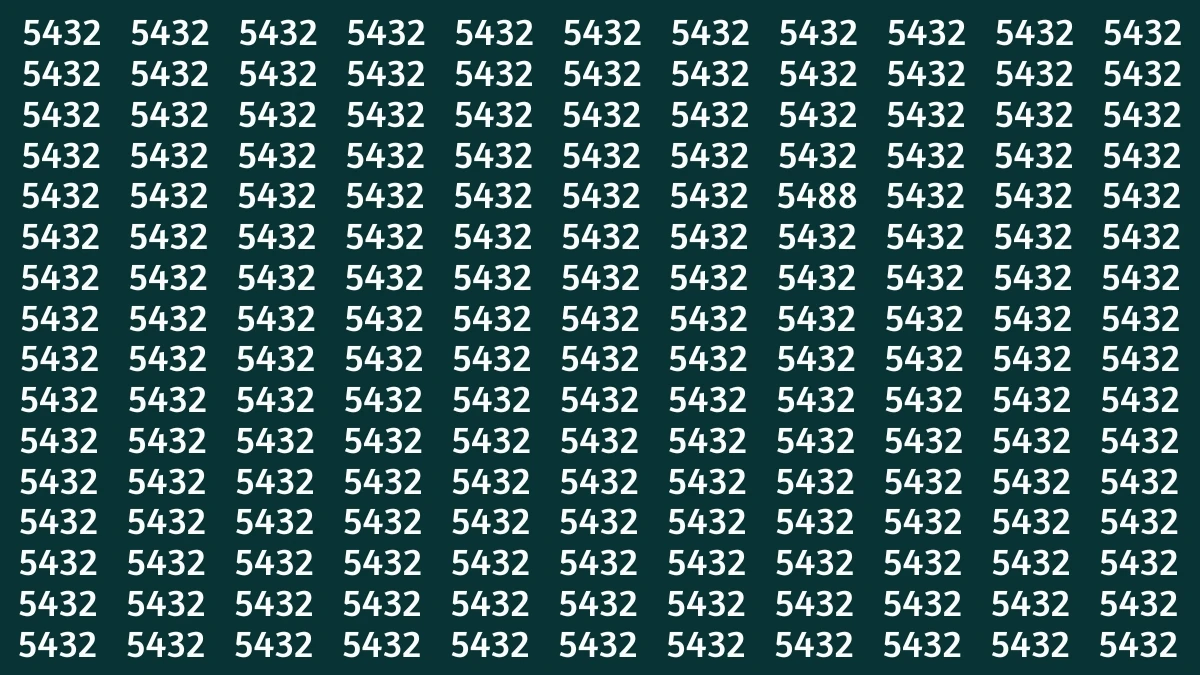
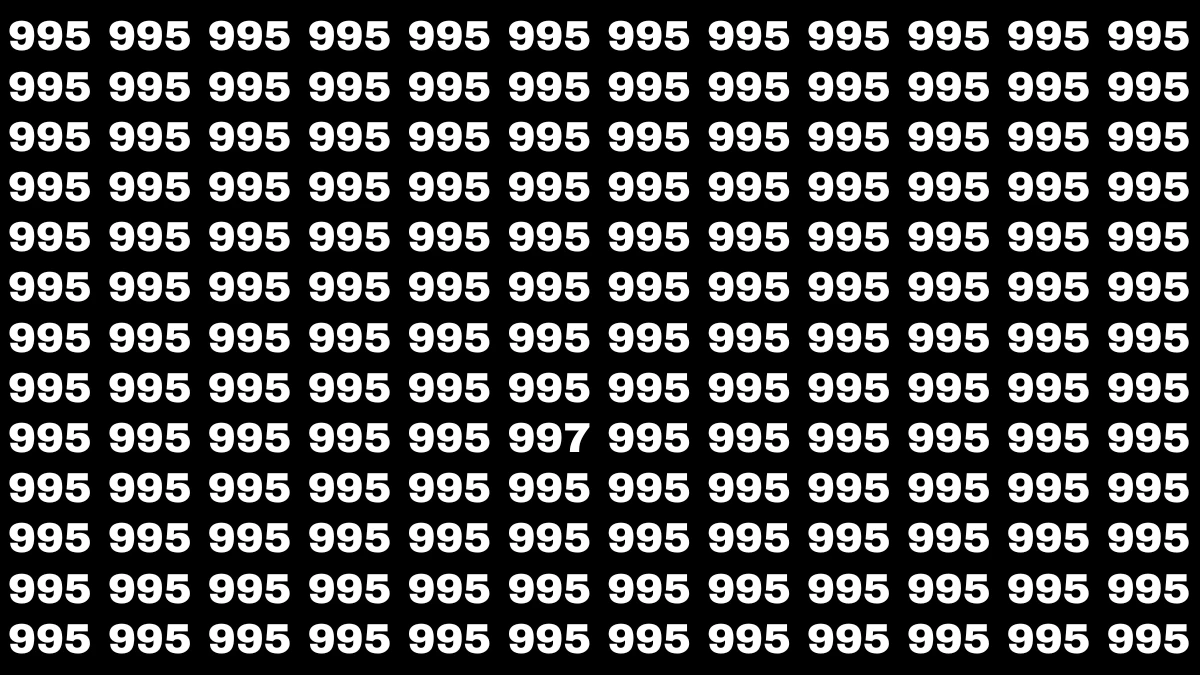
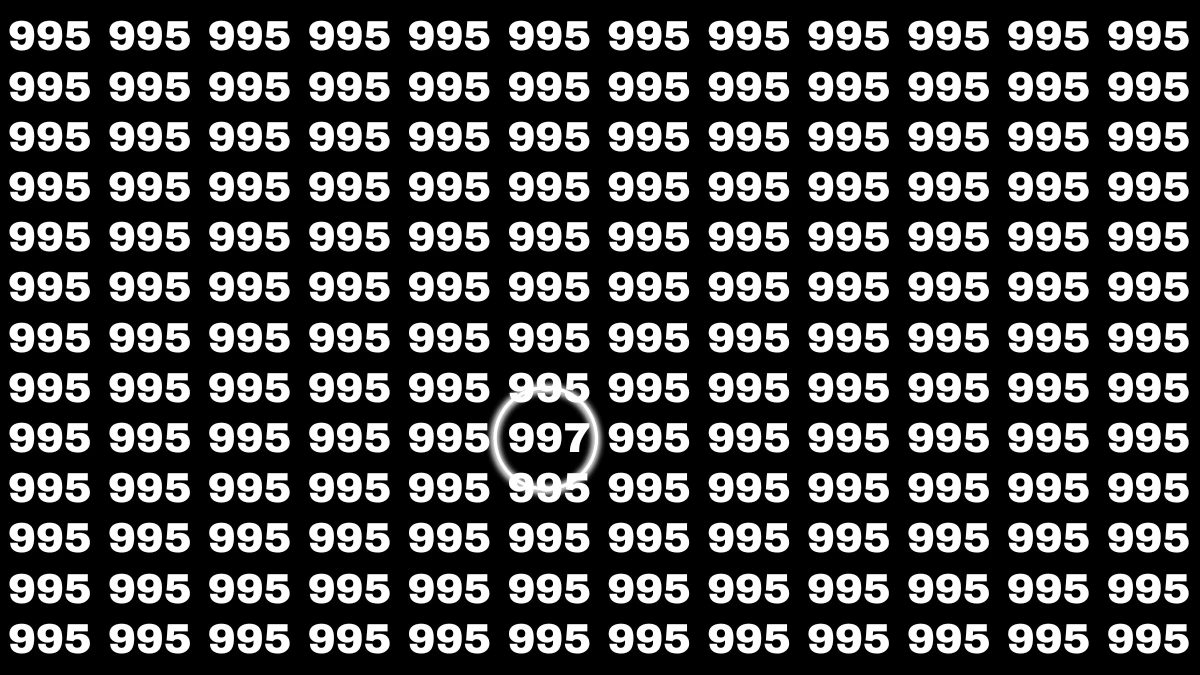
Look at the image above. You're staring at what appears to be an endless grid of the number 995, repeated over and over in white text against a black background. But hidden somewhere in this visual maze is exactly one number that's different: 997. Your mission? Find it before 8 seconds run out.
Here's the thing your brain loves patterns. When it sees the same thing repeated dozens of times, it starts to gloss over the details. That's exactly what makes this challenge so tricky. Those three digits look nearly identical at quick glance, and the repetition creates a hypnotic effect that actually works against you. The 997 is right there in plain sight, yet it seems to vanish into the background of 995s surrounding it.
Get your timer ready. Eight seconds isn't much time when you're scanning through what looks like hundreds of identical numbers.
Why Your Brain Struggles With This Puzzle
Optical illusions and visual puzzles like this one aren't just fun diversions they're windows into how your visual processing system works.Your brain takes shortcuts constantly, using pattern recognition to make sense of the world quickly. When you see repetition, your mind essentially says "got it, more of the same" and stops examining every single detail.
That's incredibly useful in everyday life. You don't need to carefully inspect every letter when reading, or study every tree while driving through a forest. But this efficiency becomes a bug when you're trying to spot one small variation among overwhelming uniformity.
The people who excel at these challenges often have what we call strong attention to detail and visual discrimination skills.They're naturally better at resisting their brain's urge to generalize, forcing themselves to actually look at each number rather than just recognizing the overall pattern.It's the same skill that helps proofreaders catch typos, quality control inspectors spot defects, and designers notice when something's just slightly off.
Smart Strategies to Beat the 8 Second Clock
Don't just let your eyes wander randomly across the grid. Here's what actually works:Start by dividing the image into sections maybe quadrants or horizontal strips. Your brain handles smaller chunks of information much better than trying to process everything at once.
Try scanning in a deliberate pattern rather than jumping around. Some people prefer going row by row from top to bottom.Others find it easier to scan in columns.The key is being systematic instead of chaotic.
Another trick? Slightly unfocus your eyes or pull back from the screen a bit. Sometimes when you're looking too hard, the difference becomes harder to spot. A gentle, relaxed scan can actually work better than intense scrutiny. Your peripheral vision and pattern recognition might catch the anomaly faster than your direct focus.
The Answer: Did You Spot It?
The 997 is located in the ninth row, roughly in the middle section of that line. If you look at the image carefully now, you'll see it's actually circled in the first image sixth position from the left in that particular row.
Why was it so tough to find? The digits 5 and 7 share similar characteristics, especially at that font size and against high contrast. Your brain sees the "99" start and wants to complete it with what it expects another 5. The 7 has to fight against that expectation. Plus, when you're racing against an 8 second timer, the pressure actually makes your brain more likely to skip over details in favor of speed.
Found it within the time limit? That's genuinely impressive pattern-breaking ability. Took longer? You're in good company most people need 15-30 seconds of careful searching. The important part is whether you enjoyed the mental exercise.
Keep Your Visual Skills Sharp
These brain teasers are more than just quick entertainment. They're like pushups for your attention span and visual processing abilities.The more you practice spotting subtle differences and resisting pattern bias, the better you get at it.
Try sharing this with friends and see who can beat the 8-second challenge. There's something satisfying about watching someone else struggle with the same puzzle that stumped you. And if you're hungry for more, visual challenges like these are everywhere each one training your brain to notice what others miss.