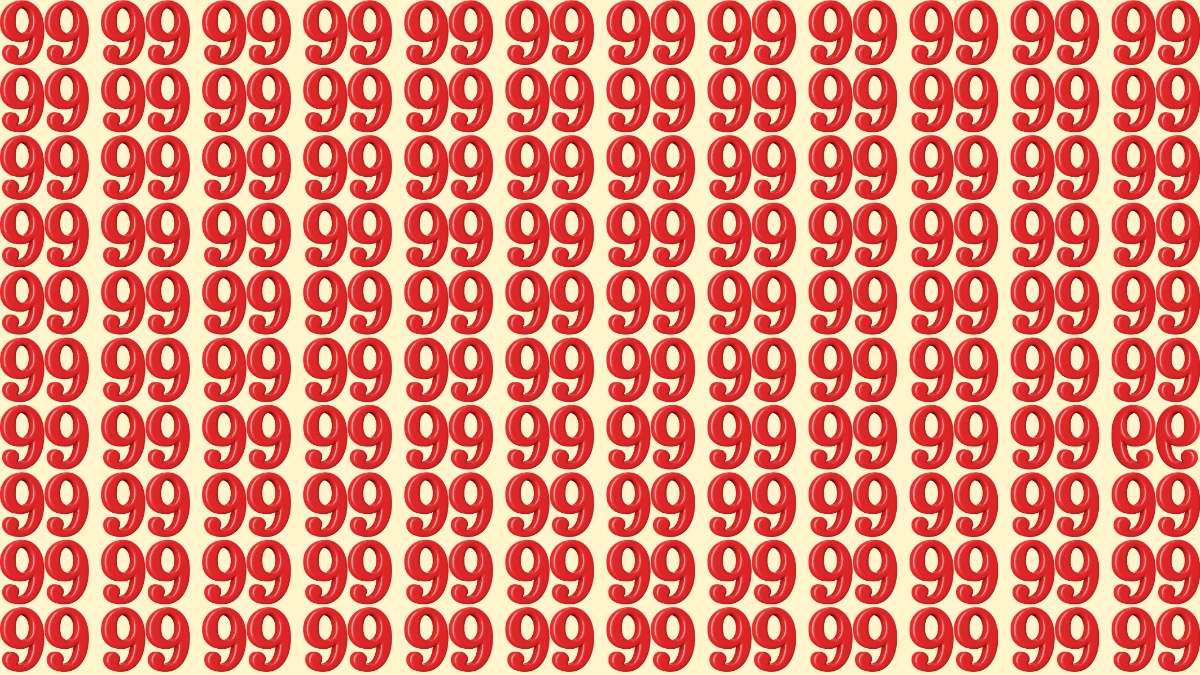
Optical Illusion: Are You A Genius? Within 7 Seconds Spot The Inverted 99 among 99
You know that feeling when you're absolutely certain you're looking right at something, but your brain just refuses to see it? That's exactly what's about to happen with this deceptively simple optical illusion. Somewhere in this sea of red 99s, there's one sneaky inverted 99 hiding in plain sight and you've got just 7 seconds to find it. Sounds easy, right? Well, most people are left scratching their heads, convinced it's some kind of trick. But here's the thing: it's really there, and spotting it says something pretty interesting about how your brain processes visual information.
The Challenge: Your Brain vs. The Grid
Take a good look at the image above. What you're seeing is rows upon rows of the number 99, all perfectly aligned in that bold red color against a light background. At first glance, it looks like a simple repeating pattern nothing unusual, nothing out of place. But somewhere in this visual maze, one 99 has been flipped upside down to read as 66. Your mission, should you choose to accept it, is to find that rebellious inverted number in just 7 seconds.
Here's what makes this brain teaser so tricky: when numbers are packed together like this, your eyes naturally glide over them, treating them as one unified pattern. The color, size, and spacing are all identical, so your brain basically goes, "Yeah, yeah, I've seen this before" and stops paying close attention. That's when the inverted 99 slips right past you. The 7-second time limit isn't just for drama it's designed to test your rapid pattern recognition skills before your brain settles into autopilot mode.
Why Your Brain Keeps Missing It
Optical illusions like this one aren't just fun party tricks they actually reveal fascinating stuff about how our visual perception works. Our brains are incredibly efficient machines, constantly looking for shortcuts to process the massive amount of visual information flooding our eyes every second. When you see a repeating pattern, your brain essentially says, "Got it, no need to analyze every single element," and creates a mental shortcut.
This is actually super useful in everyday life. It's why you can drive the same route home without consciously thinking about every turn, or why you can instantly recognize a friend's face in a crowd without examining every facial feature. But in this optical illusion, that same efficiency becomes your enemy. The pattern recognition system that usually helps you is now working against you, glossing over the subtle difference that makes the inverted 99 stand out.
What's really interesting is that people with strong attention to detail those who naturally notice when something's slightly off tend to spot these kinds of anomalies faster. It's not necessarily about being "smarter" in the traditional sense. It's more about having a brain that's wired to catch inconsistencies, even in repetitive patterns. And yes, you can actually train this skill by regularly challenging yourself with visual puzzles like this one.
Tips to Crack This Visual Puzzle
Okay, so you've scanned the image once or twice and came up empty. Don't worry here are some strategies that actually work. First, instead of trying to look at the whole grid at once, divide it into quadrants. Your brain handles smaller chunks of information way better than trying to process everything simultaneously. Start with the top right corner and work your way across methodically.
Another trick? Let your eyes go slightly out of focus. I know it sounds counterintuitive, but sometimes when you're trying too hard to see something, you end up missing it. By softening your gaze, you allow your peripheral vision to catch irregularities in the pattern that your focused central vision might skip over. It's like those Magic Eye pictures from the '90s sometimes not trying so hard is the key.
Here's one more approach: focus on the lower curves of the numbers. A regular 99 has both curves opening to the right, but when it's flipped to become 66, those curves open to the left. If you scan specifically for that leftward curve orientation instead of looking at whole numbers, you might spot the imposter faster. Try scanning horizontally row by row, paying special attention to those bottom curves.
The Big Reveal (Spoiler Alert!)
Alright, time's up! Did you manage to spot it within the 7-second challenge? If you found it, nice work you've got sharper observation skills than most. The inverted 99 (which appears as "ee" or "66" when flipped) is hiding in the lower right section of the grid. Look at the second-to-last row from the bottom, about three numbers in from the right edge. There it is, sneakily blending in with all its right-side-up neighbors.
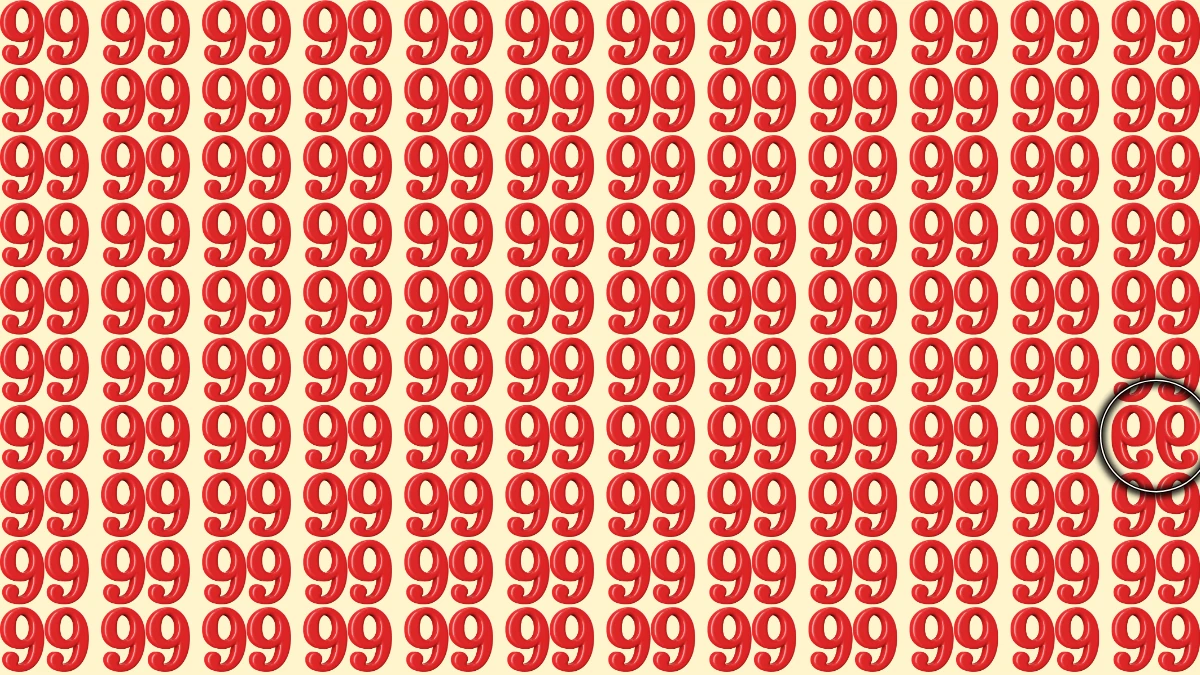
If you didn't spot it, don't beat yourself up. This optical illusion is genuinely difficult because our brains are so good at pattern completion. Once you see the answer, you might even wonder how you missed something so "obvious." That's the frustrating beauty of these visual puzzles they seem impossible until they don't. The real takeaway isn't whether you found it in 7 seconds or 7 minutes; it's understanding why your brain processed the information the way it did.
Keep Your Brain Sharp
The cool thing about optical illusions and visual brain teasers is that they're not just entertaining they're actually a fun way to keep your observation skills sharp. In a world where we're constantly multitasking and skimming information, taking a moment to really focus on details is almost like a mini workout for your brain. Plus, these challenges are way more enjoyable than traditional brain training apps that feel like homework.
Want to keep testing yourself? There are tons of similar spot-the-difference optical illusions out there, each with their own tricky twists. Some hide letters among numbers, others flip orientations like this one, and some play with color gradients so subtle you'll swear nothing's different. Challenge your friends and family with this 99 puzzle it's always fun to see who spots it first and who refuses to give up until they find it. And hey, if you found this one in under 7 seconds, you might just have genius-level attention to detail after all.