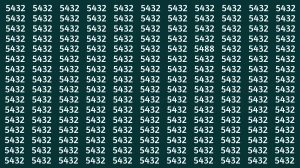
Only True Geniuses Can Spot the Inverted 10 Hidden Among 10 and 20 in 12 Seconds
Hey there, puzzle lover! Ever stared at a picture and thought, "Wait, is that what I think it is?" Optical illusions are like that sneaky friend who tricks you into seeing something that's not quite there—or in this case, spotting something that is there but hiding in plain sight.
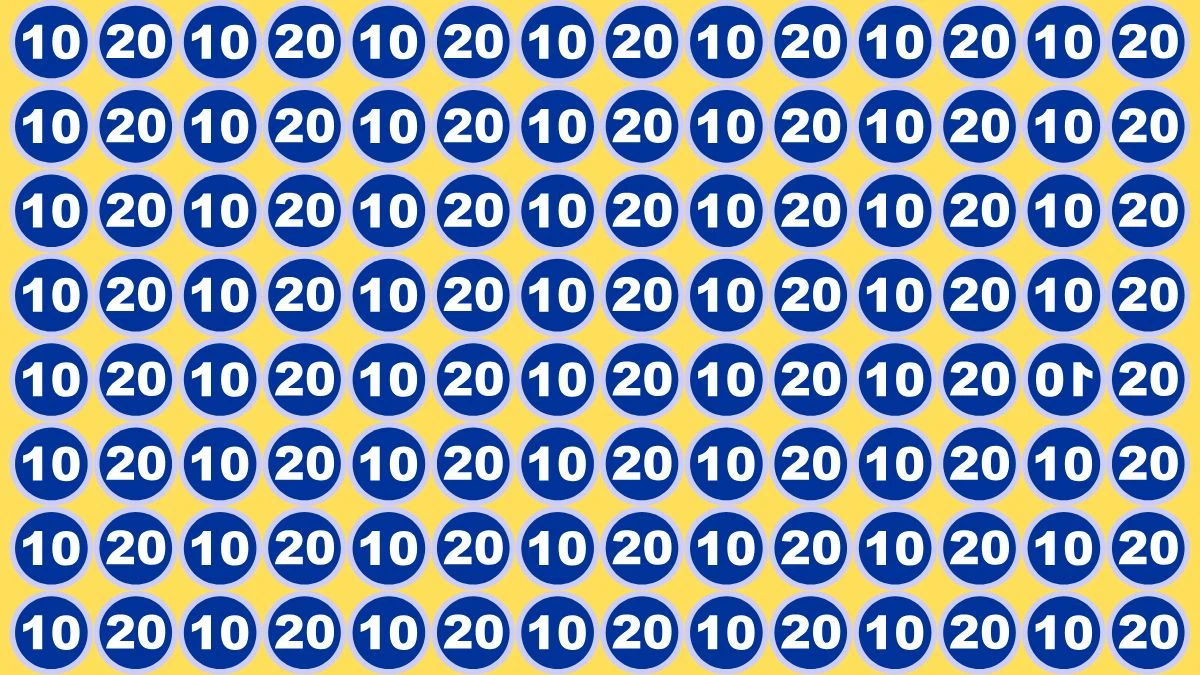
Today, we're diving into a fun brain teaser that's all about testing your eagle eyes and quick thinking. The challenge? Find the inverted "10" tucked away in a sea of regular "10"s and "20"s, and do it in just 12 seconds. Sounds simple? Trust me, it's trickier than it looks. If you're up for it, let's jump in and see if you've got that genius-level observation skill.
What Makes This Optical Illusion Tricky?
Optical illusions aren't just random fun—they play with how our brains process visual information. In this one, you've got a grid packed with alternating "10"s and "20"s, all looking pretty uniform at first glance. The twist? One of those "10"s is flipped upside down, making it look like a "01" if you squint just right. But why does our brain miss it?
It all comes down to pattern recognition. Our minds are wired to spot repetitions and fill in the blanks quickly, which is great for everyday life but a nightmare for puzzles like this. When everything around the odd one out is so similar—same colors, same shapes, same blue circles on a yellow background—the brain glosses over tiny differences like orientation.
Psychologists call this "change blindness," where we fail to notice alterations in a scene because we're not expecting them. Add in the time pressure of 12 seconds, and it ramps up the challenge, forcing you to override that autopilot mode and really focus. It's not about being a rocket scientist; it's about training your attention to detail, something that can actually sharpen your real-world problem-solving skills.
The Challenge: Can You Spot the Inverted 10?
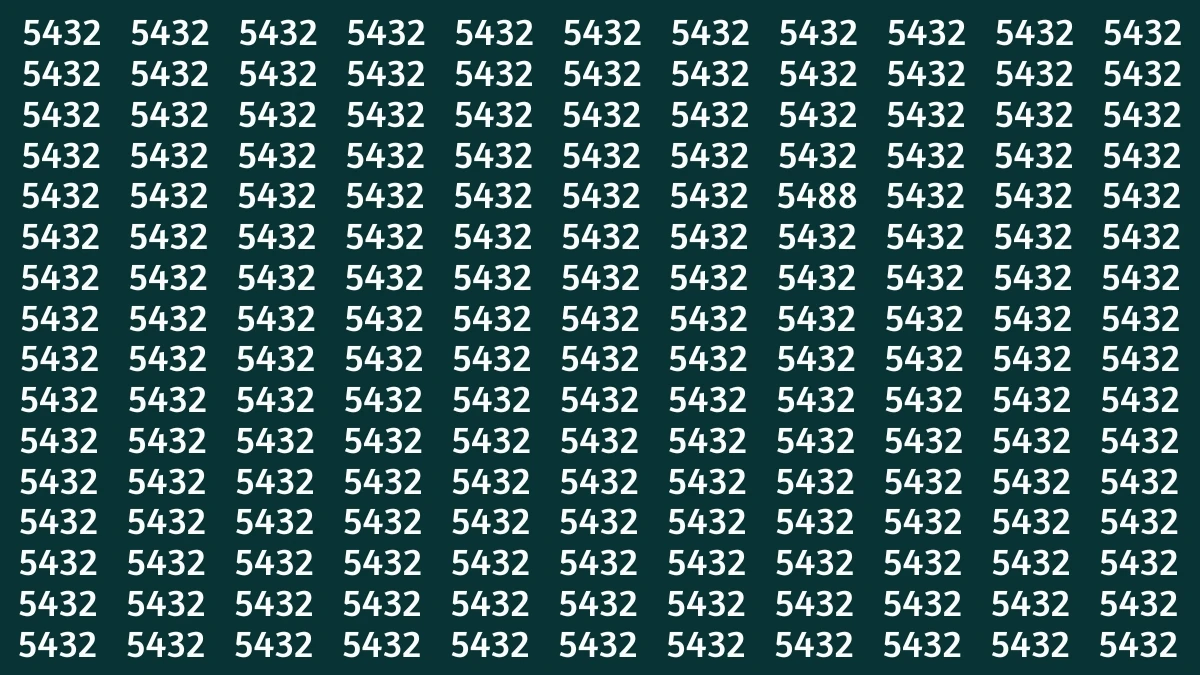
Alright, here's where the rubber meets the road. Imagine a big grid—about 8 rows deep, each with 15 or so blue circles filled with white numbers: "10" and "20" repeating over and over. The background is a sunny yellow, making everything pop. Your mission: Scan this visual chaos and pinpoint the one "10" that's been rotated 180 degrees, turning it into what looks like "01."
Set a timer for 12 seconds (use your phone if you're reading this on a screen). Ready? Go! Look closely—don't just skim; try breaking the grid into sections or focusing on the shapes rather than reading the numbers. If you nail it fast, pat yourself on the back. If not, no worries; most people take a second or third look. These kinds of visual brain teasers are designed to stump even the sharpest minds, but they're a great way to wake up those observation muscles.
Answer and Explanation
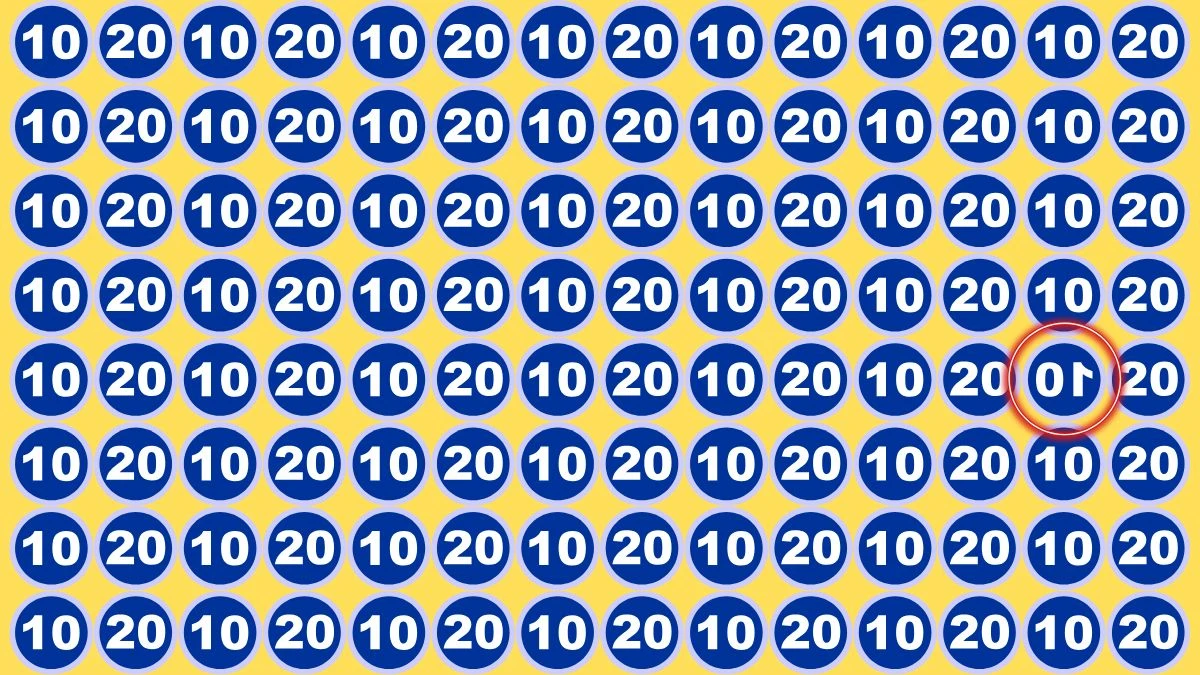
Okay, time's up! If you haven't found it yet, let's reveal the secret. The inverted "10" (which appears as "01") is hiding in the fifth row from the top, right near the end—specifically, the second-to-last spot in that row. It's circled in red in the solution image to make it crystal clear.
Why was it so hard? The uniformity is the culprit. All the numbers are in the same font, size, and color, creating a repetitive pattern that lulls your brain into complacency. The inversion is subtle; "10" upside down mimics "01" perfectly, blending in because our eyes aren't trained to check for rotations in text. Plus, the alternating "10" and "20" create a rhythm that distracts from anomalies.
If you spotted it quickly, congrats—you've got a knack for visual discrimination, which is a key part of cognitive flexibility. Studies from places like the University of California have shown that people who excel at these tasks often have stronger attentional control, helping in everything from driving to creative thinking.
How Optical Illusions Boost Your Brain Power
Beyond the "aha!" moment, there's real value in tackling optical illusions like this. They're not just games; they're mini workouts for your brain. Engaging with visual puzzles can enhance your focus and memory by stimulating the visual cortex—the part of your brain responsible for processing what you see. Research from institutions like Harvard's psychology department suggests that regular exposure to brain teasers improves pattern recognition and even delays cognitive decline as we age.
Think about it: In a world full of screens and distractions, these challenges train you to notice details you might otherwise miss. They boost neuroplasticity, which is your brain's ability to rewire itself and learn new things. Plus, they're stress-relievers—solving one releases a hit of dopamine, that feel-good chemical. If you're into self-improvement, incorporate them into your routine; apps and books on brain training often include similar exercises backed by neuroscience. It's not about proving you're a genius overnight, but about building habits that keep your mind sharp for the long haul.
More Fun Optical Illusion Challenges
If this one got your brain buzzing, why stop here? Check out these other mind-benders to keep the momentum going:
- Hidden Animal Hunt: Try finding a camouflaged cat in a cluttered room—tests your ability to see beyond the obvious.
- Odd One Out Emoji Puzzle: Spot the emoji that's slightly different in a grid; great for quick, fun breaks.
- Landscape Face Illusion: Search for a hidden human face in a natural scene, like mountains or trees—explores how our brains interpret shapes.
These are all about varying your visual skills, from color detection to shape recognition. If you're on a site with puzzles, linking to them internally can turn a quick read into a full session.