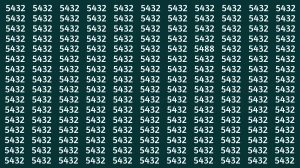
At first glance, this optical illusion feels calm and repetitive. The screen is filled with soft blue symbols that all look nearly identical. Each one appears to be an inverted 66, arranged neatly in rows across a pale background. Your eyes adjust quickly. The pattern feels familiar. Almost soothing.
That sense of visual comfort is exactly what this optical illusion is designed to exploit. Hidden inside this sea of inverted 66s is a single inverted 96. The difference is subtle, and the brain strongly resists noticing it. Your challenge is to find that inverted 96 within 9 seconds without zooming or breaking the pattern apart.
The Optical Illusion Challenge
Here’s the task in its simplest form:
- Nearly every symbol in the image is an inverted 66
- One symbol is an inverted 96
- All symbols share the same color, style, and orientation
- You have 9 seconds to find the odd one out
There are no visual hints. No borders. No color changes. The illusion depends entirely on how your brain handles repetition.

Why This Optical Illusion Is Surprisingly Difficult
This optical illusion works because the numbers 66 and 96, when inverted, share extremely similar curves and strokes. Once the brain identifies a dominant pattern, it stops analyzing individual elements.
Three factors increase the difficulty:
- The curved design keeps the symbols visually smooth
- Inversion removes the usual mental reference for numbers
- Repetition encourages the brain to treat the image as texture, not data
As a result, your eyes may pass over the inverted 96 multiple times without registering it as different.
What Your Brain Is Doing Behind the Scenes
This optical illusion demonstrates a cognitive shortcut called predictive perception. Instead of processing each symbol independently, the brain predicts what it expects to see next and confirms it quickly.
In this case:
- Your brain labels the entire image as “inverted 66”
- It checks fewer details as time goes on
- Small inconsistencies are ignored to save mental effort
This is efficient in daily life, but it becomes a weakness in visual challenges like optical illusion tests.
A Smarter Way to Scan the Image
If you struggled to find the answer, changing your approach can make a big difference.
Try this method:
- Stop reading the symbols as numbers
- Focus on the inner curve direction
- Scan vertically instead of horizontally
- Pause briefly after each row to reset attention
The inverted 96 has a slightly different balance between its curves. Once you stop auto-reading, that imbalance becomes easier to spot.
Solution Reveal
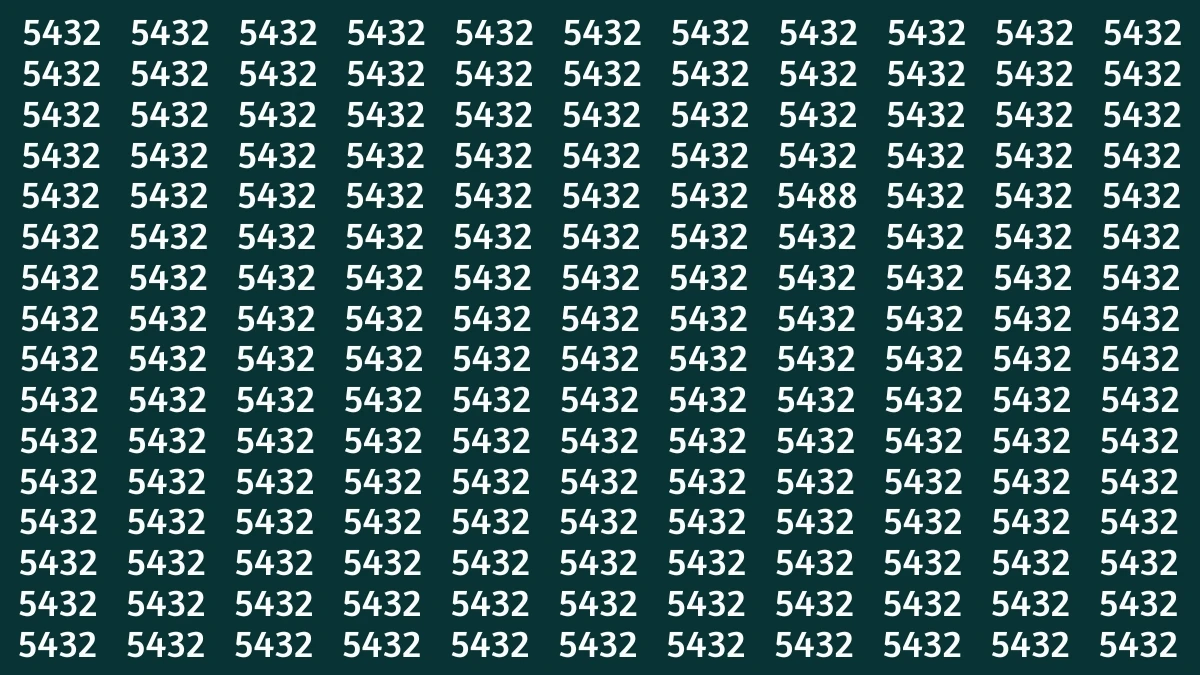
If your 9 seconds are up, the solution image confirms the answer.
- The inverted 96 is located toward the right side of the grid, slightly above the center
- Once highlighted, the difference becomes obvious
- Without guidance, the symbol blends seamlessly into the surrounding inverted 66s
This sudden clarity after confusion is a hallmark of a strong optical illusion.
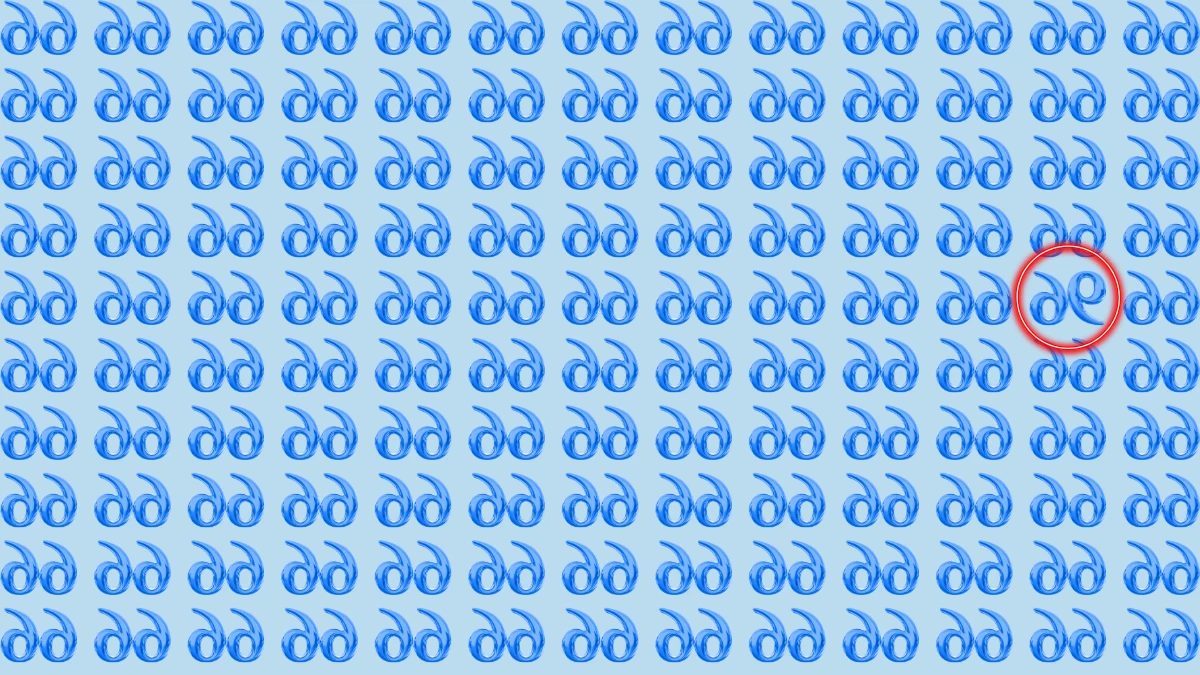
This optical illusion proves that the brain doesn’t always analyze what the eyes see. When repetition dominates, perception becomes selective, and differences disappear in plain sight.
If you found the inverted 96 within 9 seconds, your observation skills are sharp. If not, your brain behaved exactly as designed—efficient, predictive, and occasionally fooled.