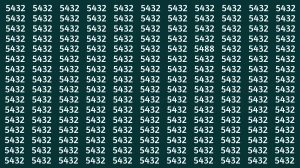
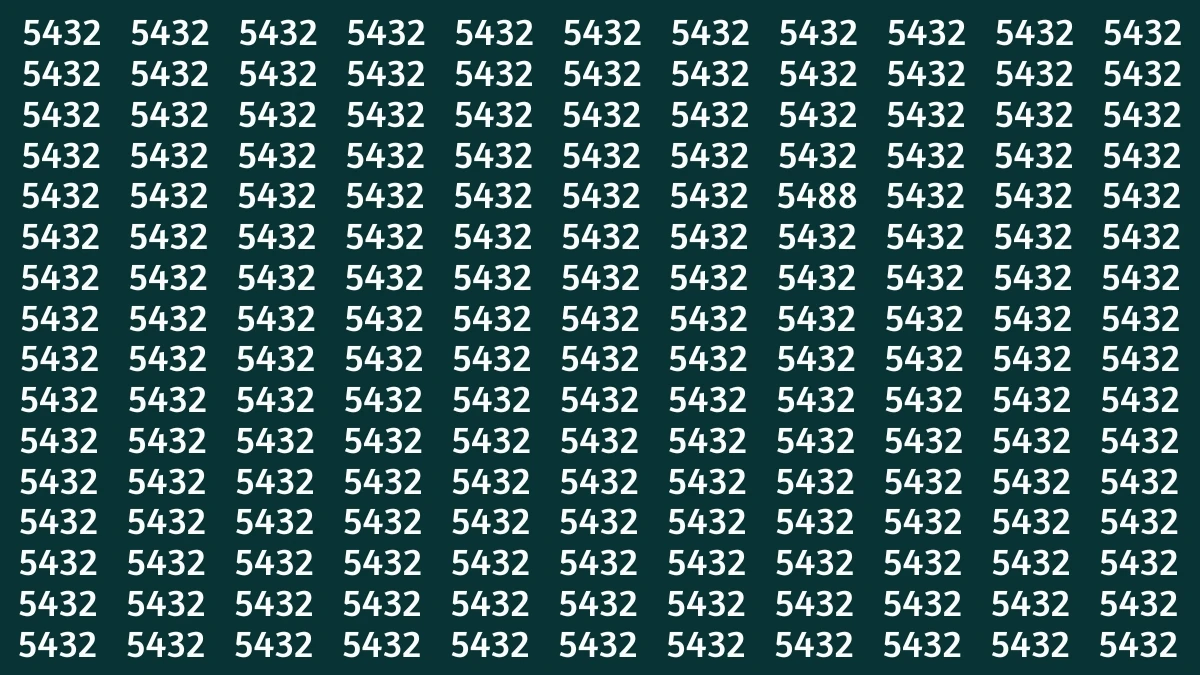
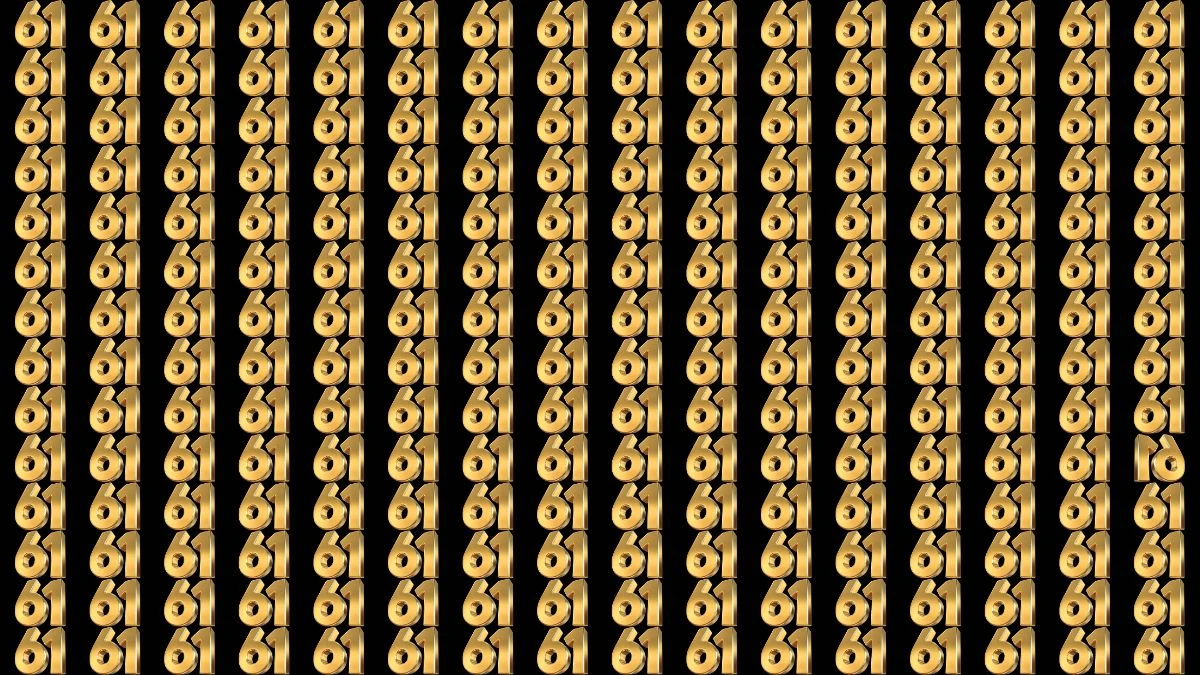
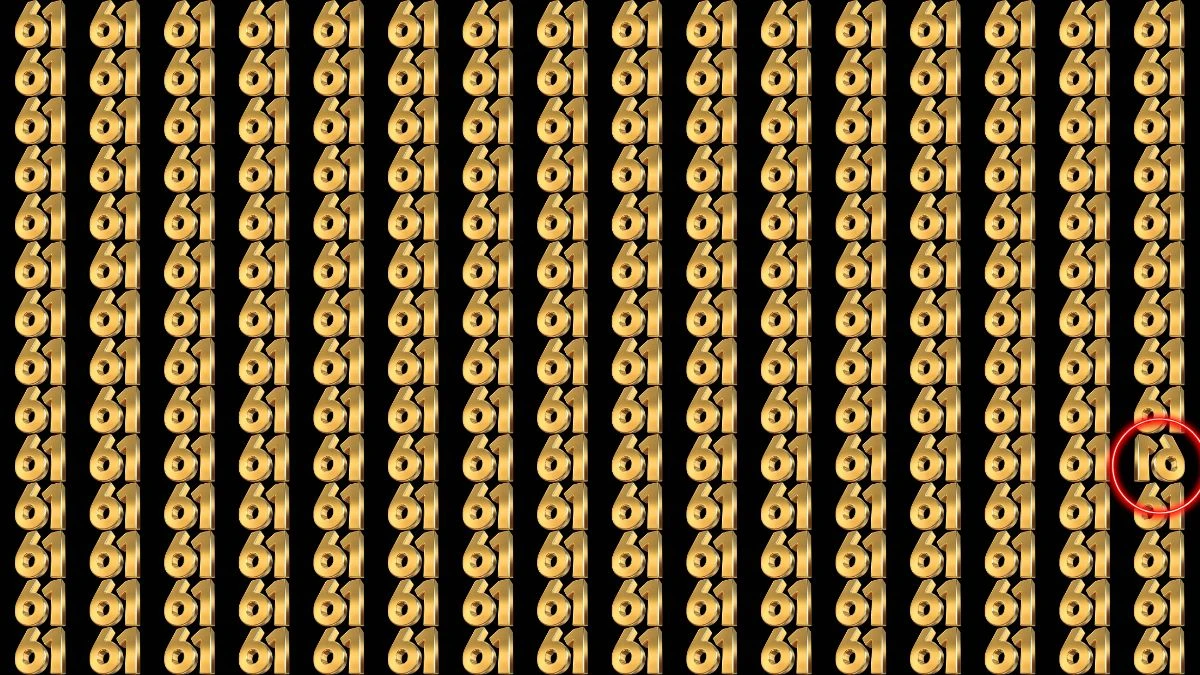
Are you ready for the ultimate optical illusion challenge? Here’s one that will test your visual acuity, attention to detail, and how fast you can spot the odd one out. In this visual test, you have to find the inverted number 61 hidden among several normal 61s. The twist? You only have 9 seconds to do it!
It may sound easy at first, but don’t let the familiar number fool you. This illusion is designed to trick your brain into overlooking the tiny detail that makes the inverted 61 stand out. The clock is ticking, so can you spot it in time? Get ready to challenge your eyes and brain!
Why This Optical Illusion Is So Engaging
I’ll admit it I struggled with this one! The first time I tried, it took me a good 15 seconds to find the hidden inverted number. I kept seeing 61s everywhere, and my brain was trying to focus on the same pattern over and over. What I didn’t realize was that the number was subtly different, and spotting it required not just sharp eyes but also a brain that could quickly break from the pattern.
Optical illusions like this one are designed to confuse and test how well you process visual information. Your brain loves patterns and tries to quickly recognize and make sense of things. However, when there’s a slight deviation—like an inverted number—it forces your brain to slow down and readjust. The longer you look at the image, the harder it becomes to spot the odd number, especially when it’s as subtle as this one.
Test Your Vision: Only Eagle Eyes Can Find 54 & 89 Hidden Among 84 in 7 Seconds!
The Challenge: Spot the Inverted 61 in 9 Seconds
Here’s what you need to do:
- Look at the image carefully. There are many numbers 61 in the image, but one of them is inverted.
- Spot the inverted 61. It may blend in with the others, so focus on the smallest details.
- You have only 9 seconds. Time is running out, so keep your focus sharp and be quick.
Ready, set, go! Start your countdown and give it a try. Don’t worry if you don’t find it immediately—the challenge is designed to be tough, and spotting the inverted number takes real concentration.
Why Does This Trick Our Brains?
This illusion works because of how our brains process repetitive patterns. When we see something over and over, like the number 61 repeated in the image, our brains start to recognize it as part of the pattern. We stop noticing the small differences and become "blind" to changes that don’t fit. This happens with optical illusions when something subtle—like an inversion or color change—breaks the uniformity, forcing our brain to pay attention and detect the anomaly.
The inverted 61 is so tricky because our brains are wired to focus on the numbers as a whole rather than the small details. It's a fascinating glimpse into how we see the world and how our brains interpret visual information, sometimes skipping over the most obvious differences!
Solution: Where is the Inverted 61?
So, did you spot it? If you were able to find the inverted 61 in time congratulations, you’ve got some sharp eyes! If you struggled, don’t worry. You’re not alone. Here's where you can find the hidden number:
Look at the 5th row from the bottom, last column from the left. There it is—the inverted 61, standing out in a sea of normal 61s.
Try again now that you know where it is see if you can spot it even faster!
Only a Person with High IQ Level Can Spot the Hidden Number 638
Engage With Us: How Fast Did You Spot It?
Did you spot the inverted number? Share how long it took you to find the hidden 61! Was it under 9 seconds, or did you need a little more time? Leave a comment below and let us know. If you found it quickly, challenge your friends and family to see if they can beat your time. The more you practice, the sharper your eyes become!
Why Optical Illusions Are More Than Just Fun
Optical illusions aren’t just entertaining—they can actually improve brain function! When you regularly engage with these kinds of challenges, your brain gets better at processing visual data and recognizing subtle differences in patterns. It's like a workout for your brain, strengthening your cognitive skills, reaction time, and attention span. Plus, they’re a lot of fun to share with friends and family!