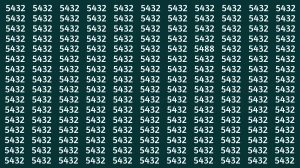
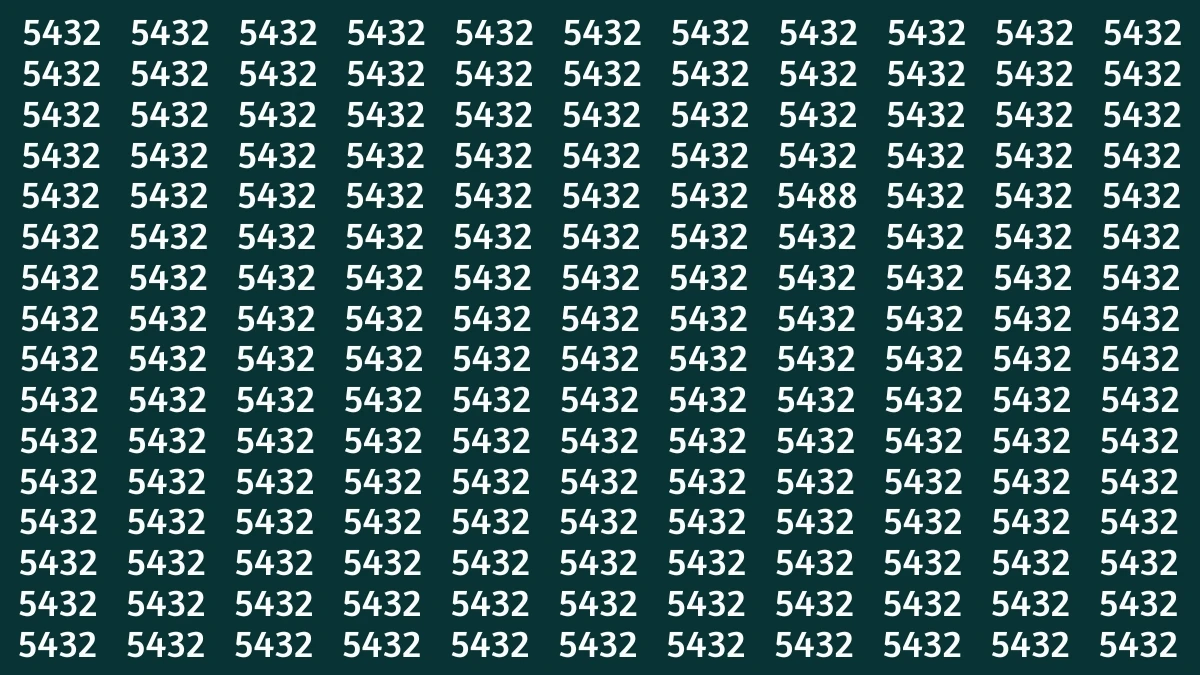
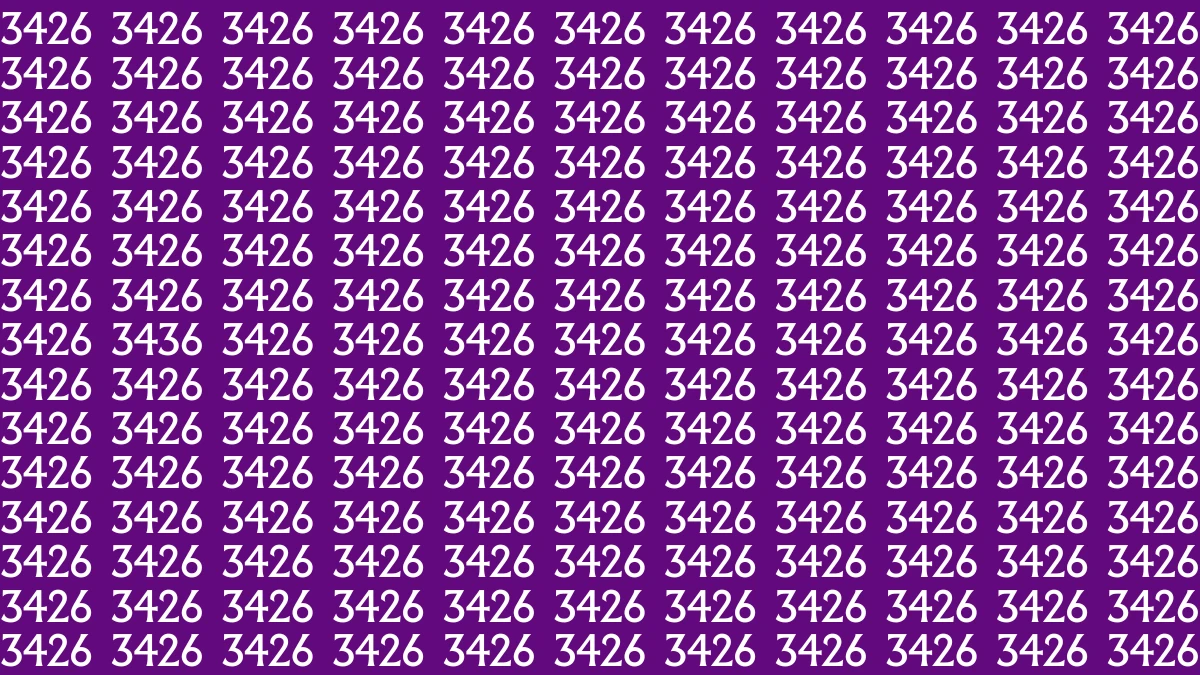
This optical illusion puzzle is a fast-paced test of visual accuracy and concentration. At first glance, the image looks completely uniform. The same four-digit number, 3426, is repeated across the entire screen in identical font, color, and spacing. Nothing appears unusual.
But this optical illusion is designed to disrupt that sense of certainty. Hidden somewhere in the grid is a single number that breaks the pattern. Your challenge is to spot 3436 among the sea of 3426—and do it within 6 seconds.
Optical illusion challenges like this are popular because they reveal how easily the brain can overlook small differences when faced with repetition.
The Optical Illusion Challenge
Focus on the image carefully.
Everywhere you look, the number 3426 repeats.
That repetition is intentional.
Somewhere in the grid, one number is different:
- 3436 is hidden among dozens of 3426 entries.
You have just 6 seconds to find it.
No hints. No zooming. Just sharp observation and quick scanning.
Why This Optical Illusion Is So Tricky
This optical illusion relies on the brain’s tendency to auto-correct information. When the mind sees the same pattern repeated multiple times, it assumes consistency and stops checking each item individually.
Several factors increase the difficulty:
- The difference is only one digit.
- The font and color remain exactly the same.
- The numbers are evenly spaced, creating visual rhythm.
Because of this, the brain reads what it expects to see instead of what is actually present. That’s why many people miss the odd number even after several seconds of scanning.
How the Brain Processes This Optical Illusion
Optical illusion puzzles like this highlight the gap between attention and perception. The eyes may scan the image, but the brain filters out details it considers unnecessary.
This illusion specifically challenges:
- Selective attention
- Detail recognition
- Visual endurance under time pressure
To improve your chances:
- Scan vertically instead of horizontally.
- Break the image into smaller sections.
- Focus on the middle digits rather than reading the full number automatically.
These techniques help interrupt the brain’s pattern bias.
Common Mistakes Viewers Make
Many people approach this optical illusion too casually. Some of the most common mistakes include:
- Reading the numbers too quickly.
- Trusting the pattern after the first few rows.
- Searching randomly instead of methodically.
Another mistake is expecting the odd number to look obvious. In this optical illusion, the difference is subtle by design.
Solution Reveal
If you couldn’t find the number within 6 seconds, don’t worry. This optical illusion is meant to be deceptive.
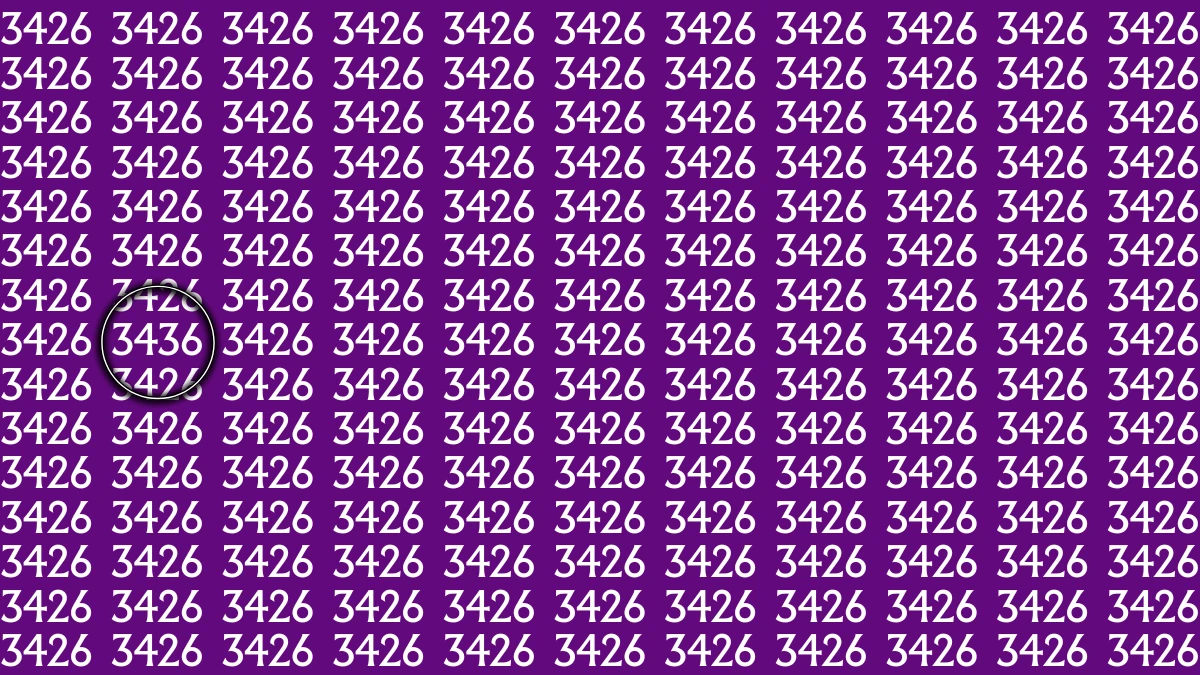
In the solution image:
- The number 3436 appears slightly left of center in the grid.
- Once highlighted, the digit difference becomes immediately clear.
Without visual guidance, however, the number blends perfectly into the surrounding 3426 pattern. This delayed recognition is exactly what makes the optical illusion effective.
What This Optical Illusion Reveals About You
Spotting the odd number quickly suggests strong attention to detail and efficient visual scanning skills. Taking longer doesn’t indicate weak eyesight. It simply means your brain relied on pattern recognition instead of active verification.
Optical illusion tests measure perceptual flexibility, not intelligence alone. They show how adaptable your visual system is when expectations are challenged.
This optical illusion demonstrates how repetition can override conscious observation. Even a clear numerical difference can go unnoticed when the brain assumes uniformity.
Short challenges like this are not only entertaining but also mentally stimulating. Regularly engaging with optical illusion puzzles can help sharpen focus, improve attention, and strengthen visual awareness.