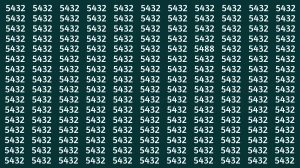
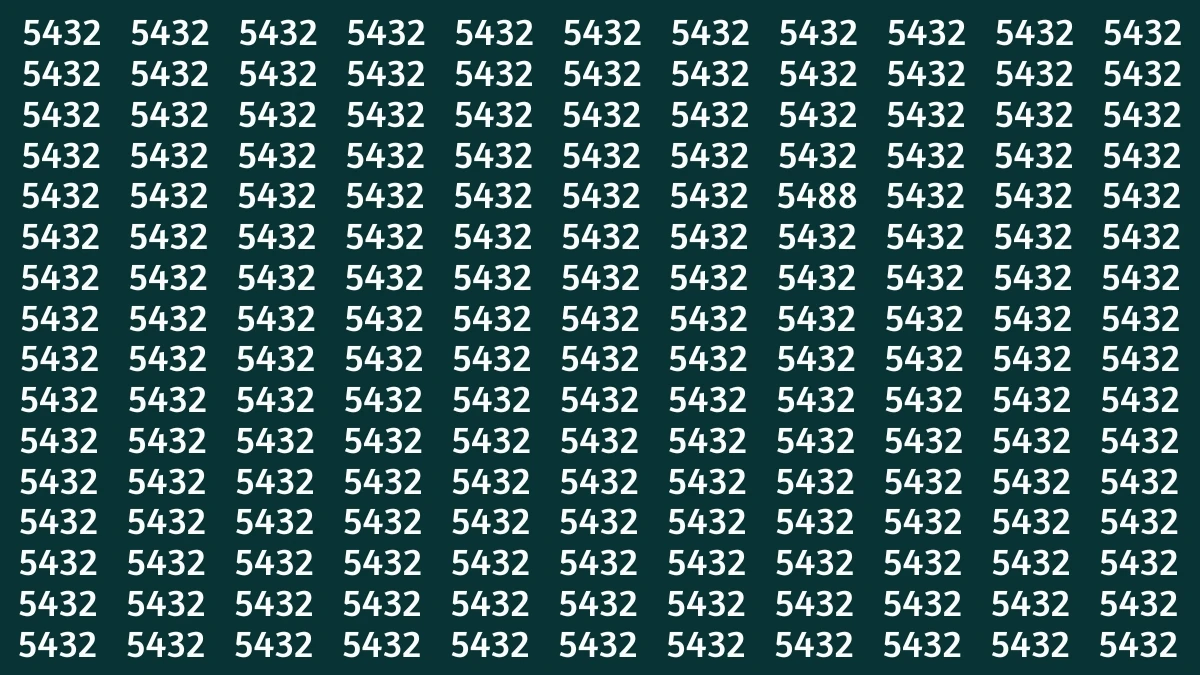
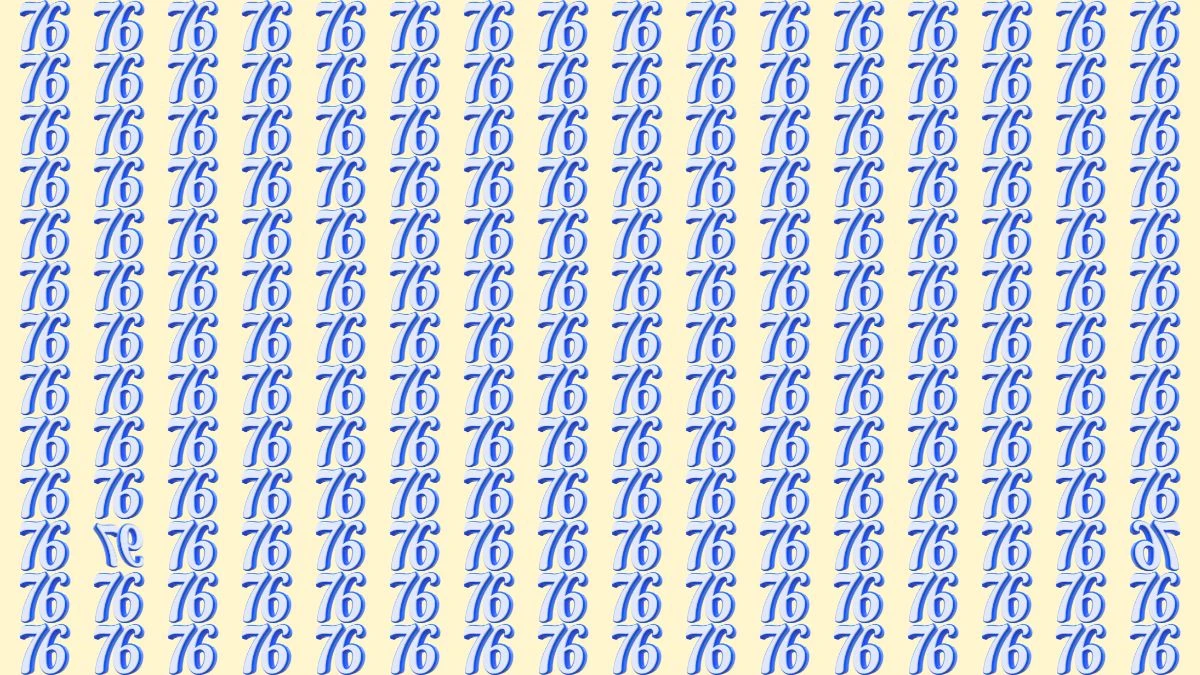
This optical illusion looks simple. It’s just the number 76 repeated across the entire screen. Same font. Same color. Same spacing. Your brain quickly labels the pattern as “all identical” and moves on.
That’s exactly why this optical illusion works so well. It hides two small disruptions inside a highly repetitive layout. Your challenge is to find two inverted numbers—an inverted 97 and an inverted 76—before the clock hits 9 seconds.
This type of optical illusion is popular because it tests quick scanning, detail control, and how well you can resist “autopilot vision.”
Eye Test Challenge: Within 9 Seconds Spot The Number 52 and 59 among 55
Quick Rules Before You Start
To make this optical illusion a real eye test, follow these rules:
- Don’t zoom in.
- Don’t drag the image around.
- Don’t search randomly.
- Use a timer for 9 seconds.
Now begin. Look for anything that feels slightly “off” in the rows of 76.
The 9-Second Optical Illusion Challenge
In the grid, almost every entry is 76.
But two are different in a very specific way:
- One 97 is inverted (flipped orientation).
- One 76 is inverted (flipped orientation).
Everything else stays normal.
Your goal: find both inverted numbers within 9 seconds.
If you spot one quickly, don’t stop. Most people find one and miss the other because the brain relaxes after a “win.”
Why This Optical Illusion Feels So Sneaky
This optical illusion depends on repetition. When the same number is repeated many times, the brain uses a shortcut called pattern recognition. It stops reading each number and starts treating the grid like a single texture.
That creates three common effects:
- Auto-reading: you “see” 76 even when it isn’t presented normally.
- Orientation blindness: the brain notices value but ignores flip direction.
- Scan fatigue: the longer you stare, the more everything blends together.
In other words, the optical illusion isn’t hiding the numbers with camouflage. It’s hiding them with your expectations.
What This Optical Illusion Tests
Even though this is an entertainment puzzle, it highlights real cognitive skills:
- Selective attention: focusing on detail while ignoring repetition
- Visual discrimination: detecting tiny differences quickly
- Top-down control: overriding what the brain expects to see
That’s why optical illusion challenges feel satisfying. They force your brain to switch from fast assumptions to careful checking.
Observation Find it Out: Within 7 Seconds Spot The Number 77 among 47
Solution Reveal
If the 9 seconds are up, here’s what the solution image confirms:
- The inverted 97 is located toward the lower-left area of the grid. Once you know where it is, the flipped orientation becomes obvious.
- The inverted 76 appears near the right side of the grid, also in the lower half. It blends in because it’s still “76”—just not in the correct orientation.
In the solution image, both locations are clearly marked, making the differences easy to verify.
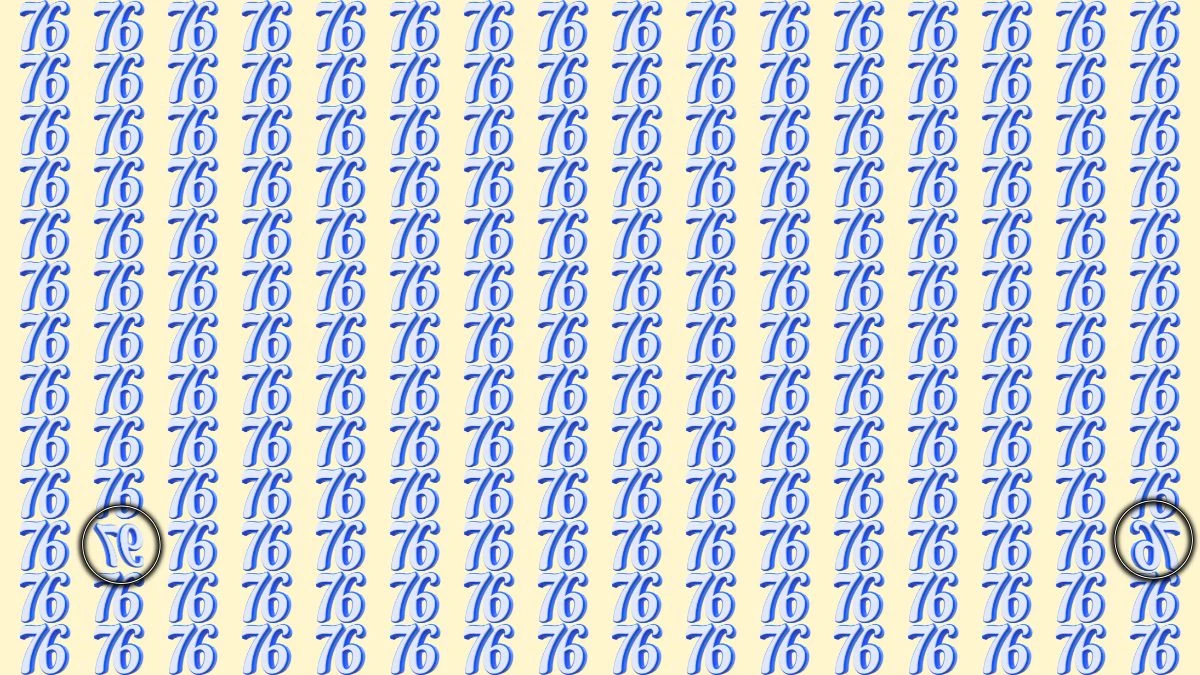
If you found both inverted numbers within 9 seconds, that’s a strong result. It suggests you scanned with control instead of letting the pattern take over.
If you found only one, that’s the most common outcome in this optical illusion. The first “success” often causes people to stop scanning carefully, and the second inverted number slips by.
Want a tougher optical illusion next? Upload the next two images and I’ll create a fresh, unique article again.