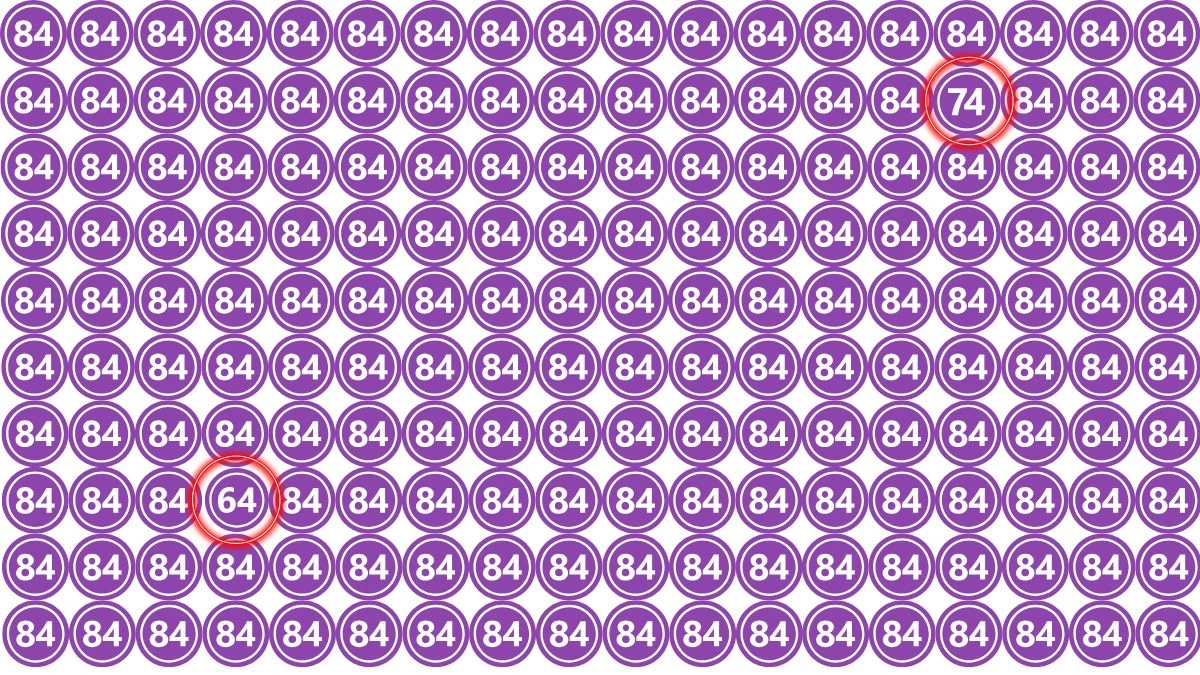
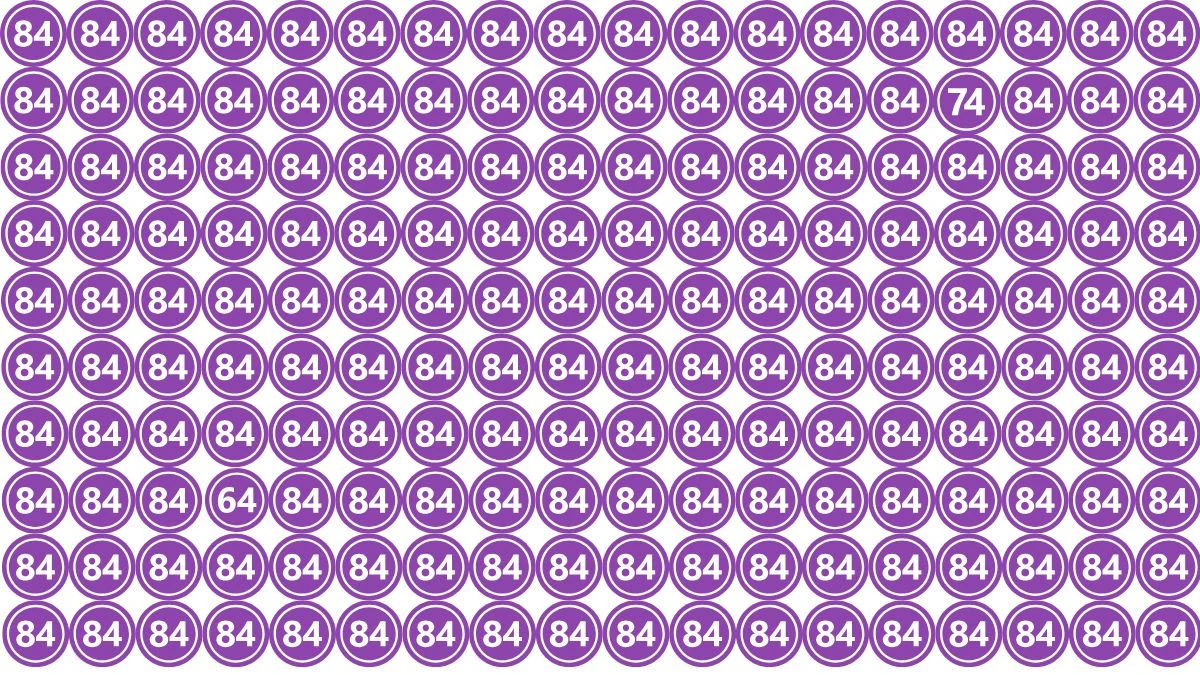
Welcome to today’s optical illusion challenge! This test is all about spotting the number 64 hidden among the numbers 74 and 84, and you have just 9 seconds to find it! While it sounds simple at first, the trick lies in how similar these numbers appear at a quick glance. Ready to put your observation skills to the test?
How to Play:
In this optical illusion, you’ll see a series of numbers, including 74, 84, and the elusive 64. Your task is to locate the number 64, which is cleverly hidden among the others. But be quick — you have only 9 seconds to spot it! The subtle differences between the numbers make it tricky to spot, so you’ll need to stay focused and examine each number carefully.
Are You A Genius? Within 6 Seconds Spot The Inverted 69 among 69
Optical Illusion: Within 9 Seconds Spot The Number 64 among 74 and 84
In this optical illusion, your task is to find the number 64 hidden among 74 and 84 within just 9 seconds. At first glance, the numbers may appear similar, but there’s a subtle difference that makes 64 stand out — if you can spot it in time. The challenge lies in how the numbers are arranged and the way they blend together, tricking your eyes into overlooking the hidden 64.
Optical illusions like this one not only test your speed but also challenge your attention to detail and ability to process visual information quickly. Your brain has to quickly differentiate between the numbers, making it a great exercise for improving focus and cognitive sharpness. Can you beat the clock and spot the 64 before time runs out?
Within 7 Seconds Spot The Inverted Number 71 and 27 among 27 - MUST TRY
Optical Illusion: Within 9 Seconds Spot The Number 64 among 74 and 84 - Solution
In this optical illusion puzzle, the hidden number 64 appears near the bottom-left section of the grid, where one of the purple circles that mostly contain the number 84 instead displays 64, while another odd circle in the upper-right shows 74 among the sea of 84s.
The challenge is to scan the repeating pattern of 84s quickly and carefully enough to spot both deviations within 9 seconds, which tests how well your eyes can detect small numerical changes and resist being tricked by the uniform circular design and consistent color scheme.