Spot 3 Differences Challenge: Brain teasers are the backbone of cognitive development, helping millions of people improve their observation skills and mental sharpness through fun visual puzzles. In this 2026 challenge, we present an important test that every sharp-eyed person should try. The most significant aspect is the 15-second time limit that separates casual observers from true detail detectives. Let's explore what makes this cleaning room challenge special for everyday puzzle lovers.
Visual Scanning Becomes Essential Skill
In today's fast-paced digital world, the ability to spot small differences quickly has become crucial. This skill helps in proofreading documents, catching errors in designs, and noticing important details in daily life. The girl cleaning room puzzle trains your eyes to scan systematically rather than randomly looking around. Once mastered, you'll notice improvements in your work accuracy and attention span immediately. This practice creates stronger neural pathways for detail-oriented thinking in all areas.
Three Hidden Changes Test Your Focus
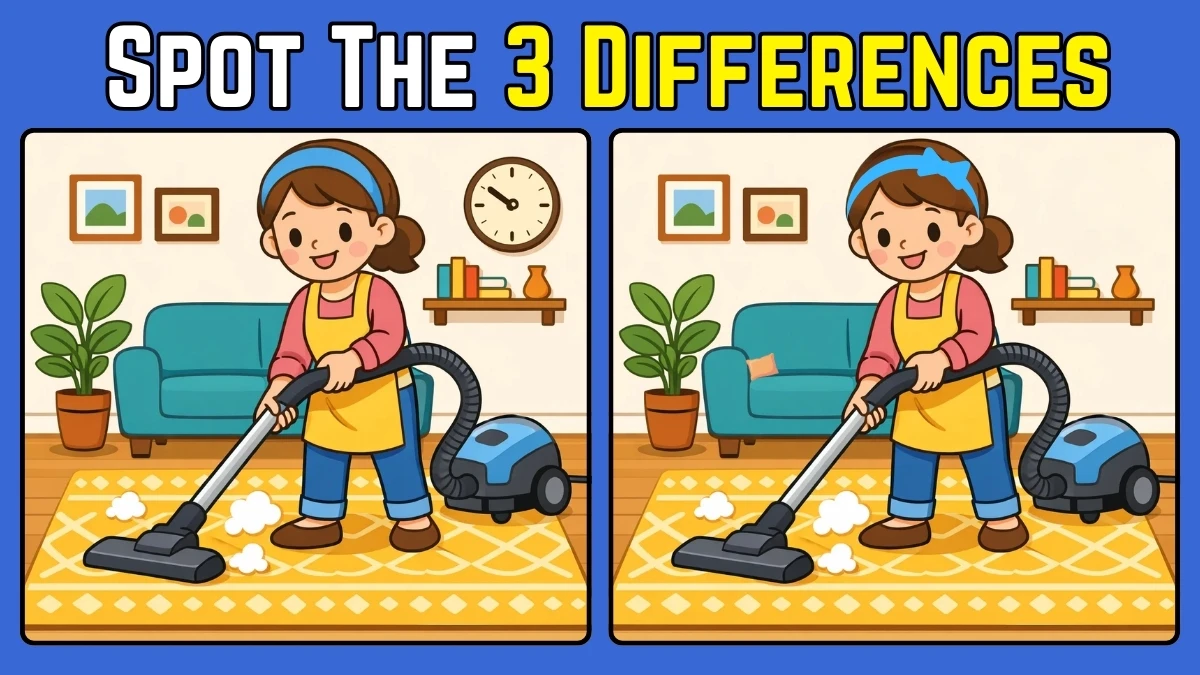
The two images appear identical at first glance, but three distinct differences hide in plain sight. These changes involve the girl's accessories, room decorations, and furniture elements that most people overlook. Your brain must process multiple visual elements simultaneously while racing against the clock. Families often compete together, with children sometimes spotting differences faster than adults due to their fresh perspective. This challenge proves that concentrated focus beats casual observation every single time.
Simple Rules for Maximum Engagement
The challenge follows straightforward guidelines that anyone can understand within seconds. Compare both images side-by-side, identify three differences, and complete the task in 15 seconds or less. No special tools or skills required - just your natural observation ability and focused attention. Both images contain the same girl vacuuming a colorful room with a couch, plant, and wall decorations. This simple setup allows beginners and experts to enjoy the challenge equally.
Benefits of Regular Puzzle Practice
Solving spot-the-difference puzzles daily sharpens multiple cognitive abilities simultaneously. Your visual processing speed increases as your brain learns to filter relevant information faster. Memory retention improves because you must hold mental images while comparing details across pictures. Pattern recognition skills develop naturally, helping in academic performance and professional tasks. These mental exercises also reduce age-related cognitive decline when practiced consistently over months and years.
Time Pressure Enhances Brain Performance
The 15-second deadline isn't arbitrary - it's scientifically designed to push your brain into high-performance mode. Under time pressure, your mind eliminates distractions and enters a state of hyperfocus. This simulates real-world situations where quick decision-making determines success or failure. Regular practice with timed challenges builds mental resilience and improves your ability to handle pressure. The dopamine release from beating the clock makes the exercise addictive and enjoyable.
Solution Reveals Hidden Differences
SPOILER ALERT - Solution Below:
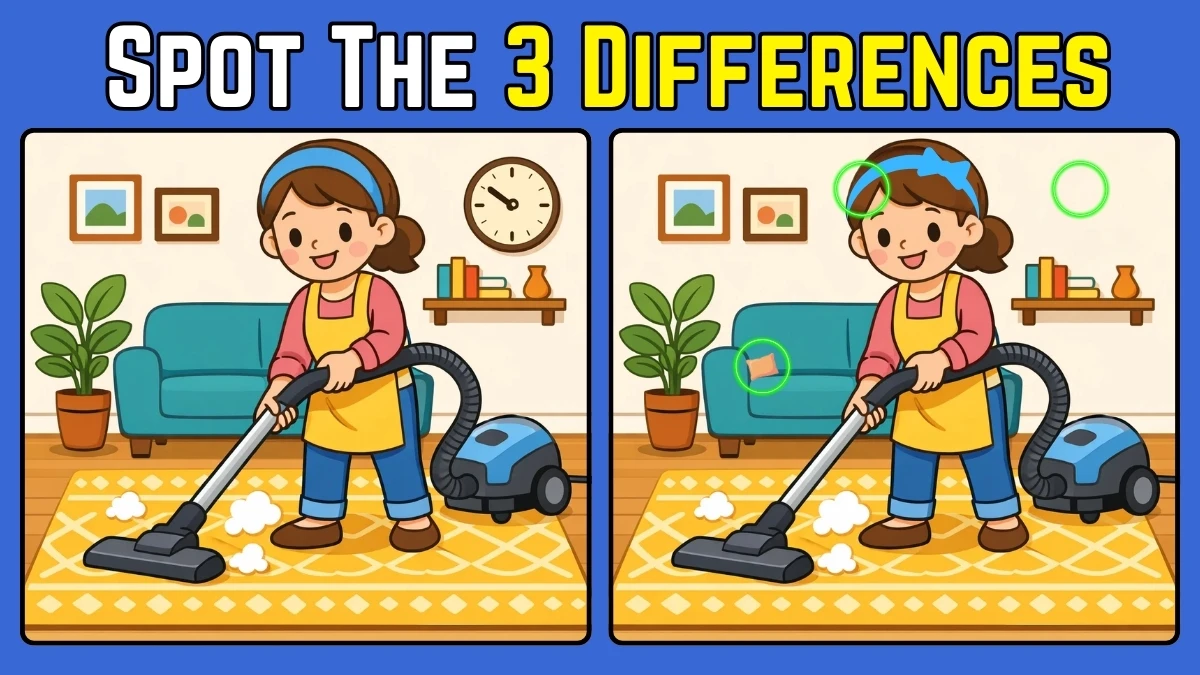
The three differences in this cleaning room puzzle are:
- Top Right Corner: A green circle object appears/disappears in the right image
- Girl's Headband: The blue headband has a different shape or position
- Couch Cushion: An orange/pink decorative pillow is present/missing on the teal couch
Most people spot one or two differences quickly but struggle with the third. The cushion change is particularly deceptive because your brain expects symmetry in furniture arrangements. Successful solvers typically scan in a grid pattern rather than jumping randomly between sections. This systematic approach ensures no area gets overlooked in the time rush.
Challenge Your Friends and Family
Brain teasers become exponentially more fun when shared with others through social media or family groups. Screenshot the puzzle, send to contacts, and compare solving times to create friendly competition. Children especially benefit from these exercises as they develop observation skills crucial for reading and learning. Grandparents enjoy staying mentally sharp while connecting with younger generations over shared challenges. This creates quality bonding time while exercising everyone's brain simultaneously.
Daily Practice Builds Sharp Minds
Incorporating puzzle challenges into your daily routine requires just 2-3 minutes but delivers lasting cognitive benefits. Morning puzzle solving activates your brain for productive work throughout the day ahead. Evening challenges help wind down while keeping your mind engaged positively before sleep. Consistency matters more than duration - five puzzles weekly beats one marathon session monthly. Track your improvement over weeks to stay motivated as your speed and accuracy increase noticeably.
Spot 3 Differences Challenge
This girl cleaning room puzzle offers both entertainment and genuine brain training in just 15 seconds. While the time pressure adds excitement, the real value lies in strengthening your observation and focus abilities. People who practice regularly develop sharper attention to detail that benefits every aspect of life. The simple format makes it accessible to all ages and skill levels willing to test themselves. This challenge reinforces that mental fitness requires consistent exercise just like physical fitness does.
Disclaimer: This puzzle is designed for entertainment and cognitive exercise purposes. We do not guarantee specific brain improvement results. Readers should enjoy these challenges as fun mental workouts rather than medical cognitive assessments or professional brain training tools.