
Toyota Highlander EV 2027 Launched
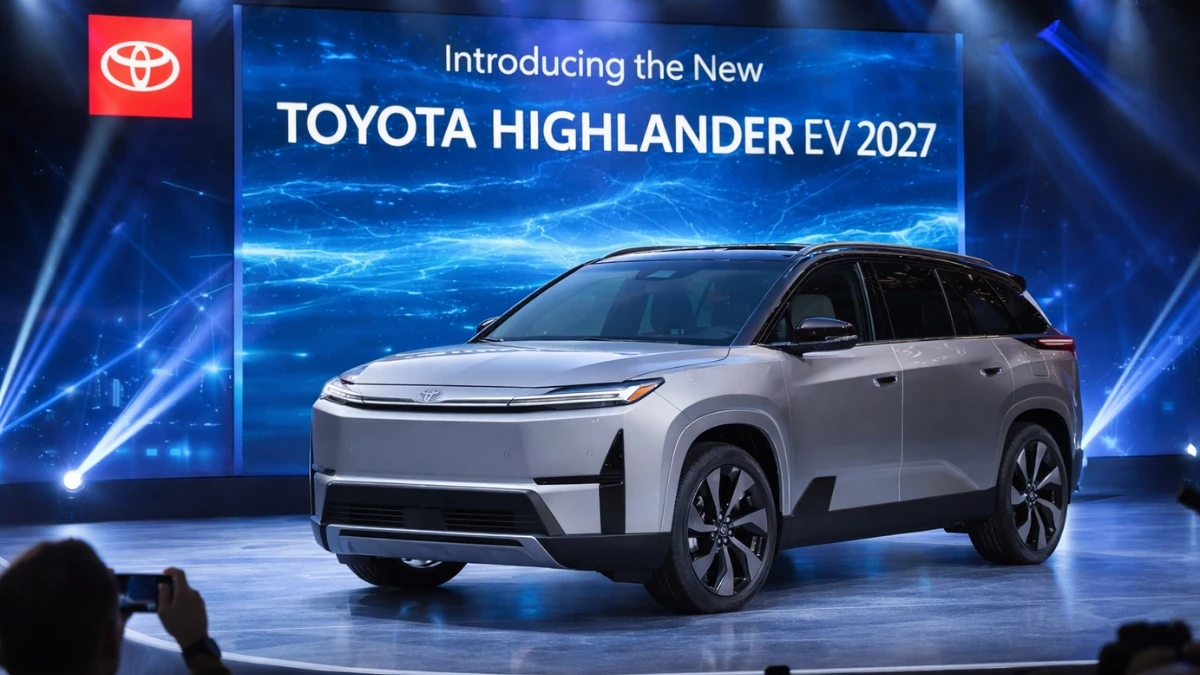
Toyota has officially launched the 2027 Highlander as a fully electric, three‑row SUV, turning one of its most familiar family nameplates into a full battery‑electric vehicle for the first time.
The new model drops the traditional gas and hybrid setups and goes all‑in on a BEV powertrain, while keeping the core Highlander promise: space for the family, decent range, and everyday usability instead of wild concept‑car vibes.
It’s also a milestone for the brand – the 2027 Highlander is Toyota’s first three‑row BEV in the U.S. and the first Highlander EV to be built in America, at the company’s Kentucky plant, with battery modules assembled in North Carolina.
Design‑wise, this isn’t just a “same shape, new battery” refresh. The 2027 Highlander gets a lower, wider stance, Toyota’s modern “hammerhead” front with slim DRLs, flush door handles, broad fenders, and a stretched wheelbase that gives it a planted look on the road.
Inside, it leans hard into tech and comfort: a big 14‑inch touchscreen, a 12.3‑inch digital cluster, 64‑color ambient lighting, SofTex‑trimmed seats, and available panoramic glass roof. It still seats up to seven and offers over 45 cubic feet of cargo space with the third row folded, so it’s very much aimed at the “one car does everything” crowd, just with electrons instead of petrol.
Toyota Highlander EV 2027 Specification
Powertrain, Range & Charging
The 2027 Highlander EV is built around a battery‑electric powertrain only, with different configs depending on trim and drivetrain.
Front‑wheel‑drive models use a 77.0‑kWh battery, while higher‑spec all‑wheel‑drive versions can be fitted with a larger 95.8‑kWh pack. AWD models with the big battery are targeting up to 320 miles of manufacturer‑estimated range, while the base FWD setup is estimated around 287 miles under ideal conditions.
In terms of muscle, the FWD version is tuned for 221 hp and 198 lb‑ft of torque, which is enough for daily use and highway merging without drama.
AWD variants step things up with up to 338 hp and 323 lb‑ft, which should make this three‑row EV feel quicker off the line than you’d expect from something that can haul kids, luggage, and a Costco run in one go.
The battery and motors sit low in the chassis, so you get the usual EV benefits: a lower center of gravity and that instant torque shove when you prod the accelerator.
Charging is handled through a NACS DC fast‑charging port, giving access to a large fast‑charge network in the U.S. Under good conditions, Toyota says the Highlander can go from 10% to 80% in roughly 30 minutes on a compatible DC fast charger.
Level 1 and Level 2 AC charging are also supported, and an 11 kW onboard charger plus a dual‑voltage (120V/240V) cable are standard. A built‑in battery preconditioning system can warm the pack to an optimal temperature before fast charging, which is particularly helpful in cold climates where EVs usually suffer slower charge speeds.
Platform, Size & Interior
Underneath, the Highlander EV rides on a modified TNGA‑K platform adapted to house a high‑capacity battery while preserving interior space.
The SUV is now wider and longer in wheelbase than before, with an overall width of about 78.3 inches and a wheelbase just over 120 inches.
Height has been trimmed slightly, giving it a sleeker profile without compromising headroom too much. Those tweaks, combined with underfloor aero panels and other airflow tricks, are meant to balance efficiency and stability.
Inside, the vibe is tech‑forward but familiar. Highlights include:
-
14‑inch central touchscreen with the latest Toyota Audio Multimedia system
-
12.3‑inch digital driver display
-
64‑color ambient lighting, integrated into features like Safe Exit Assist
-
Standard SofTex‑trimmed seats with heated front seats (ventilated fronts and heated second row available on higher trim)
-
Second‑row captain’s chairs are standard on most versions, with an optional bench on select XLE AWD models
-
The third row is sized for two adults and has easy access via one‑touch fold on the second row
Storage is thoughtful rather than flashy: a dual wireless charging pad angled so phones don’t slide off, plenty of USB‑C ports in all rows, 18 cupholders (because of course), and a flat‑folding third row that opens up more than 45 cubic feet of cargo space. There’s also a hands‑free power tailgate for when your hands are full of everything except the key.
Trims & Equipment
At launch, the 2027 Highlander EV comes in two main grades:
-
XLE – the better‑equipped “base” model
-
19‑inch wheels
-
14‑inch touchscreen, 6‑speaker audio
-
12.3‑inch digital cluster
-
Semi‑flush electronic door handles
-
Heated front seats and steering wheel
-
64‑color ambient lighting
-
Toyota Safety Sense 4.0
-
DC fast‑charge‑ready NACS port
-
-
Limited – the more premium trim
-
Adds/upgrades to: head‑up display, ventilated front seats, heated second row, rear sunshades
-
Available panoramic roof
-
Extra driver‑assist tech like Advanced Park and Traffic Jam Assist on certain packages
-
Toyota also offers an optional JBL audio system, 22‑inch wheels, and two‑tone paint options on selected versions for buyers who want a little more flair.
Tech, V2L & Safety
On the tech side, the Highlander EV runs Toyota’s latest Audio Multimedia system with 5G connectivity, wireless Apple CarPlay and Android Auto, cloud‑connected navigation, voice assistant (“Hey Toyota”), and integrated streaming options like Spotify and SiriusXM (where available).
Navigation instructions can be mirrored in the digital cluster for a cleaner look, and a built‑in drive recorder can capture short video clips from the exterior cameras, acting like an integrated dashcam.
A standout addition is Vehicle‑to‑Load (V2L) capability. With the right accessories, the Highlander EV can power external devices – think camping gear, tools, or even parts of a home setup during an outage.
It’s a clever way of saying: this SUV isn’t just for getting you to the campsite, it can also run the blender once you’re there.
For safety, the 2027 Highlander carries Toyota Safety Sense 4.0 as standard, with features like:
-
Pre‑Collision System with pedestrian and cyclist detection
-
Full‑speed adaptive cruise control
-
Lane centering assist and lane departure alert with steering assist
-
Automatic high beams and road sign recognition
-
Proactive Driving Assist, which can gently help with braking and steering in certain low‑risk situations
It’s backed up by stability control, traction control, ABS, and a suite of parking aids, with options like a Panoramic View Monitor and more advanced semi‑automatic parking functions on higher trims.
Put simply, the Toyota Highlander EV 2027 is Toyota taking one of its most “normal family SUVs” and quietly making it a pretty serious electric contender: three rows, usable range, big‑screen tech, V2L party tricks, and the kind of safety and comfort package that makes it feel like a genuine next step rather than a science experiment.
Disclaimer:
This article is for informational purposes only. Vehicle specifications, features, performance figures, pricing, and availability mentioned for the Toyota Highlander EV 2027 are based on manufacturer announcements, early reports, and pre-production information available at the time of writing. Final production specifications, trims, features, charging times, and regional availability may vary by market and may change before or after official sales begin. Buyers should refer to official Toyota websites, dealerships, or press releases for the most accurate and up-to-date details.