Visual Puzzle Challenge: Can You Spot the Camouflaged Woodpecker in 10 Seconds?
Hey, ready for a quick eye test? Your challenge is simple: can you spot the camouflaged woodpecker hiding in this tree within just 10 seconds?
Don't scroll yet—grab your phone or computer, set a 10-second timer, go full-screen if you can, and really scan every branch and inch of that white bark against the bright blue sky. Most people stare right at it and still miss it the first (or second... or third) time. It's sneaky.
The tree looks like a classic aspen or birch—pale, smooth bark with those dark, knobby branches reaching out. Somewhere in there is a woodpecker blending in almost perfectly. Give it a real go before you peek at the reveal.
Start the 10-Second Woodpecker Challenge
Here's the full shot:
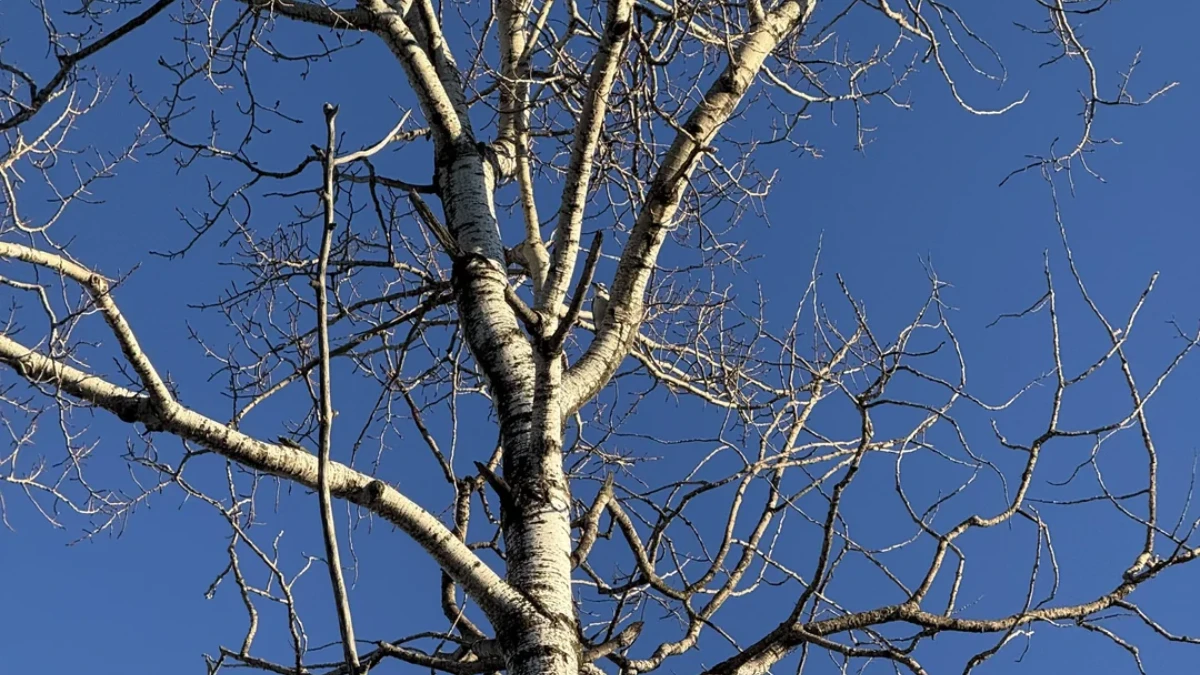
Image Source: Reddit
Take those 10 seconds now. Look for anything that doesn't quite match the bark pattern—maybe a subtle shape, a beak outline, or eyes that stand out if you know what to hunt for.
How to Tackle the Puzzle the Right Way
To up your odds:
- Crank up your screen brightness a bit—the blue sky can wash things out otherwise.
- Don't zoom in right away; start with the whole tree to get the big picture.
- Scan systematically: start at the trunk base, move up to the main forks, then check the branches radiating out.
- Look for breaks in the natural lines—woodpeckers cling vertically, so watch for vertical shapes that aren't just twigs.
These little tricks help because our eyes love patterns, and this bird is using the bark's texture to vanish.
Reveal Time – Here’s Where the Woodpecker Is Hiding
Time's up! If you found it, nice work—your eyes are sharp. If not, don't feel bad; it's designed to trick you.
It's right there in the main trunk, near the fork where branches split. Clinging to the bark in that red-circled spot from the second photo—blending into the white and grayish tones with its black-and-white checkered pattern breaking up its outline.
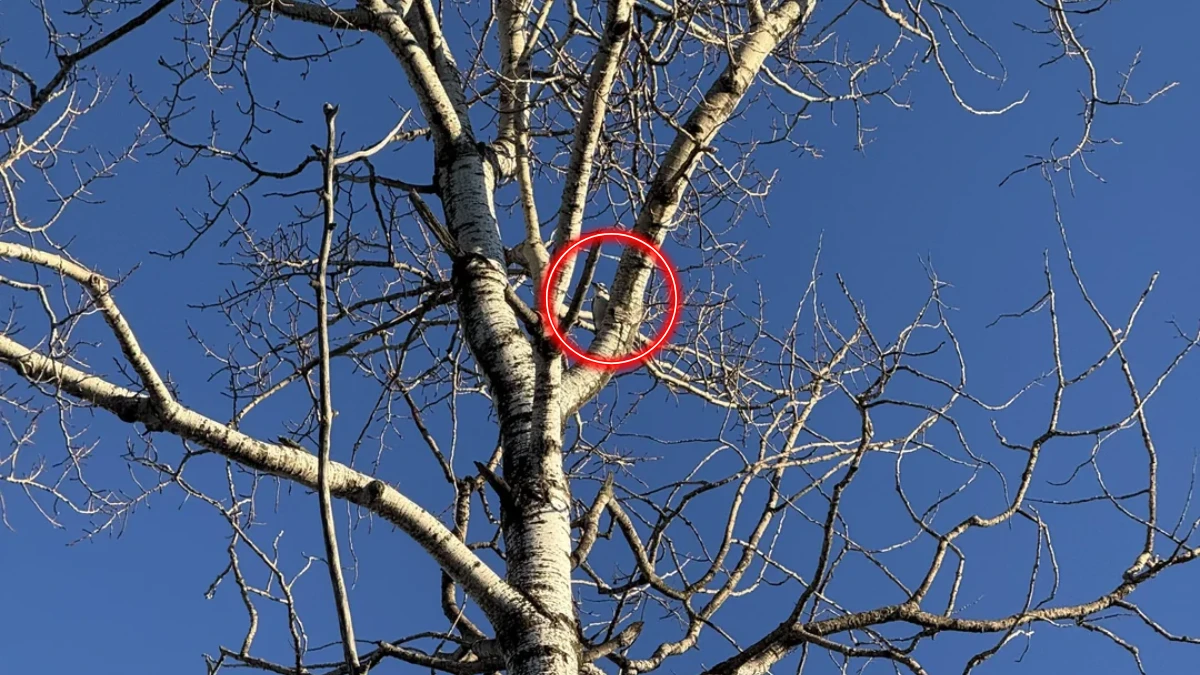
The bird is positioned slightly off-center, body aligned vertically, head probably turned or tucked to match shadows.
Zoomed-In View of the Hidden Bird
Zooming in makes it obvious once you know where to look: the black-and-white barred feathers mimic the bark's texture and light/dark contrasts perfectly. The beak might give it away as a straight line poking out, and those small eyes blend into knots or shadows.
Many woodpeckers, especially smaller ones like downy or hairy species common in aspen groves, have evolved this disruptive coloration—bold contrasts that break up their body shape so predators (like hawks) see fragments instead of a full bird.
Why This Woodpecker Is So Perfectly Camouflaged
Woodpeckers spend most of their lives pressed against tree trunks, drumming for insects or excavating nests. Being spotted easily would be a bad idea—predators are always scanning.
Their feathers use disruptive patterns (those black-and-white checks) to disrupt outlines, plus color matching to pale bark like aspen or birch. Shadows from branches help too. Studies show woodpeckers are often more cryptic on the exact trees they forage on, using luminance matching (brightness levels) and color similarity to disappear.
It's not just pretty—it's survival. While pecking away, they stay hidden from sharp-eyed birds of prey circling overhead.
How Your Brain Gets Tricked by Busy Backgrounds
Ever wonder why you miss it at first? It's visual clutter. Our brains filter "noise"—repetitive branches, sky patches, bark textures—and prioritize bigger shapes or motion. A perfectly blended bird gets tuned out as more background.
It's the same reason camouflage works in nature: the brain groups similar patterns together and ignores them. Once you spot the bird, though, your brain can't unsee it—classic "pop-out" effect.
Simple Tips to Get Better at Visual Puzzles
- Scan slowly side-to-side instead of darting around.
- Hunt for outlines that don't follow natural branch flow.
- Look for eye glints, beak points, or tiny feather details that stand out on second look.
- Step back from the screen or view from farther away—sometimes distance helps patterns emerge.
- Change angles—tilt your head or device slightly.
These work in real nature too: on walks, pause and scan trunks methodically.