Think You've Got Eagle Eyes? Let's Put That Brain to the Test!
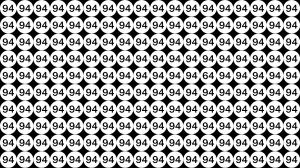
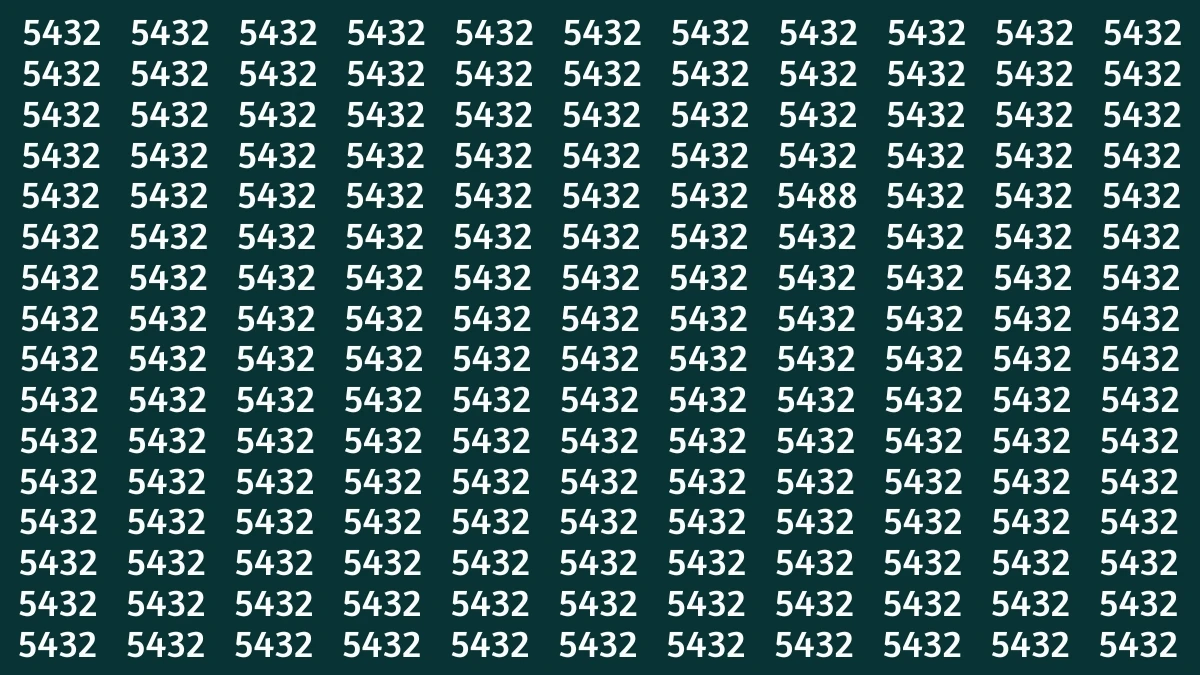
Have you ever stared at something so long that your eyes start playing tricks on you? Well, buckle up because today's optical illusion challenge is about to mess with your mind in the best possible way! We're talking about a puzzle that's been making the rounds online, leaving even the sharpest minds scratching their heads. The mission, should you choose to accept it: find the sneaky inverted 68 hiding among a sea of inverted 63s—and you've only got 13 seconds to do it.
Sound impossible? That's what makes it so addictively fun!
Optical illusions are nature's way of reminding us that our brains aren't quite as reliable as we'd like to think. They're images or patterns that trick our visual perception, making us see things that aren't there or miss things right under our noses. Sometimes it's about colors, sometimes shapes, and in this case, it's all about those devilishly similar numbers that want to fool your observation skills.
This particular genius IQ test puzzle has been stumping internet users worldwide. Why? Because spotting tiny differences when everything looks nearly identical requires serious concentration, razor-sharp focus, and a bit of that genius-level pattern recognition we all secretly think we have. Are you ready to prove you've got what it takes?
Visual Challenge: Only People with Eagle Eyes Can spot the Number 908 among 903 under 9 secs
The Challenge: Your 13-Second Mission Starts NOW
Picture this: spread before you is a dense grid filled with numbers. Not just any numbers—inverted 63s, flipped upside down, repeated over and over in rows and columns. Your eyes scan across the pattern, and everything looks uniform, predictable, almost hypnotic. But wait! Somewhere in that visual maze lurks a rebel. An inverted 68 has crashed the party, hiding in plain sight among its nearly identical cousins.
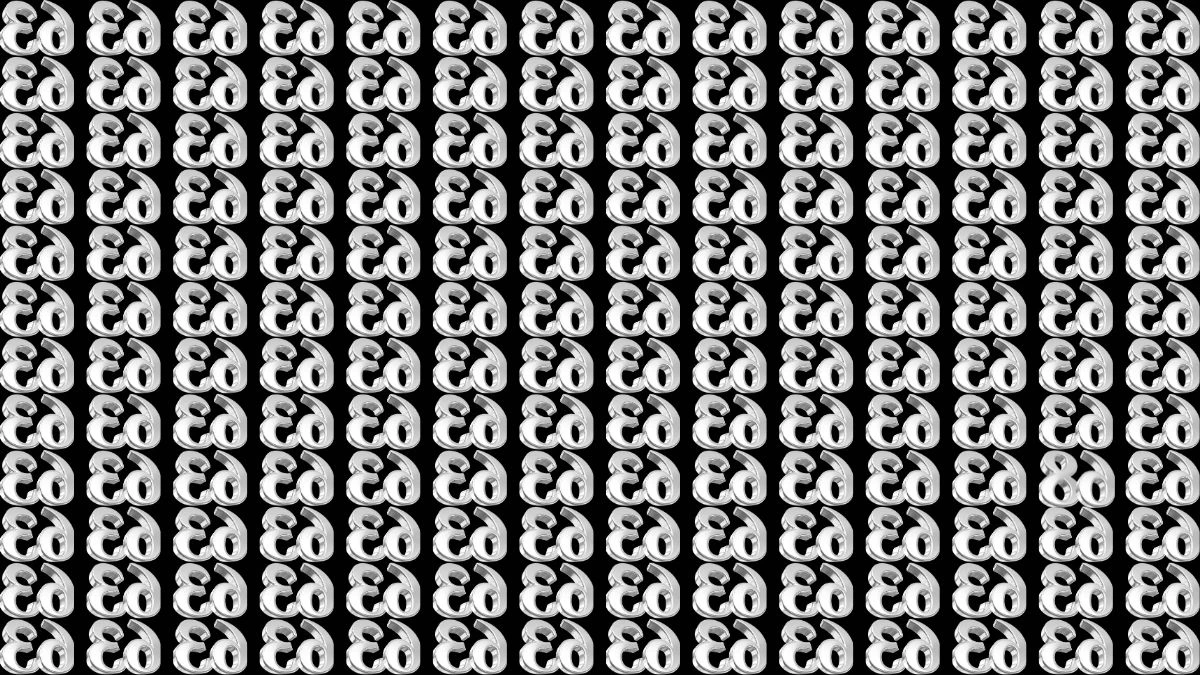
The spot the difference challenge seems straightforward at first glance. I mean, how hard can it be to spot 68 instead of 63? But here's where it gets diabolical: when numbers are inverted (turned upside down), the differences become incredibly subtle. The brain sees a pattern, assumes consistency, and boom—you've already scrolled past the answer without even realizing it.
Your timer starts the moment you look at the image. Thirteen seconds. That's it. No pressure, right?
I'll be honest—when I first tried this, I was confident. "Pfft, easy," I thought. Ten seconds passed. Nothing. Twelve seconds. My eyes darted frantically. At second 13, I gave up and had to peek at the answer. The thing was staring me right in the face the whole time! Talk about humbling.
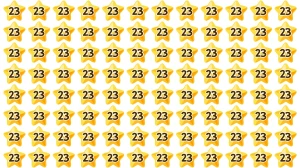
Are You A Genius? Within 7 Seconds Spot The Inverted 37 among 37
Hints and the Big Reveal: Where Is That Sneaky 68?
Still searching? Don't worry—your secret's safe with me. Let me drop some hints without completely spoiling the fun.
- Hint #1: Stop scanning too quickly. Your brain wants to find patterns and fill in the gaps, which means it might skip over the odd one out. Slow down and look at each number individually.
- Hint #2: Focus on the right side of the image, particularly the middle rows. Puzzle creators love hiding things where you'd least expect but also where your eyes naturally gravitate toward after scanning the edges.
- Hint #3: Pay attention to the curves and loops. The difference between a 3 and an 8 is all in those circular shapes, especially when they're flipped upside down. The 8 has two complete loops, while the 3 has an open curve.
- Ready for the answer? Here it is:
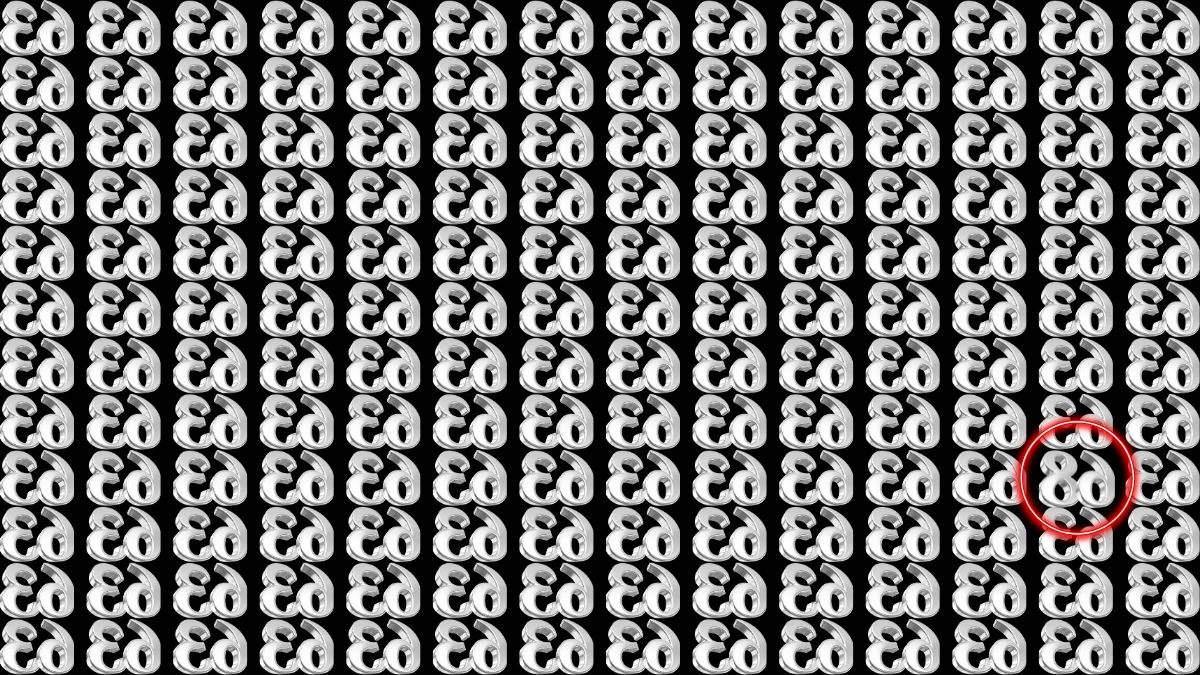
There it is! The inverted 68 is positioned in the 9th row from the top, towards the right side of the grid. When you finally spot it, you'll probably laugh at how obvious it seems now! See how the double loops of the 8 make it stand out once you know what to look for?
The trick is that our brains are pattern-recognition machines. When we see rows of similar numbers, our visual cortex essentially says, "Yep, I know what this is," and stops analyzing each individual element carefully. This is why hidden object puzzles are so effective at testing our attention to detail—they exploit this very shortcut our brains love to take.
Time to Brag (or Try Again!)
So, did you spot the inverted 68 in under 13 seconds? If you did, congratulations! You've got observation skills that would make Sherlock Holmes proud. Feel free to humble-brag in the comments or challenge your friends to see if they can match your time.
Didn't quite make it? Join the club! These genius IQ test puzzles are designed to be challenging. The good news? The more you practice, the better you'll get. Your brain is literally building new neural pathways each time you engage with these visual challenges.
Here's my challenge to you: screenshot this article, share it with three friends, and see who can spot the inverted 68 fastest. Make it a friendly competition. The loser buys coffee (or shares the next viral puzzle).
Remember, whether you crushed this challenge or needed a few hints, the real win is keeping your mind active, engaged, and playful. In a world that often takes itself too seriously, there's something wonderfully refreshing about getting stumped by upside-down numbers.
Keep puzzling, keep challenging yourself, and most importantly—keep having fun with it. Your brain will thank you, even if your eyes need a break! Now, who's ready for the next challenge?
The Fascinating Science Behind Optical Illusions
Why do optical illusions work so well? The answer lies in the incredible (and sometimes quirky) way our brains process visual information.
Our eyes capture light and send signals to the brain, but here's the thing: the brain doesn't just passively receive this information. It actively interprets, predicts, and sometimes flat-out guesses what it's seeing based on past experiences and context. This is called "top-down processing," and while it usually helps us navigate the world efficiently, it can also lead us astray.
When confronted with repetitive patterns like our grid of inverted 63s, the brain employs something called "perceptual grouping." It clusters similar items together and treats them as a single unit rather than processing each element individually. This speeds up recognition but causes us to miss anomalies—like that lone inverted 68.
Research in cognitive psychology has shown that these visual puzzles activate the prefrontal cortex, the part of your brain responsible for complex thinking, decision-making, and focus. Every time you engage with a challenge like this, you're literally giving your brain a workout! Pretty cool, right?
Why These Brain Teasers Are Actually Good for You
Beyond the obvious fun factor, optical illusion challenges and similar brain teasers offer legitimate cognitive benefits. Let me break down why you should be doing more of these:
Sharpened Observation Skills: Regular practice with spot-the-difference and hidden object puzzles trains your brain to notice fine details that might otherwise slip past. This translates to better attention in daily life—whether you're proofreading documents, navigating traffic, or just not losing your keys constantly.
Improved Concentration: In our world of endless notifications and distractions, anything that forces sustained focus is valuable. These 13-second challenges might seem short, but they demand intense, undivided attention.
Mental Flexibility: Solving puzzles requires you to think differently, challenge assumptions, and approach problems from new angles. This mental agility benefits everything from creative thinking to problem-solving at work.
Stress Relief: There's something genuinely satisfying about solving a tricky puzzle. That little dopamine hit when you finally spot the answer? That's your brain rewarding you for a job well done, and it's a healthy way to unwind.
Social Connection: Let's be real—half the fun of these challenges is sharing them with friends and seeing who's faster. It's competitive, it's engaging, and it gets people talking and laughing together.
More Mind-Bending Illusions to Try
If you enjoyed this challenge (or even if you failed miserably—no judgment!), here are some other famous optical illusions that'll keep your brain entertained:
The Spinning Dancer: This silhouette illusion divides people into two camps—those who see her spinning clockwise and those who see counterclockwise. Some say it indicates which side of your brain is dominant, though scientists debate this.
The Dress: Remember that black and blue dress that some people swore was white and gold? That viral sensation taught us all a valuable lesson about how lighting and context influence color perception. Families divided. Friendships tested. All over a dress.
Find the Hidden Animal: These nature-themed puzzles hide creatures like pandas, cats, or snakes among intricate backgrounds. They're perfect for testing your visual discrimination skills while appreciating some beautiful artwork.
Rubin's Vase: This classic shows either two faces looking at each other or a vase, depending on how you look at it. It's a perfect example of figure-ground perception and how our brains decide what's the main object versus the background.