Optical Illusion Puzzle IQ Test: Within 7 Seconds Spot The Number 5677 among 5674
Your eyes are scanning a sea of numbers right now, and somewhere in that chaos, there's a sneaky little imposter hiding in plain sight. Think you can find it before your brain gives up? This optical illusion has been making the rounds online, and honestly, it's trickier than it looks. We're talking about finding the number 5677 hidden among hundreds of 5674s and you've got just seven seconds to do it.
The Challenge That's Breaking Brains
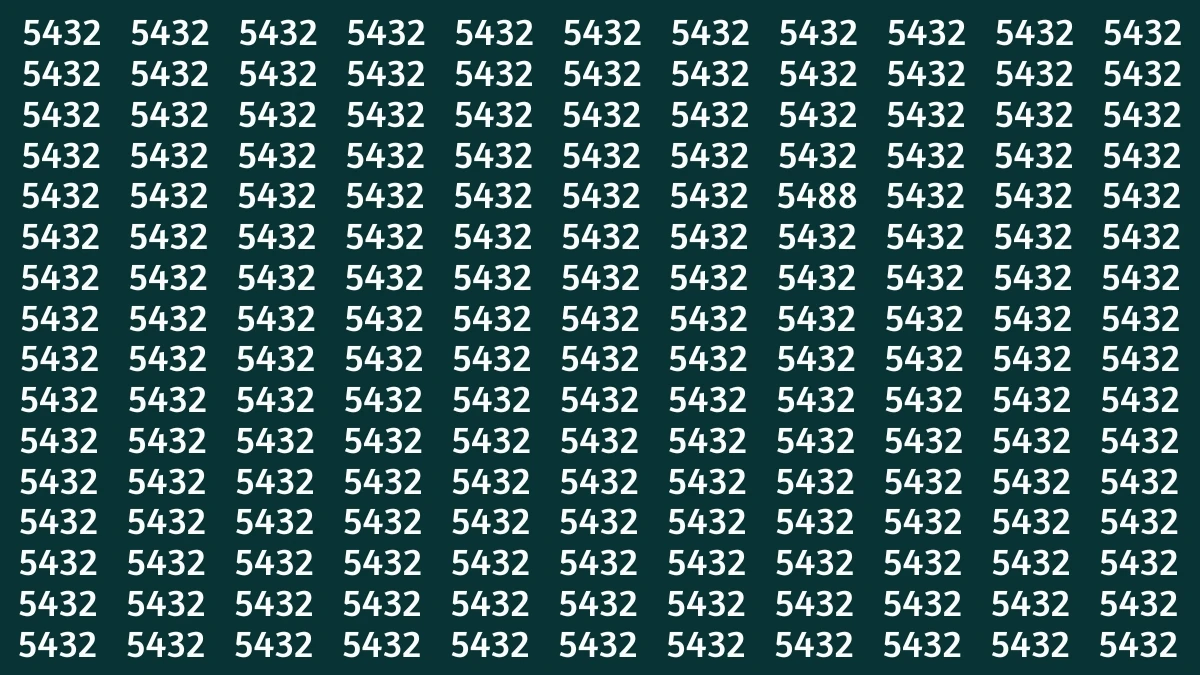
Picture this: a bold red background covered edge to edge with the number 5674, repeated over and over in crisp white text. Your mission? Hunt down the rebellious 5677 that's crashed the party. It sounds simple enough, right? Just spot the number with a 7 in the last position instead of a 4. But here's where your brain starts playing tricks on you.
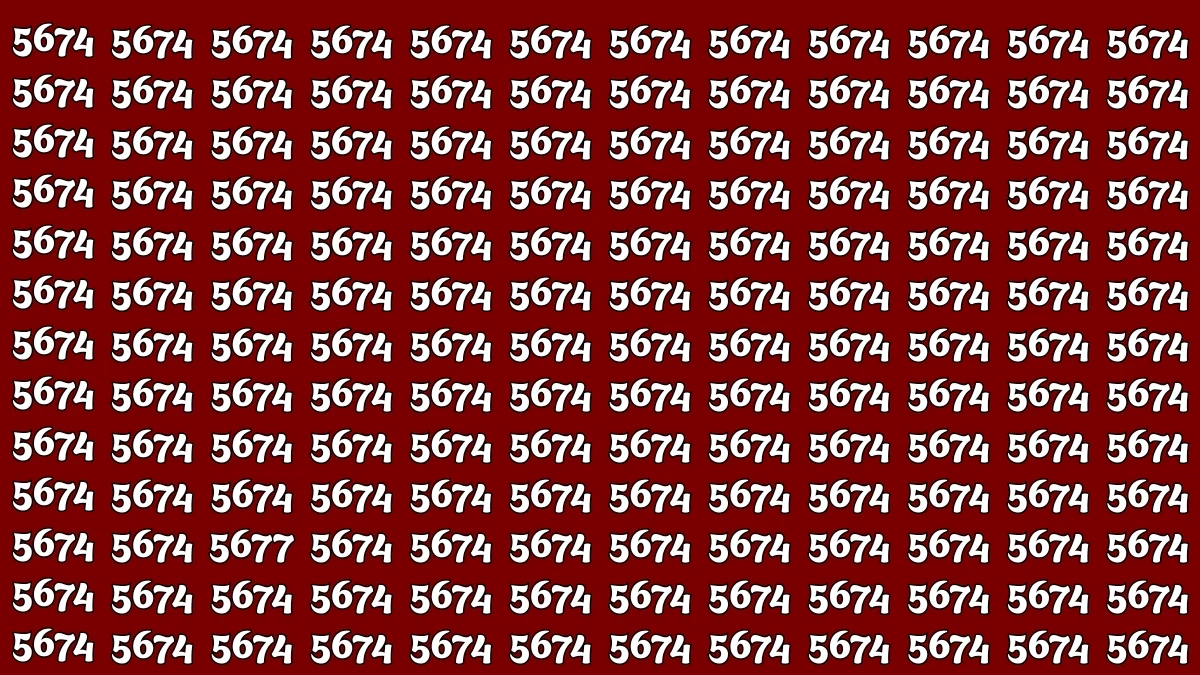
The numbers blend together into this hypnotic pattern, and your eyes want to skim right past the differences. The repetition creates a visual rhythm that actually works against you. It's like trying to spot one slightly different beat in a drum loop your brain assumes everything's the same and stops looking carefully. That's what makes this seven-second challenge genuinely difficult.
Why Your Brain Struggles With This
Here's the thing about optical illusions like this one: they reveal how our brains take shortcuts. Your visual system is constantly filtering information, deciding what's important and what's just background noise. When you see the same number repeated hundreds of times, your brain essentially goes, "Got it, all 5674s here," and stops examining each one individually.
This is actually a survival mechanism. If our ancestors stopped to analyze every single leaf on every single tree, they'd never spot the predator lurking in the branches. So our brains evolved to recognize patterns quickly and flag only the anomalies. The problem? In a grid this dense, that anomaly becomes incredibly hard to flag because you're fighting against your own pattern recognition software.
People with sharp attention to detail often excel at these challenges. It's the same skill that helps proofreaders catch typos or quality inspectors spot manufacturing defects. You're essentially training your brain to override its natural tendency to generalize.
How To Beat The 7-Second Timer
Want to actually find that 5677 before time runs out? Try scanning the grid in sections instead of trying to see everything at once. Your peripheral vision isn't great at catching small differences, so focus on one area, really look at those numbers, then move to the next section.
Another trick: let your eyes relax slightly and look for any number that seems to break the visual pattern. Sometimes the "7" creates a slightly different shape than the "4," and your subconscious might pick up on that before your conscious mind does.
Don't read left to right like you're reading text. That's too slow and methodical. Instead, try a zigzag pattern or even start from the middle and work outward. Breaking your normal scanning habits can help you see things you'd otherwise miss.
The Answer (No Peeking Until You've Tried!)
Alright, found it yet? The sneaky 5677 is hiding in row 11 on the left side of the grid. There are actually multiple instances if you look at both images one shows it in row 11, third number from the left, and in the second image, there are a few more scattered in that general area, including row 11.
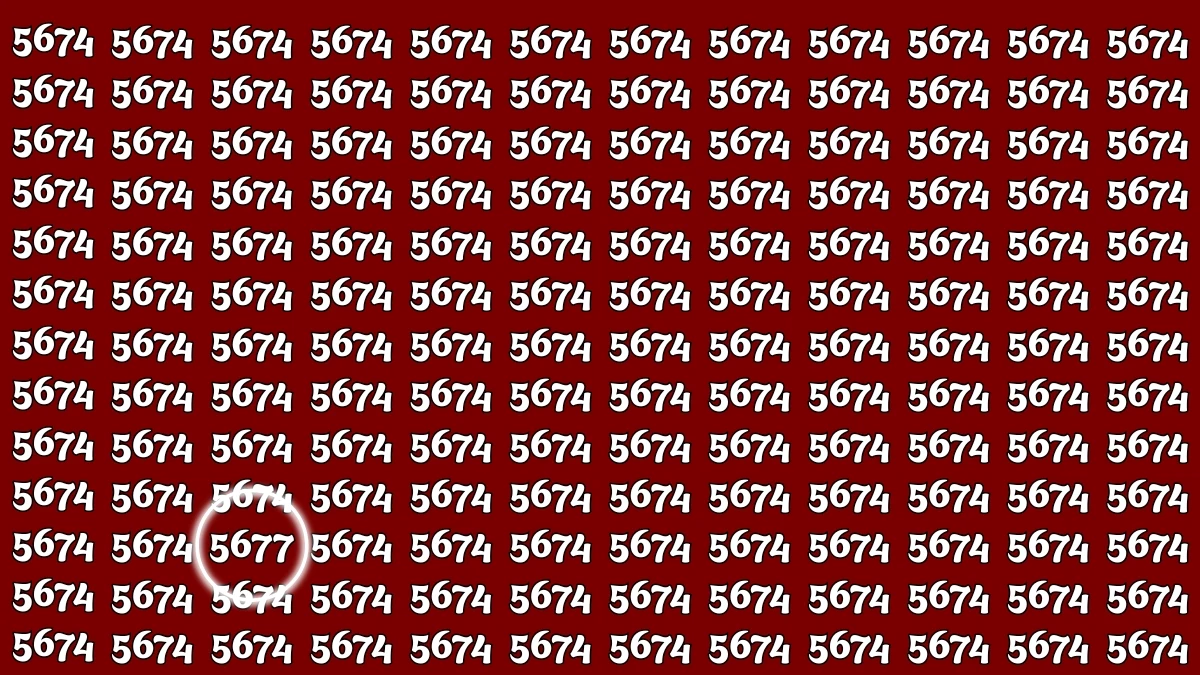
Why was it so hard to spot? Your eyes probably kept jumping around the grid, and every time you'd think "maybe that one?" it turned out to be another 5674. The uniform spacing and identical font weight meant there were no visual cues to guide you. You had to rely purely on reading each number something our brains resist when faced with repetitive patterns.
If you found it within seven seconds, nice work. Your attention to detail is genuinely above average. If you didn't? That's completely normal. Most people need closer to 15-20 seconds once they actually start looking carefully, not just glancing around hoping the answer will jump out.
Ready For More?
These visual puzzles aren't just random internet time-wasters. They're actually pretty good brain training, keeping your observation skills sharp and your focus flexible. The more you practice with different optical illusions and spot-the-difference challenges, the better you get at quickly identifying anomalies in patterns.
Share this with friends and see who can beat that seven-second challenge. Just don't be surprised when everyone suddenly becomes very competitive about finding numbers in grids these things are weirdly addictive once you start.