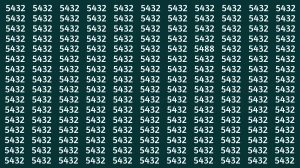
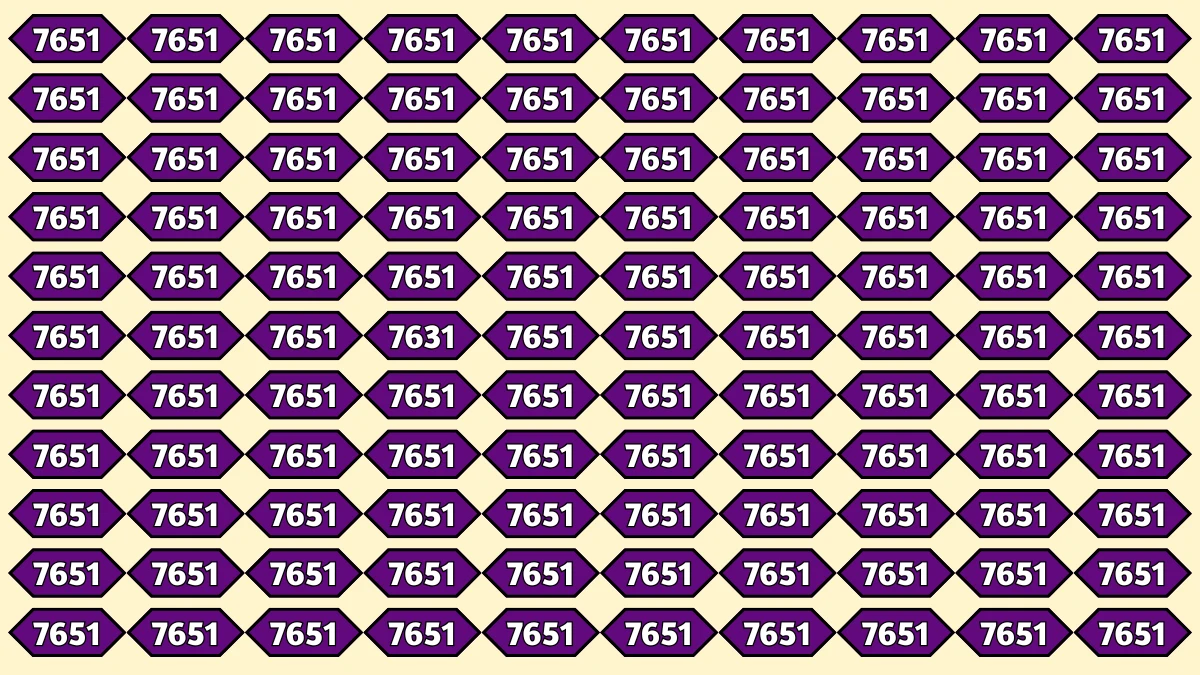
This optical illusion puzzle looks orderly, structured, and easy to scan. Rows of purple shapes stretch across a light background, each one displaying the number 7651 in bold white text. The layout feels clean and repetitive, giving the impression that everything is exactly the same.
That impression is misleading. This optical illusion hides one single number that quietly breaks the pattern. Somewhere in the grid, 7631 is mixed in among dozens of identical 7651s. Your challenge is to spot it within 6 seconds.
Optical illusion puzzles like this are designed to test how well you can override visual habits and force your brain to check details instead of trusting patterns.
The Optical Illusion Challenge
At first glance, every tile looks identical.
Same shape.
Same color.
Same font.
But one tile contains 7631, not 7651.
The difference is subtle. Only two digits are switched. There are no visual clues pointing to the odd number. You must rely entirely on focused observation.
Set a 6-second timer and begin scanning.
Why This Optical Illusion Is So Easy to Miss
This optical illusion works because of digit familiarity. When numbers follow a predictable sequence, the brain reads them as a unit instead of as individual digits.
In this case:
Your brain locks onto “7651” as a familiar pattern
- It stops verifying each digit
- It auto-fills what it expects to see
Because 7631 shares most of the same digits, the difference slips past unnoticed. The illusion doesn’t hide the number. It hides it behind your expectations.
How Your Brain Processes This Puzzle
This optical illusion relies on a cognitive shortcut called chunking. Instead of processing “7–6–5–1” separately, the brain groups them into a single visual object.
That shortcut helps with speed, but it reduces accuracy.
Under time pressure:
- The eyes scan quickly
- The brain confirms patterns too early
- Minor digit changes get ignored
This is why many people look directly at the correct tile and still don’t recognize it.
A More Effective Search Technique
If you want to improve your odds, don’t read the entire number.
Try this instead:
Ignore the first and last digits
Focus only on the middle pair
Look specifically for where 63 appears instead of 65
By narrowing what you search for, you reduce the brain’s tendency to auto-correct the image.
In optical illusion puzzles, less searching often leads to better results.
A More Effective Search Technique
If you want to improve your odds, don’t read the entire number.
Try this instead:
- Ignore the first and last digits
- Focus only on the middle pair
- Look specifically for where 63 appears instead of 65
By narrowing what you search for, you reduce the brain’s tendency to auto-correct the image.
In optical illusion puzzles, less searching often leads to better results.
Common Mistakes Viewers Make
Most people fail this optical illusion for predictable reasons:
- Scanning too fast
- Reading numbers as words instead of symbols
- Assuming the odd number will stand out clearly
Another mistake is stopping after a quick scan and trusting the first impression. This illusion punishes confidence without verification.
Solution Reveal
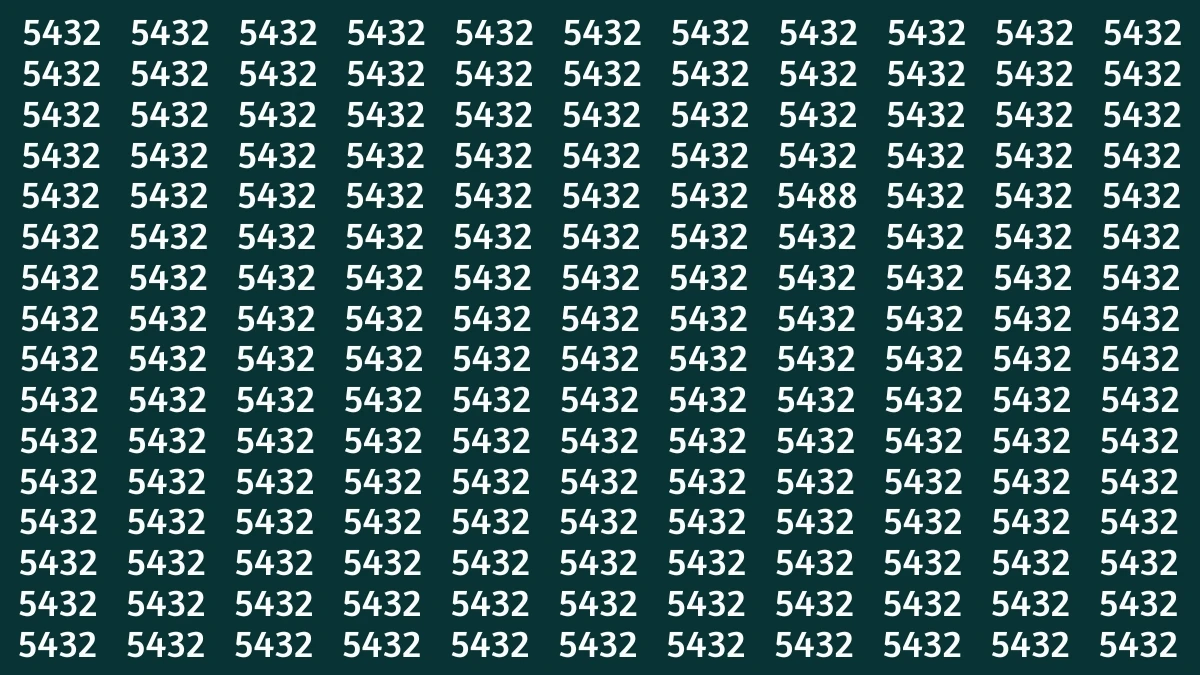
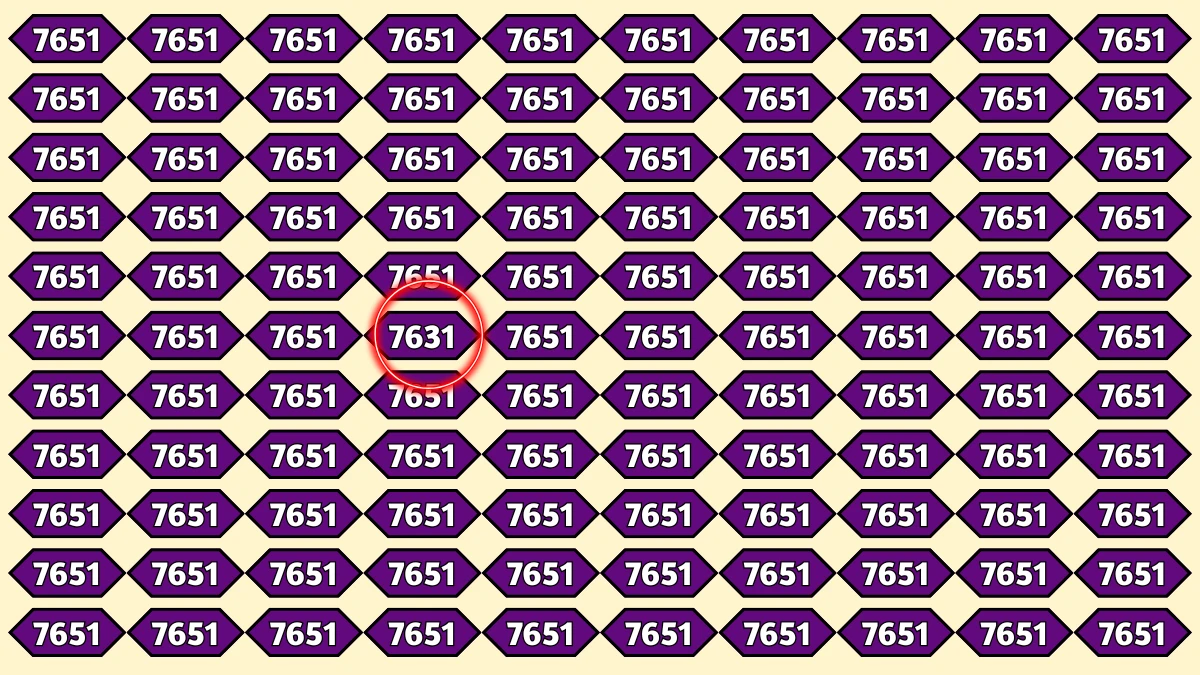
If your 6 seconds are up, the solution image confirms the answer:
- The number 7631 is located near the center-left area of the grid
- It is surrounded on all sides by 7651, making the difference hard to notice
- Once highlighted, the swapped digits become obvious immediately
That sudden clarity after confusion is a classic effect of a strong optical illusion.
This optical illusion proves that small changes can disappear inside strong patterns. When repetition dominates, perception becomes selective, not objective.
If you found the hidden 7631 within 6 seconds, your eyes stayed in control. If not, your brain did exactly what it’s designed to do—save effort by trusting patterns.
Ready for another optical illusion challenge? Upload the next images, and I’ll create a completely new article again.