
Tokyo, Dec 1 (AP) Japan's beloved Princess Aiko is often cheered like a pop star.
During a visit to Nagasaki with Emperor Naruhito and Empress Masako, the sound of her name being screamed by well-wishers along the roads overwhelmed the cheers for her parents.
As she turns 24 on Monday, her supporters want to change Japan's male-only succession law, which prohibits Aiko, the emperor's only child, from becoming monarch.
Along with frustration that the discussion on succession rules has stalled, there's a sense of urgency. Japan's shrinking monarchy is on the brink of extinction. Naruhito's teenage nephew is the only eligible heir from the younger generation.
Experts say the female ban should be lifted before the royal family dies out, but conservative lawmakers, including Prime Minister Sanae Takaichi, oppose the change.
Aiko has gained admirers since debuting as an adult royal in 2021, when she impressed the public as intelligent, friendly, caring and funny.
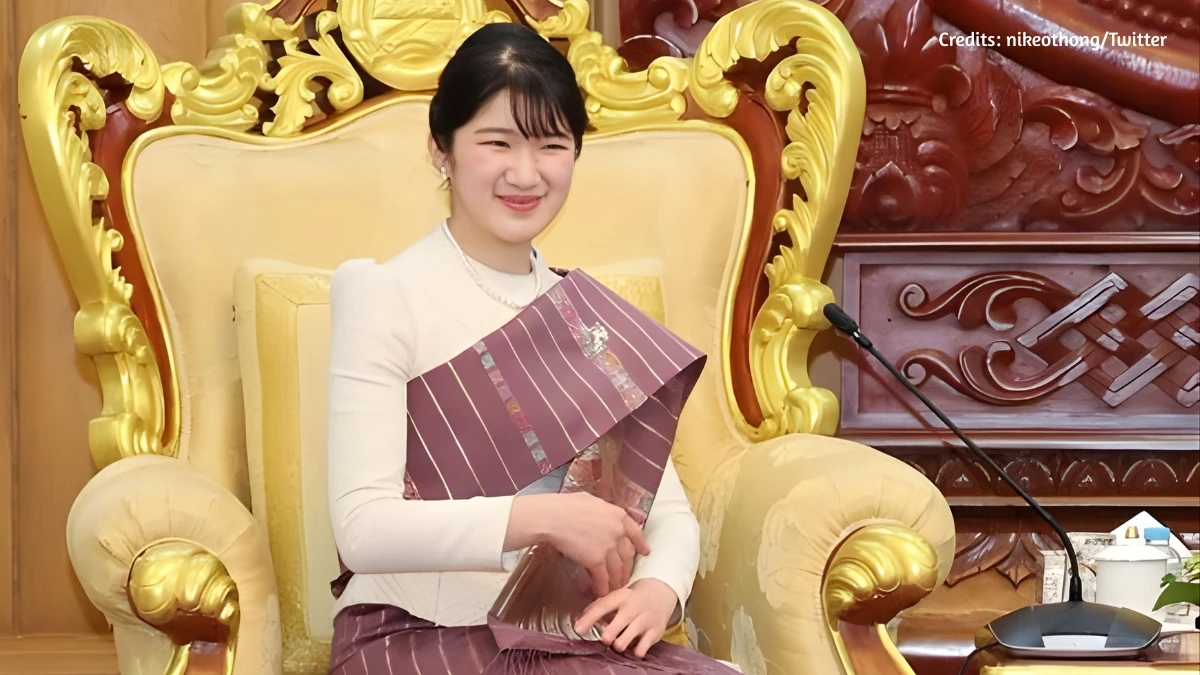
Support for Aiko as a future monarch increased following her first solo official overseas trip to Laos in November, representing the emperor. During the six-day visit, she met with top Laotian officials, visited cultural and historical venues and met with locals.
Earlier this year, Aiko accompanied her parents to Nagasaki and Okinawa. She has followed the example set by her father, who places great importance on passing down the tragedy of WWII to younger generations.
“I have always been rooting for Princess Aiko to be crowned," said Setsuko Matsuo, an 82-year-old atomic bombing survivor who came to Nagasaki's peace park hours before Aiko and her parents' scheduled arrival in the area. “I like everything about her, especially her smile ... so comforting," she told The Associated Press at the time.
Mari Maehira, a 58-year-old office worker who waited to cheer Aiko in Nagasaki, said she has seen Aiko grow up and “now we want to see her become a future monarch.” The princess' popularity has triggered some to pressure legislators to change the law.
Cartoonist Yoshinori Kobayashi has written comic books that push for a legal change to allow Aiko to become monarch, which supporters keep sending to parliamentarians to raise awareness and get their backing for the cause.
Others have set up YouTube channels and distributed leaflets to gain public attention on the issue.
Ikuko Yamazaki, 62, has been using social media to advocate for the succession of the emperor's first child regardless of gender. She says not having Aiko as a successor and the insistence on male-only monarchs will cause the monarchy to die out.
“The succession system conveys the Japanese mindset regarding gender issues,” Yamazaki said. “I expect having a female monarch would dramatically improve women's status in Japan." The popular princess was born on Dec. 1, 2001.
Soon after giving birth to Aiko, her mother, Harvard-educated former diplomat Masako, developed a stress-induced mental condition, apparently due to criticism for not producing a male heir, from which she is still recovering.
Aiko was known as a bright child who, as a sumo fan, memorized wrestlers' full names.
However, she also had faced difficulties: As an elementary school girl, she briefly missed classes because of bullying. As a teenager, she appeared extremely thin and missed classes for a month.
In 2024, Aiko graduated from Gakushuin University, where her father and many other royals studied. She has since participated in her official duties and palace rituals while also working at the Red Cross Society. On weekends, she enjoys taking walks with her parents and playing volleyball, tennis and badminton with palace officials.
The 1947 Imperial House Law only allows male-line succession and forces female royals who marry commoners to lose their royal status.
The rapidly dwindling Imperial Family has 16 members, down from 30 three decades ago. All are adults.
Naruhito has only two potential younger male heirs, his 60-year-old younger brother, Crown Prince Akishino, and Akishino's 19-year-old son, Prince Hisahito. Prince Hitachi, former Emperor Akihito's younger brother and third in line to the throne, is 90.
Akishino acknowledged the aging and shrinking royal population, "but nothing can be done under the current system.” “I think all we can do right now is to scale back our official duties," he told reporters ahead of his 60th birthday Sunday.
Last year, the crown prince noted that royal members are “human beings” whose lives are affected by the discussion, a nuanced but rare comment. He has seen no change, though palace officials have sincerely taken his remark, Akishino said Sunday.
Aiko had also previously said she is aware of the declining royal population, but could not comment on the system. “Under the circumstances, I hope to sincerely serve every official duty and help the emperor and the empress, as well as other members of the Imperial Family.” The shortage of male successors is a serious worry for the monarchy, which some historians say has lasted for 1,500 years. It's also a reflection of Japan's broader problem of a rapidly aging and shrinking population.
“I think the situation is already critical,” said Hideya Kawanishi, a Nagoya University professor and expert on monarchy. Its future is totally up to Hisahito and his potential wife's ability to produce a male offspring. “Who wants to marry him? If anyone does, she would endure enormous pressure to produce a male heir while performing official duties at a superhuman capacity.
This report includes content sourced from Press Trust of India (PTI), edited for clarity and context.