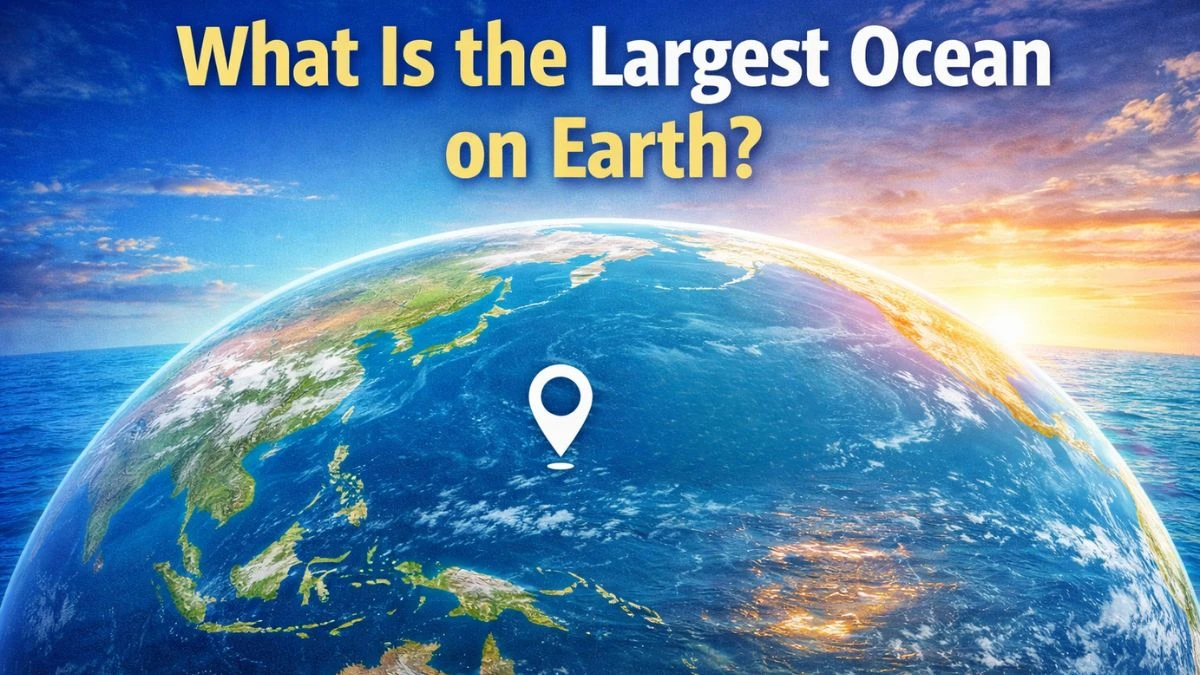

What Is the Largest Ocean on Earth? (The Pacific Ocean, Up Close)
Let's be real: when you stop and think about the sheer scale of our planet's oceans, the Pacific stands in a league of its own. It's not just the biggest it's overwhelmingly so. Covering roughly one-third of Earth's surface and holding more than half the planet's free water, the Pacific Ocean is a true giant that shapes weather, supports incredible life, and connects continents in ways few other features on Earth do.
Quick Facts: How Massive Is the Pacific Really?
Imagine trying to wrap your head around this: the Pacific stretches from the chilly Arctic waters in the north down to the icy Southern Ocean near Antarctica. On one side, Asia and Australia frame it; on the other, the Americas. Its surface area clocks in at approximately 165,250,000 square kilometers (about 63,800,000 square miles) when including its full boundaries this makes it larger than all the world's land combined (which totals around 148–150 million km²).
That works out to roughly 32–33% of Earth's total surface and about 46% of the entire ocean area. Some sources (like NOAA) cite a core basin figure closer to 155–165 million km², while others adjust slightly depending on whether marginal seas are fully included. Either way, it's mind-boggling enough water volume to drown every continent and still have room left over.
Why Did the Pacific Get So Huge? The Tectonic Story
The Pacific's size isn't random it's a product of Earth's restless geology. It largely sits on the Pacific Plate, one of the planet's biggest tectonic players, which has been around for about 200 million years. In the past, seafloor spreading pushed its boundaries outward dramatically. These days, though, it's actually shrinking slowly (by roughly 0.5–2.5 cm per year in places) as plates subduct around its edges and the Atlantic expands instead.
That ring of subduction is the famous Ring of Fire volcanoes, earthquakes, and deep trenches galore. It's why the Pacific has so many dramatic features: island chains born from hotspots, massive volcanic arcs, and the deepest spots on the planet.
Not Just Big Incredibly Deep (Meet the Mariana Trench)
The Pacific isn't only the widest; it's also the deepest, with an average depth of about 4,280 meters (around 14,040 feet). But head to the western Pacific, east of the Philippines, and you'll find the Mariana Trench home to the Challenger Deep, the lowest point known on Earth.
Recent measurements put the Challenger Deep at approximately 10,935 meters (±6 m) below sea level deeper than Mount Everest is tall by over 2 kilometers. The pressure down there is crushing (over 1,000 times surface pressure), the temperature hovers near freezing, and it's pitch black. Yet life persists: snailfish that look almost alien, giant amphipods, and microbes that thrive without sunlight. Only a handful of crewed dives have reached it each one reveals new species and surprises about how life adapts to extremes.
How the Pacific Drives Global Climate and Weather
Because it's so enormous, the Pacific acts like Earth's giant heat battery. It absorbs massive amounts of solar energy at the surface, then redistributes it via currents and gyres that move warm and cold water around the globe.
It's the main arena for El Niño and La Niña those big shifts in trade winds and sea temperatures that can flip weather patterns worldwide. An El Niño might drench Peru with rain while drying out Australia; La Niña often reverses it. These events influence monsoons, hurricanes, droughts, and even global food prices. Deep circulation from Antarctic waters also brings nutrients up, fueling some of the ocean's most productive fishing grounds.
Biodiversity Hotspot: Life and Islands in the Pacific
From colorful coral reefs to dark hydrothermal vents, the Pacific hosts an astonishing range of ecosystems. The Great Barrier Reef (in the Coral Sea, part of the broader Pacific system), kelp forests off California, and chemosynthetic communities around vents are just a few highlights.
Then there are the islands tens of thousands of them. Polynesia, Micronesia, and Melanesia alone have countless atolls and volcanic islands, plus bigger players like Japan, Indonesia, the Philippines, New Zealand, and parts of Australia. These places are biodiversity treasure troves, but rising seas, warming waters, and bleaching events threaten many of them.
Humans and the Pacific: Trade, Food, and Real Challenges
For billions of people, the Pacific is essential. Huge shipping routes connect Asia's factories to American markets and beyond. Fisheries here provide a big chunk of the world's seafood though overfishing has hit many species hard.
Dozens of countries border it: the U.S., Canada, Mexico, Chile, China, Japan, Australia, New Zealand, and countless Pacific Island nations. Coastal communities rely on it for livelihoods, culture, and protein.
But it's not all smooth sailing. Plastic garbage patches swirl in its gyres (especially the North Pacific one), ocean acidification harms shellfish and corals, warming causes bleaching, and sea-level rise endangers low-lying atolls. Conservation efforts marine protected areas, plastic cleanup initiatives, international agreements are growing, but the ocean's scale makes solutions tough.
Pacific vs. Other Oceans: A Quick Size Comparison
| Ocean | Approximate Area (million km²) | Rank |
|---|---|---|
| Pacific Ocean | ~165 | Largest |
| Atlantic Ocean | ~82–106 | Second |
| Indian Ocean | ~70–74 | Third |
| Southern Ocean | ~20–35 | Fourth |
| Arctic Ocean | ~12–14 | Smallest |
The Pacific is roughly twice the size of the Atlantic and bigger than all land put together.