Can You Spot the Hidden 66? Most People Fail This 5-Second Challenge
Your brain is about to get the workout it didn't know it needed. Scattered across a grid of triangular patterns, dozens of "99" numbers stare back at you but hiding somewhere in plain sight is a sneaky "66" that's practically invisible. Think you can find it in just five seconds?
This isn't your average spot-the-difference puzzle. The triangles alternate between pointing up and down, creating a mesmerizing pattern that makes your eyes want to glaze over. Black triangles, white triangles, all packed with bold white numbers that seem to blur together the longer you stare. That's exactly what makes this optical illusion so deliciously frustrating.
The Challenge: Find 66 in a Sea of 99s
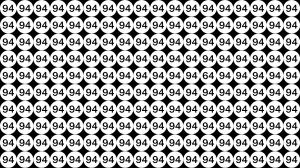
Here's what you're dealing with: seven rows of triangular shapes, each one containing either a black or light-colored background. Almost every single triangle displays "99" in thick, white numbers. Your mission? Locate the one rebel triangle that says "66" instead.
Five seconds.That's all you get.
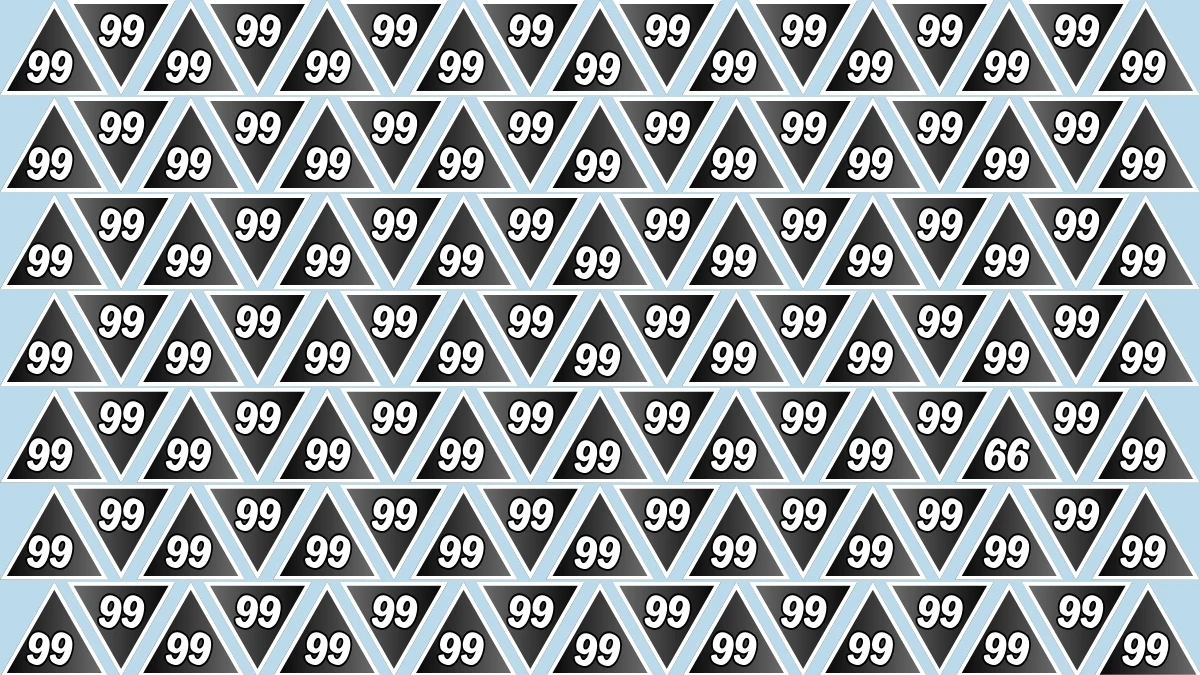
The numbers are styled identically, same font, same size, same color. The only difference is the actual digits themselves and when you're scanning through literally hundreds of "99s," your brain starts playing tricks on you. It expects to see "99" everywhere, so it kind of... does. Pattern recognition can be your best friend or your worst enemy in puzzles like this.
Ready? Start your timer and give it a shot before scrolling down.
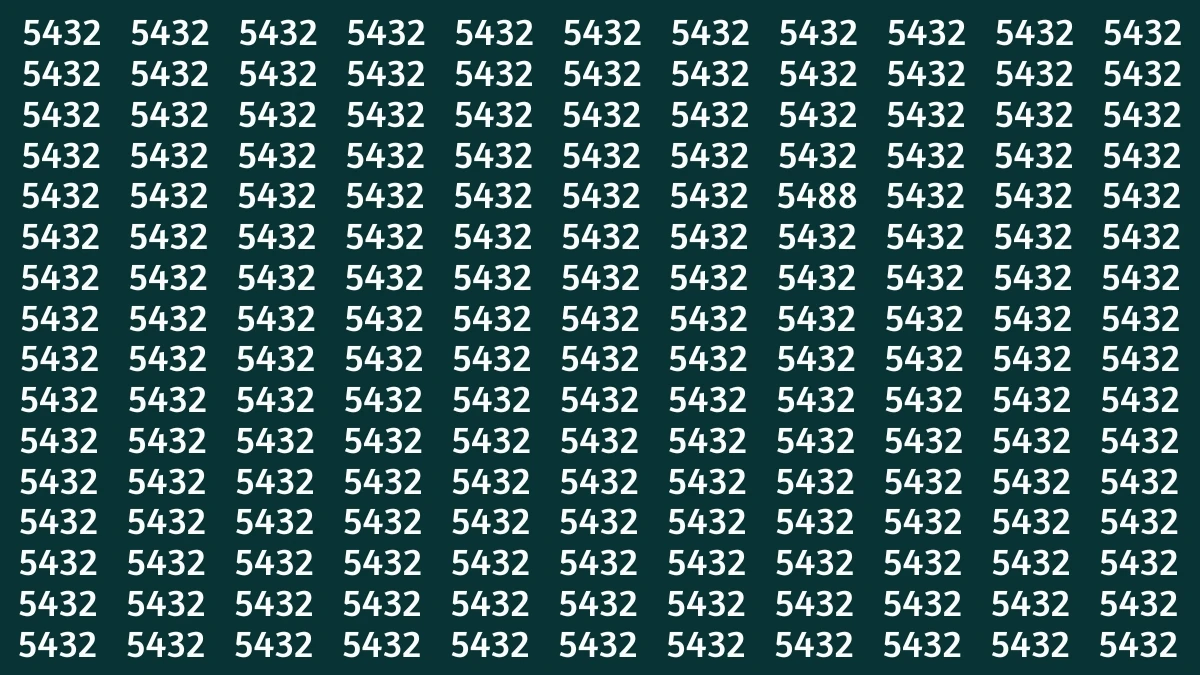
Spot The Number 5677 among 5674 :Must Try
Why Your Brain Struggles With This
There's actual science behind why this optical illusion trips people up. Your visual system is built for efficiency, not accuracy. When you're scanning repetitive patterns, your brain takes shortcuts. It recognizes the overall shape and rhythm of "99" and basically goes on autopilot, filling in what it expects to see rather than what's actually there.
This phenomenon helps you navigate daily life without getting overwhelmed imagine if you had to consciously process every single word on a page or every face in a crowd. You'd be exhausted in minutes. But these mental shortcuts mean that anomalies like a random "66" can slip right past your conscious awareness.
Optical illusions and visual puzzles aren't just fun internet challenges. They reveal how attention to detail works under pressure, how easily our perceptions can be fooled, and why multiple people can look at the same thing and see it completely differently. It's the same skill set that helps proofreaders catch typos, security personnel spot suspicious behavior, or designers notice when something's just slightly off.
Strategies That Actually Work
If you're still hunting for that 66, here's what might help. Instead of letting your eyes wander randomly across the grid, try scanning systematically left to right, row by row, like you're reading a book. Your brain handles organized searches better than chaotic ones.
Another trick? Soften your focus slightly. Sometimes when you're trying too hard, you actually miss things. Let the image get a little fuzzy in your peripheral vision differences in pattern often pop out better that way.
Look for triangles that point downward in the lighter colored sections. The different orientation and background might give you an edge. And here's the thing about the number 6 versus 9 they're mirrors of each other, which means your brain might be auto-correcting them without you realizing it.
The Answer: Did You Find It?
Are You a Genius: Spot The Inverted 33 among 33
The sneaky 66 is hiding in the fifth row from the top, positioned toward the right side inside a light-colored triangle. It's surrounded by 99s on all sides, perfectly camouflaged until you finally lock eyes with it. Then suddenly it seems so obvious you wonder how you possibly missed it.
If you spotted it within five seconds, congratulations your visual processing and attention to detail are seriously sharp. But if you didn't? You're in good company. Most people either miss it entirely or need significantly longer than five seconds to track it down.
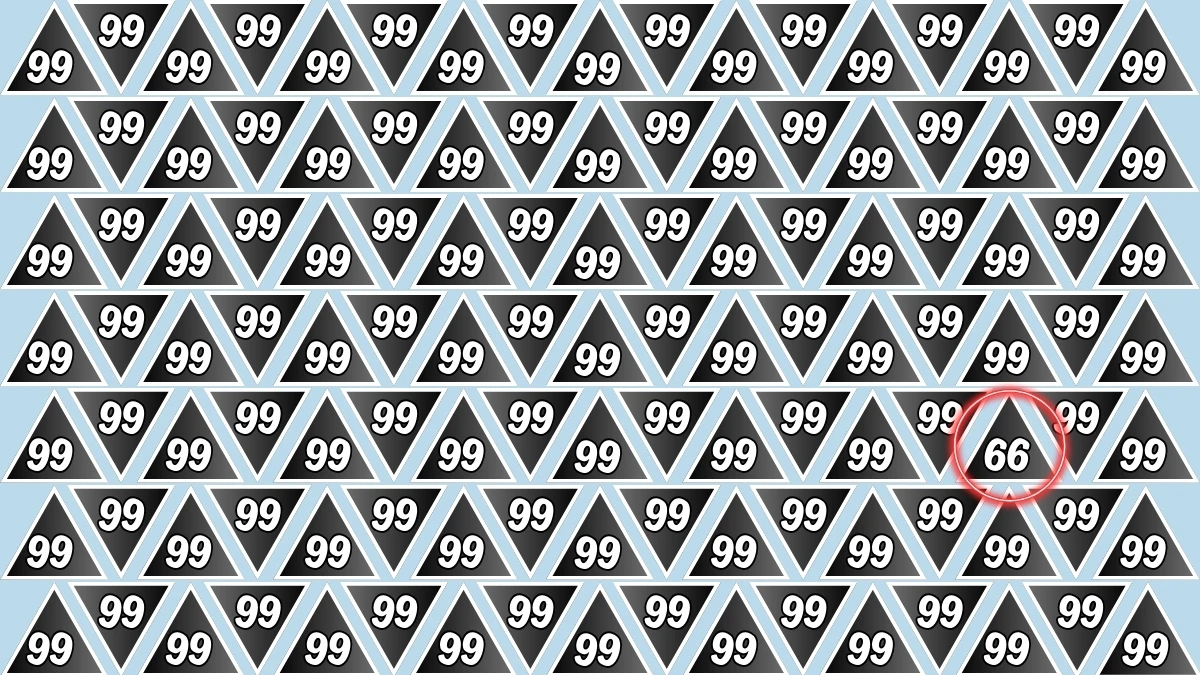
The uniform styling and repetitive pattern create what's essentially a perfect hiding spot.
The reason it's so tricky comes down to expectation. Your brain saw the pattern established in the first few rows 99, 99, 99 and assumed that pattern would continue indefinitely. Breaking that assumption requires conscious effort and focused attention, two things that are surprisingly hard to maintain when you're staring at a repetitive grid.
Keep Your Brain Sharp
Puzzles like this aren't just entertaining time-killers.They're mini training sessions for your observation skills and mental flexibility. The more you practice spotting subtle differences in complex patterns, the better you get at noticing details in everyday situations too.
Try sharing this with friends or family and see how they do. There's something satisfying about watching someone else struggle with the same visual challenge that stumped you—and maybe, just maybe, you'll find someone who spots it even faster than you did. Either way, your brain got a little sharper today, and that's worth the five seconds you invested.