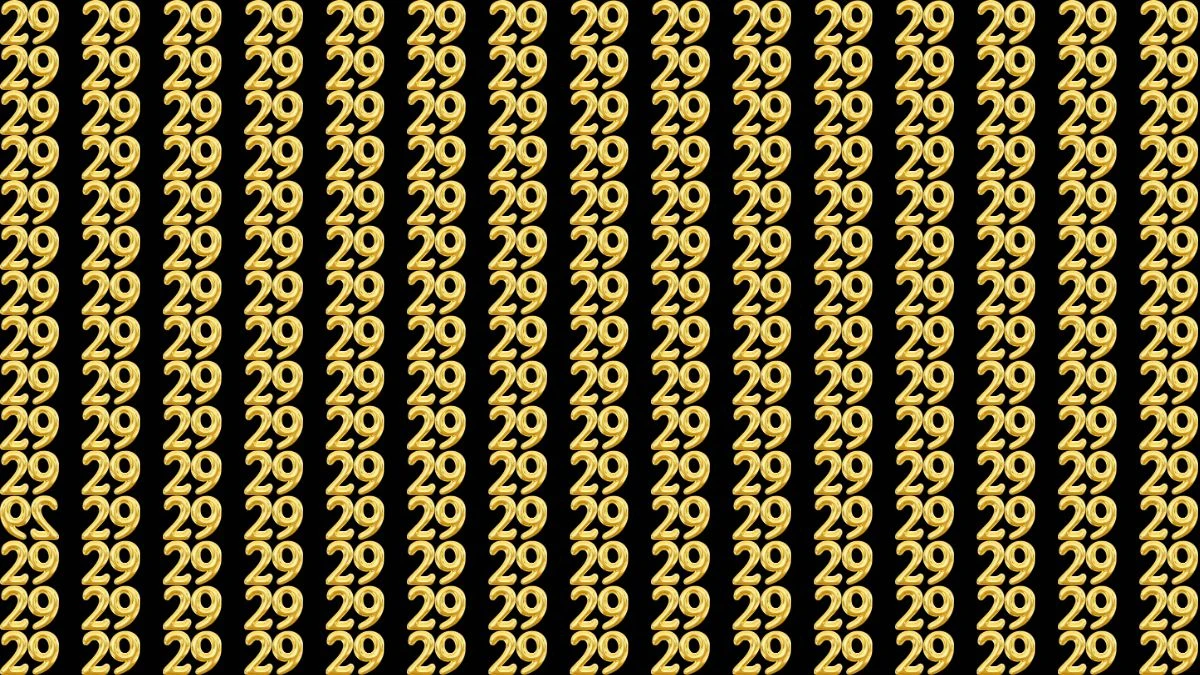
This optical illusion looks elegant, simple, and almost hypnotic. A dark background is filled with glowing golden 29s, arranged in perfect rows and columns. Everything feels symmetrical. Orderly. Predictable.
That sense of certainty is exactly what this optical illusion exploits. Somewhere inside this uniform grid, one single 29 is inverted. The challenge is not about reading numbers quickly—it’s about noticing when something isn’t quite right.
Your task is to spot the inverted 29 within 9 seconds. Most people fail on their first attempt, not because of weak eyesight, but because the brain trusts repetition too easily.
The Optical Illusion Challenge
At first glance, the grid appears flawless.
Every number looks the same.
Every shape feels familiar.
But one 29 has been flipped upside down.
That’s it.
No color changes.
No spacing differences.
No obvious markers.
Just one inverted number hiding among dozens of identical ones.
Start scanning now.
Why This Optical Illusion Is So Effective
This optical illusion relies on expectation bias. Once your brain identifies a repeated pattern, it stops examining individual details. Instead, it labels the entire image as “all the same” and moves on.
Three design choices make this illusion especially deceptive:
- The numbers use a decorative, curved font that remains readable even when inverted
- The gold-on-black contrast is visually pleasing but slightly fatiguing over time
- The spacing creates rhythm, encouraging fast scanning rather than careful inspection
Because of this, your brain reads “29” automatically—even when the orientation is wrong.
What Happens Inside Your Brain
In optical illusion challenges like this, the eyes see everything. The problem lies in how the brain processes what the eyes deliver.
Your brain:
- Predicts the next object instead of verifying it
- Prioritizes speed over accuracy
- Treats repetition as background noise
This mental shortcut is efficient in daily life, but it becomes a liability in visual puzzles. The inverted number doesn’t disappear—it simply gets ignored.
A More Effective Way to Search
If you’re still scanning, change how you look.
Instead of reading the number 29, try this method:
- Focus only on the curves and tails of the digits
- Look for numbers that feel visually “backward”
- Scan slowly in small blocks rather than sweeping the entire grid
Solution Reveal
If your 9 seconds are up, the solution image provides clarity.
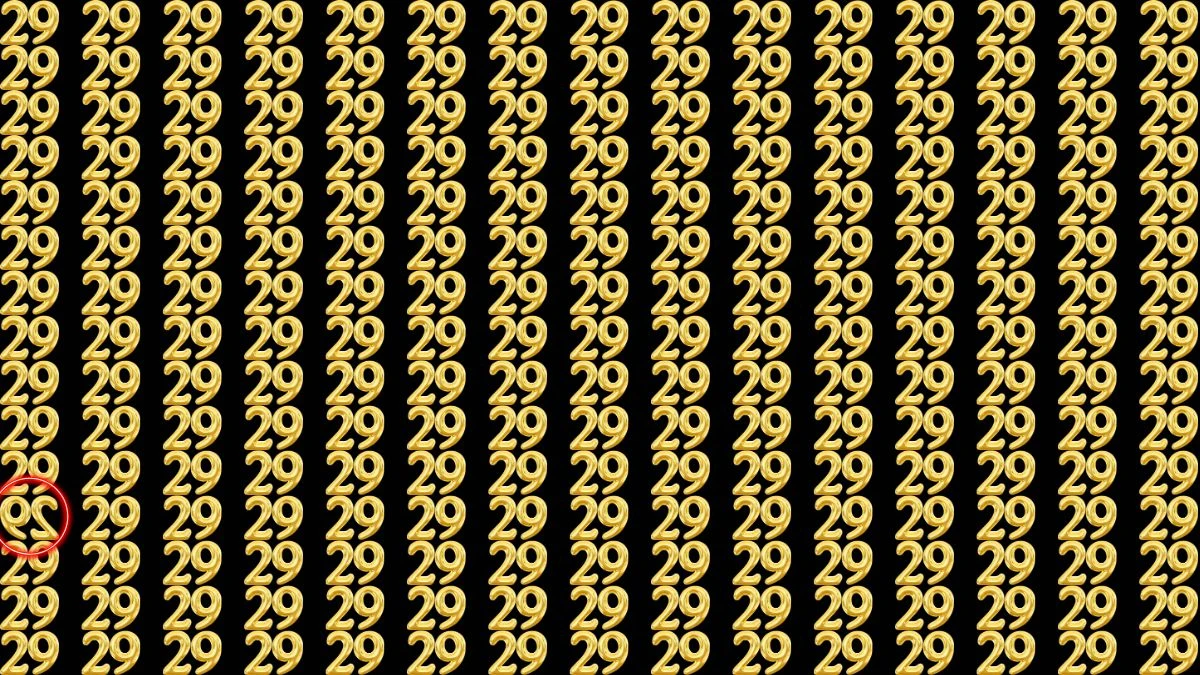
- The inverted 29 is located near the left side of the grid, slightly below the center
- Once highlighted, the flipped orientation becomes obvious
- Without guidance, it blends perfectly into the surrounding numbers
The moment you see it, the illusion collapses and the brain immediately wonders how it missed something so visible.
This optical illusion proves that even a single flipped detail can vanish inside repetition. The eyes may look directly at the answer, but perception decides whether it registers.
If you found the inverted 29 within 9 seconds, well done.
If not, your brain behaved exactly as it was designed to.