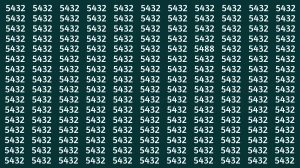
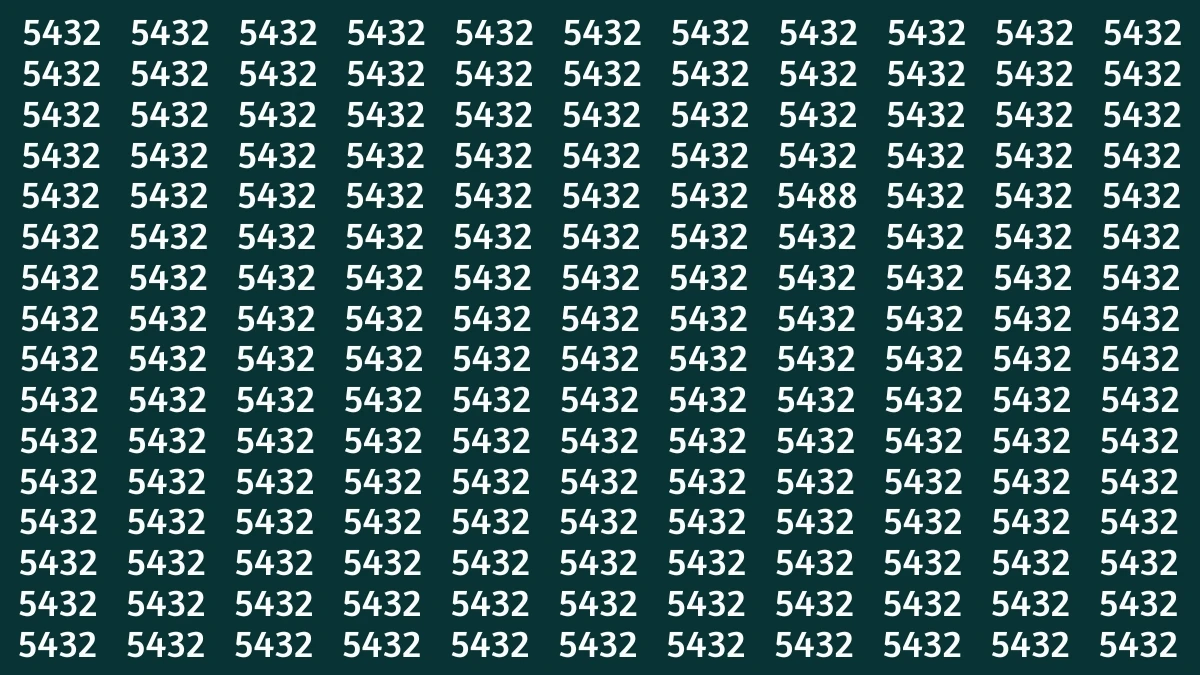
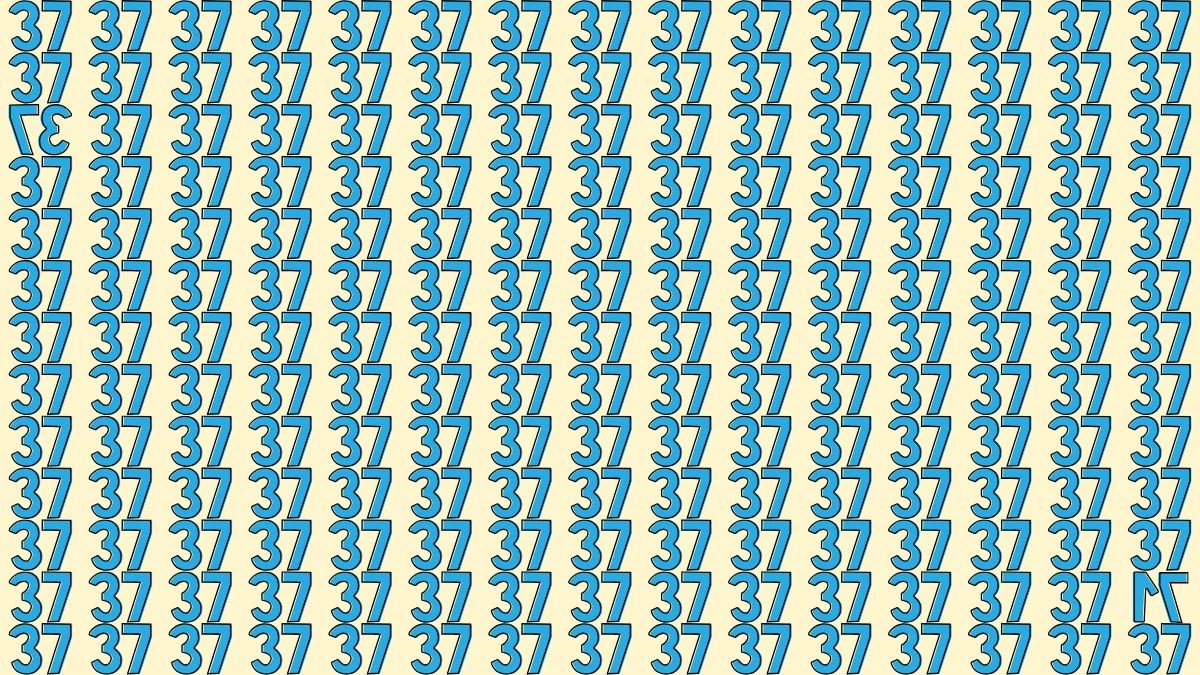
This optical illusion looks like a simple number grid. But it’s built to trip up fast readers and quick scanners. The screen is packed with 37 in the same style, color, and spacing. That repetition pushes your brain into “pattern mode,” where it stops checking details.
Here’s the twist. This optical illusion contains two inverted numbers hiding in plain sight: an inverted 71 and an inverted 37. Most people miss at least one on the first try.
What You’re Looking For
In this optical illusion, nearly every entry is 37.
But two entries are flipped (inverted):
- 71 is inverted
- 37 is inverted
Both are camouflaged by repetition, not by color changes. That’s what makes the test feel tougher than it should.
Quick Challenge Rules
To keep this optical illusion a real eye test:
- Don’t zoom in
- Don’t trace with your finger
- Don’t search randomly
- Scan with a plan
Start scanning now. Try to find both inverted numbers as quickly as possible.
Why This Optical Illusion Works
This optical illusion relies on a mental shortcut called automatic pattern recognition. When your eyes see the same thing repeated, your brain compresses the information. It treats the grid like a single texture instead of many individual items.
That creates two common blind spots:
- Orientation gets ignored - Your brain reads “37” and assumes the shape is normal, even if it’s flipped.
- Your mind fills in what it expects -Instead of verifying each number, it predicts the next one.
This is why an inverted 71 can sit inside the grid without immediately jumping out.
A Simple Strategy That Helps
If you’re stuck, don’t “read” the numbers. Inspect shapes.
Try this approach:
- First pass: scan only the left edges of each row.
- Second pass: scan only the right edges of each row.
- Look for digits that feel “backward” or mirrored.
Solution Reveal
If you’re ready to check the answer, the solution image makes it clear:
- The inverted 37 is located near the upper-left area of the grid.
- The inverted 71 is located near the bottom-right corner of the grid.
Once you know the locations, the flipped orientation becomes obvious. Before that, both blend in because your brain keeps auto-reading “37.”

What This Optical Illusion Tests
This optical illusion is less about eyesight and more about visual control.
It quietly tests:
- attention to detail
- resistance to repetition
- the ability to notice orientation changes
If you found both quickly, your scanning habits are strong. If you found only one, that’s the most common outcome—because the brain relaxes after the first “find.”