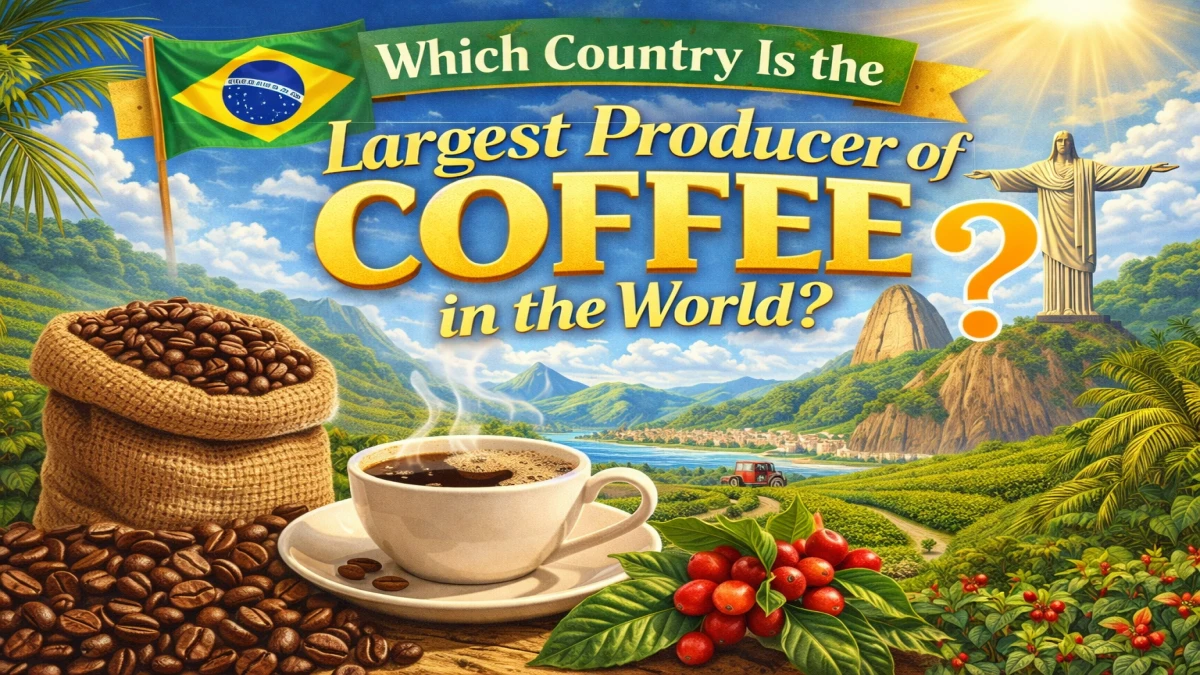

Which Country Is the Largest Producer of Coffee in the World?
For millions of people, coffee is more than a morning ritual it’s a global industry that fuels economies and entire communities. If you’ve ever wondered which country grows most of the coffee that fills our cups, the answer is clear: Brazil.
This South American giant has been the world’s top coffee producer for over 150 years, consistently contributing around one‑third of the world’s total coffee supply. But how did Brazil earn and maintain this dominance? Let’s brew up the facts behind the world’s richest coffee legacy.
Quick Answer: Which Country Produces the Most Coffee?
Brazil is the world’s largest producer of coffee, accounting for roughly 35–40 percent of global output in recent years. No other country even comes close in scale or consistency.
Brazil’s leadership in coffee isn’t a recent phenomenon. The country has held the top spot since the mid‑1800s, shaping global coffee trade routes and prices ever since. With vast plantations, favorable soil, and a deep cultural connection to the bean, Brazil’s reign as the coffee champion shows no sign of slowing down.
Brazil’s Coffee Production at a Glance
Every year, Brazil produces around 65–70 million 60-kilogram bags of coffee roughly 3 million tons depending on weather and growing conditions. To put it in perspective, that’s nearly twice as much as the next-largest producer, Vietnam.
The country’s main coffee-growing regions include:
- Minas Gerais – Brazil’s top coffee state, known for high-quality Arabica beans with smooth, nutty notes.
- Espírito Santo – Major Robusta producer, contributing to Brazil’s instant coffee exports.
- São Paulo – Historical heart of Brazil’s coffee expansion during the 19th century.
- Bahia and Paraná – Growing new coffee varieties with modern irrigation and technology.
From the red, mineral-rich soil of Minas Gerais to the coastal highlands of Espírito Santo, every region contributes its own flavor profile to the world’s coffee blends.
Why Brazil Dominates Global Coffee Production
Brazil’s dominance isn’t a coincidence it’s the result of geography, scale, and vision.
- Perfect growing conditions: The tropical climate, moderate rainfall, and high-altitude regions create ideal conditions for Arabica and Robusta varieties alike.
- Vast land area: Brazil has more farmland suitable for coffee than any other country.
- Deep agricultural infrastructure: Over centuries, the nation built a robust system of transport, cooperatives, and export facilities.
- Range of farms: From massive estates to small family operations, more than 300,000 coffee farmers together sustain the industry.
This combination of nature, tradition, and technology ensures steady production even when climate shifts or economic changes challenge other growers.
Types of Coffee Grown in Brazil
Brazil is unique in the diversity of its coffee types. It produces both major species of commercial coffee:
- Arabica: Makes up about 70–75 percent of Brazil’s total production. These beans are typically smoother, milder, and used in high-quality blends and specialty coffees.
- Robusta (Canephora): Grown mainly in Espírito Santo and Rondônia, Robusta beans are stronger, more bitter, and ideal for espresso bases and instant coffee.
The flavor profile of Brazilian coffees leans toward chocolate, nuts, and caramel, often with low acidity characteristics that make them perfect for espresso blends and global coffee chains.
Top Coffee-Producing Countries After Brazil
| Rank | Country | Approx. Share of World Production |
|---|---|---|
| 1 | Brazil | ~34–40% |
| 2 | Vietnam | ~16–18% |
| 3 | Colombia | ~7–8% |
| 4 | Indonesia | ~7% |
| 5 | Ethiopia | ~6% |
Vietnam follows as the world’s second-largest coffee producer, specializing almost entirely in Robusta. Colombia ranks third, famous for its high-altitude Arabica that coffee lovers prize for balance and aroma.
Economic Importance of Coffee to Brazil
Coffee has long been more than a crop for Brazil it’s part of the national identity. The industry supports millions of jobs across farming, processing, exporting, and logistics.
Brazil doesn’t just grow and export green coffee beans; it’s also a leading supplier of roasted and instant coffee, contributing billions in export value each year. Coffee helped shape Brazil’s early economic development and still remains a foundation of its agricultural export economy today.
How Brazil’s Coffee Affects Global Prices and Your Cup
Because Brazil accounts for such a huge portion of global coffee supply, even small shifts in its harvest can ripple across world markets. A year of drought in Minas Gerais or heavy rainfall during harvest season can cause worldwide price spikes on commodity exchanges like ICE (Intercontinental Exchange).
This directly affects the cost of your cup of coffee from instant mixes to premium espresso blends. When Brazil produces a bumper crop, global prices often drop; when the crop de