
Why is Draymond Green not Playing Tonight?
Draymond Green is not playing tonight because of the chain of events triggered by his heated argument with head coach Steve Kerr during the Orlando Magic game, his decision to remove himself from that contest, and the Warriors’ resulting need to reset standards around focus, accountability, and emotional control before putting him straight back on the floor. In simple terms, he is sitting out while the team cools off the situation and reinforces that a player—even a veteran leader—cannot decide mid‑game when he is done playing and still expect business as usual the very next night.
The turning point came early in the third quarter of Golden State’s 120–97 win over the Magic at Chase Center, with the Warriors trailing 71–66 and looking flat. Green had just committed a turnover and was still locked in a conversation with a referee when Kerr called timeout and tried to gather everyone into the huddle, frustrated that the team’s focus and ball security had slipped again after a stretch of turnover‑heavy games.
Instead of a calm regroup, the timeout exploded into a loud back‑and‑forth between coach and forward, with cameras catching Kerr shouting in Green’s direction and Green firing back as teammate Moses Moody and assistant coaches tried to slide between them to de‑escalate.
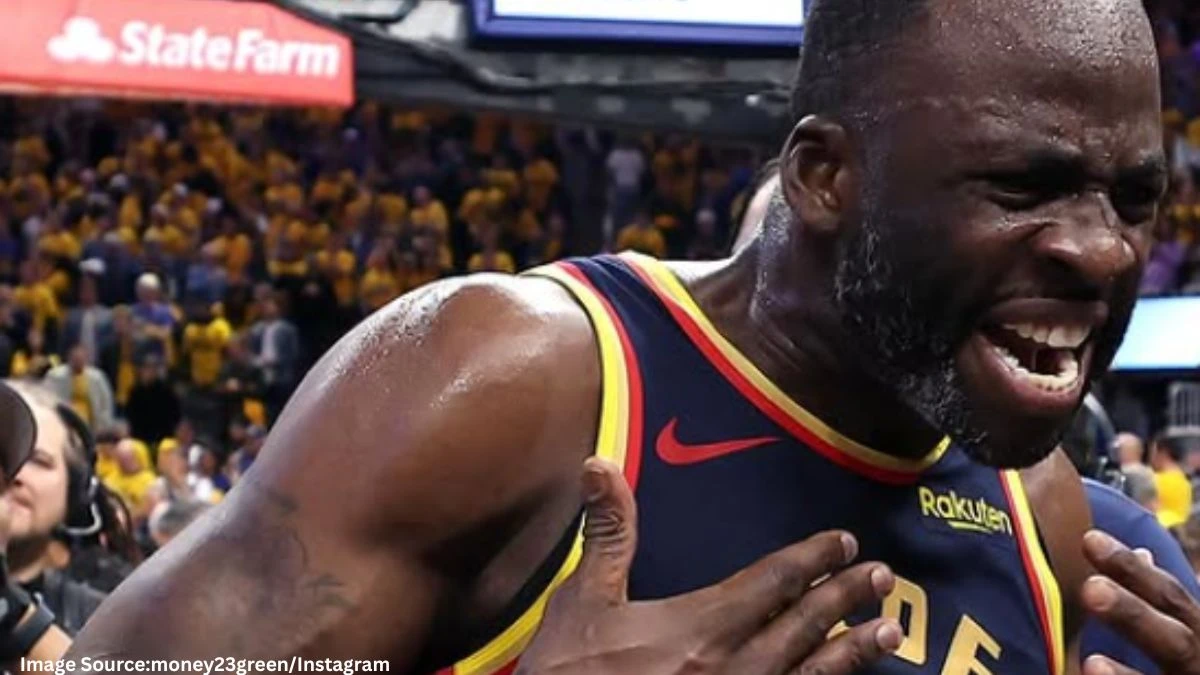
What happened next shifted the story from a routine in‑game argument to a serious internal issue. After a final volley of words, Green stood up from the bench, walked down the tunnel, and went straight to the locker room with more than eight minutes left in the third quarter, even though he was not injured and had been playing well to that point.
He stayed in the back for the rest of the third, while veterans like Jimmy Butler, Al Horford, Buddy Hield and team staff reportedly checked on him, before returning to the bench for the fourth quarter in full warmups—but he never took them off and never re‑entered the game.
Draymond Green speaks on heated exchange with Steve Kerr
Kerr later made it clear that once Green left the huddle, his night on the court was effectively over, bluntly saying he “wasn’t going back in” because the team had already moved on with the players who remained locked in.
After the final buzzer, both men spoke publicly, and their comments help explain why Green is not in uniform tonight. Kerr described the moment as “we had it out a little bit” and emphasized that it was Green’s decision to go to the locker room to cool off, stressing that he did not send him away and calling the deeper details “private.”
Green, for his part, told reporters that “tempers spilled over” and that he believed it was “best that I get out of there” because he did not see the situation improving if he stayed on the bench in the heat of the moment. He also downplayed any long‑term fracture, pointing to their 12 years together and saying that when people are around each other that long, “s— happens” and they simply “move forward,” but that does not erase the fact that he chose to walk away from his team mid‑game.
Context makes the Warriors’ stance even clearer. The Magic incident was Green’s second consecutive abbreviated outing, coming right after his ejection against the Phoenix Suns, when he picked up two rapid technical fouls and was tossed after just eight minutes in his first game being heavily criticized for emotional overflows again. Kerr had already called that ejection “weak” from an officiating standpoint, but it still highlighted a familiar pattern: the Warriors’ defense and chemistry depend heavily on Green, yet his availability is too often compromised not by injury, but by preventable emotional moments.
Add in that he had committed 13 combined turnovers over the previous two losses before Orlando, drawing fresh coaching emphasis on protecting the ball, and the blow‑up during a timeout after yet another turnover became the flashpoint where frustration boiled over on both sides.
From a team‑culture perspective, allowing Green to immediately play his full normal role the next night would send the wrong message inside the locker room. When a veteran leader walks off during a huddle, misses the last 20 minutes of a game by choice, and only later reappears on the bench, younger players and role guys are watching closely to see how the organization responds.
By keeping him out tonight, the Warriors are effectively reinforcing that no one is bigger than the collective, that emotional outbursts have consequences, and that decisions to abandon a game—even framed as “cooling off”—have to be followed by a reset period, not an automatic return to business as usual.
On the tactical side, his absence tonight forces Golden State to reshape rotations on the fly. Green usually anchors the defense, quarterbacks the offense from the elbows and top of the key, and covers up mistakes with his help rotations and communication, so the Warriors must now spread those responsibilities among multiple players. More minutes fall on the remaining frontcourt options to rebound, switch onto guards, and organize the offense—tasks that together replicate, but do not fully replace, Green’s unique on‑court voice.
For a team hovering around .500 and already under pressure in the Western Conference standings, every game without its emotional and defensive engine carries real risk, which only underlines how serious the staff believes this situation is.
There is also a longer‑term layer to why he is sitting tonight: this is about recalibrating boundaries in a relationship that has walked the line between fiery and combustible for years. Kerr and Green have clashed before, in practices, huddles, and even during playoff runs, but those confrontations were usually framed as part of the competitive edge that helped deliver four championships.
As Green has aged and the roster has turned over, however, the cost of those moments has risen—especially when younger teammates are watching to learn what is acceptable behavior from a franchise cornerstone. A short spell on the sideline now serves as both a pause button and a message that the same intensity that once fueled title runs has to be channeled differently if it is not to derail a team trying to stay relevant in a deep conference.
In the coming days, the expectation is that Kerr, Green, and the front office will meet privately, hash out what lines were crossed, and agree on what changes are needed so that similar flashpoints do not lead to self‑imposed exits or lost minutes again. If both sides genuinely follow through on their public insistence that there will be “no lingering effects,” this absence could end up as a one‑game correction that refocuses everyone rather than a sign of a deeper rupture.
For now, though, the reason Draymond Green is not playing tonight is clear: his own decision to walk away from his team in the middle of the Magic game forced the Warriors to draw a line, sit him down, and put accountability ahead of short‑term on‑court needs.
Disclaimer:
This article is based on postgame comments, media reports, and publicly available information surrounding the Golden State Warriors as of now. Statements attributed to Draymond Green and Steve Kerr reflect remarks made to reporters and observed game events. Lineup decisions and disciplinary responses are subject to change based on internal team discussions and are presented here for informational purposes only.