
What is Bebot Trend?
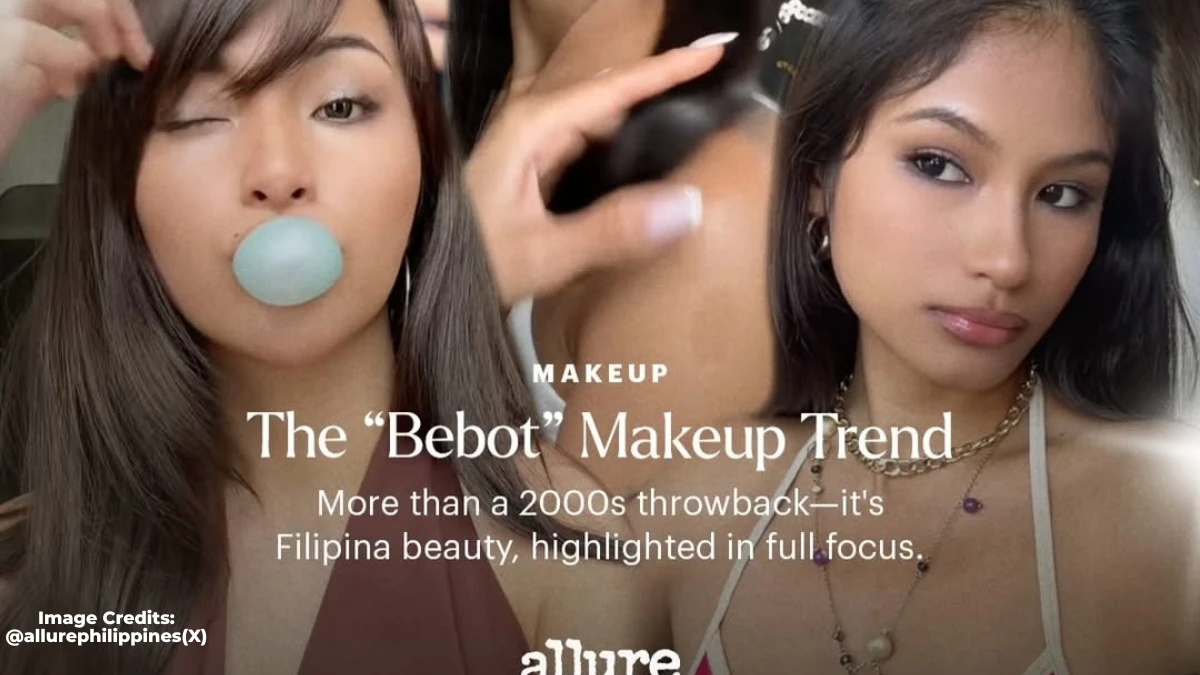
The Bebot trend is a viral beauty and glow‑up challenge where creators transform from bare-faced or casual to full Y2K “Filipina baddie” glam, set to the Black Eyed Peas song Bebot.
The videos usually start with a simple look and then cut or transition on the beat drop into frosty eyeshadow, thin brows, glossy lips, bronzed skin, and early‑2000s styling, think big hoops, hair poufs, and that “main character at a 2005 party” energy.
What makes it feel different from a random makeup trend is the cultural undercurrent: it’s very specifically rooted in Filipina beauty and pride.
Many Filipino creators talk about growing up being told their features needed to be lighter, sharper, or more “Western,” and now the exact same morena skin, noses, and eyes are being framed as aspirational on global feeds.
You can feel that mix of fun and relief in a lot of captions; it’s makeup, yes, but it’s also a little mini love letter to a version of themselves they didn’t always see celebrated.
Bebot Challenge
The Bebot challenge is essentially the TikTok/Instagram format that turned this into a full‑blown wave: a before‑and‑after transformation using classic 2000s glam with Bebot as the soundtrack. Most creators follow a loose recipe:
-
Start bare‑faced or in super casual “just woke up/just got home” mode.
-
Let the opening guitar or intro play while you stare down the camera, maybe with text like “turning myself into a bebot.”
-
Smash cut or smooth transition on the beat drop into:
-
Thin or sharply defined brows
-
Cool‑toned or frosty eyeshadow (silvers, icy blues, shimmers)
-
Smoky liner or dark pencil in the waterline
-
Bronzed, slightly matte skin
-
Shiny lip gloss in pink or nude tones
-
Filipina creator Belle Pauleen (@bellepauleen) is widely credited with kicking off the current wave in late December 2025, with a video captioned “bebot is just Filipina baddie but in Tagalog.”
From there, other creators, like Monique Libres with her “historically accurate bebot” look, leaned into hyper‑Y2K details and on‑beat transitions that basically became the template everyone else riffs on.
By early February 2026, the challenge had exploded: there were before‑and‑after reels, tutorials, and even celebrity takes, with artists like Sue Ramirez and Gabbi Garcia posting their own spins.
What started as a niche nod to Filipino culture quietly turned into an international aesthetic moment, with non‑Filipino creators joining in while still crediting the original sound and idea.
And honestly, it’s one of those trends where scrolling feels strangely wholesome, lots of dancing, lots of soft flexing, very little negativity.
Meaning Of Bebot
“Bebot” is Filipino slang for a beautiful woman or “babe”, used much like “baddie,” “boo,” or “hot girl.” It’s affectionate, flirty, and a little cheeky, the kind of word you’d hear in a party setting or in playful conversation, not a formal term.
The word went global through the Black Eyed Peas track “Bebot” from their 2005/2006 album Monkey Business, performed by apl.de.ap as a love letter to his Filipino roots.
The song is mostly in Filipino and mixes shout‑outs to Filipino culture, migration stories, food, and community pride with this repeated hook that centers the bebot figure, the pretty girl, the crush, the muse.
In the context of the 2026 trend, “bebot” has shifted into a shorthand for “Filipina baddie energy”, not just looking good, but claiming space unapologetically as a Filipina or Filipina‑inspired beauty.
Creators and writers have pointed out that for a lot of Filipinas, seeing this word tied to their natural features on a massive platform feels quietly radical: instead of chasing someone else’s standard, they get to center their own.
So when someone says they’re “turning into a bebot” for a video, they’re not just talking about eyeliner and lip gloss.
They’re stepping into a very specific mix of Y2K nostalgia, morena glow, and cultural confidence, with apl.de.ap’s voice blasting in the background and a whole lot of people in the comments saying, “Oh, this is ours.”
Disclaimer:
The information in this article is based on publicly available social-media trends, creator posts, and cultural references circulating online as of early 2026. Trends on platforms like TikTok and Instagram evolve quickly, and interpretations of their meaning or origin may vary among creators and audiences. Cultural descriptions are intended for informational purposes and should not be considered definitive or exhaustive.