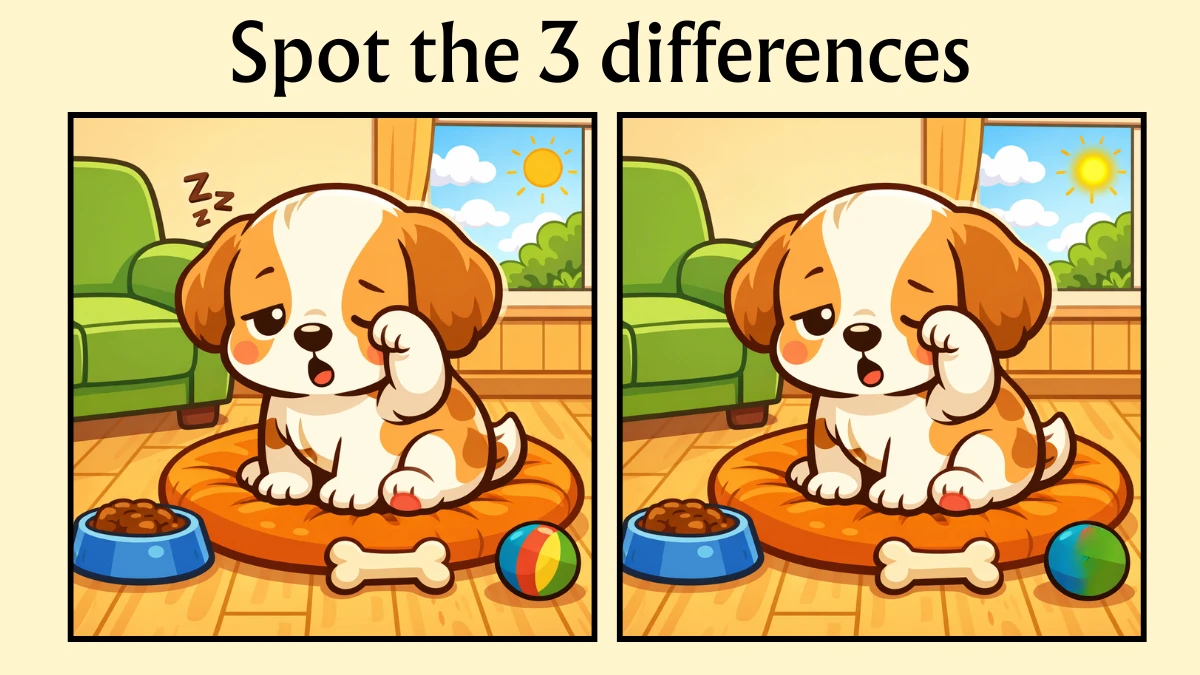
Who doesn’t love a cute, sleepy puppy? This classic "spot the difference" challenge features two nearly identical images of an adorable dog dozing on its bed in a cozy room. At first glance, everything looks the same but there are exactly three subtle differences hidden between the two pictures. Your task: find all three in just 10 seconds!
These puzzles are perfect for sharpening observation skills while enjoying wholesome cartoon art. Ready to test your attention to detail? Take a close look at the side-by-side images below, start your timer, and begin the hunt!
Why It's Challenging
Spot-the-difference puzzles like this one are deceptively hard because the images are designed to be almost identical, exploiting how our brains process visual information efficiently. The overall scene the lazy dog, green armchair, sunny window, toys, and food bowl creates a strong global impression that overshadows small local changes.
The differences are deliberately subtle: minor alterations in shape, color, or presence of tiny elements. Under time pressure (just 10 seconds), most people rely on quick, broad scans rather than methodical comparison, causing them to miss details. Familiarity with cute animal images also triggers positive emotion, which can distract focus and reduce analytical scrutiny. These factors combine to make even simple changes surprisingly elusive.
Brain Science Explanation
This challenge taps into core principles of visual perception and attention. According to the binding theory in neuroscience, we perceive objects by combining features (color, shape, location) processed in parallel across different brain areas. When two images are highly similar, the brain uses top-down expectations to fill in details, assuming continuity.
Change detection relies heavily on visual working memory and the attentional spotlight controlled by the parietal lobe. Studies (e.g., Rensink’s change blindness research) show that without focused attention on a specific region, even large changes go unnoticed if they don’t alter the scene’s gist. Here, the emotional appeal of the puppy further engages the limbic system, competing with prefrontal resources needed for detailed comparison. Quick solvers typically have superior visual short-term memory capacity and better inhibitory control to override automatic assumptions.
How to Solve It
Success comes from strategy, not just sharp eyes. Instead of randomly jumping between images, use a systematic approach: mentally divide each picture into zones (top left, top right, middle, bottom) and compare corresponding areas directly.
Move your gaze slowly and deliberately rapid saccades often skip small discrepancies. Focus on high-contrast or meaningful objects first: the dog’s face, toys, window, and bowl, as differences are often placed there for fairness.
Another pro tip: slightly cross your eyes or alternate focus between the two images to create a flickering effect changes will "pop" more visibly. Avoid getting emotionally attached to the cuteness; stay objective. With practice, you’ll train your brain to allocate attention more efficiently under time constraints.
Solution Revealed
Time’s up! Did you find all three?
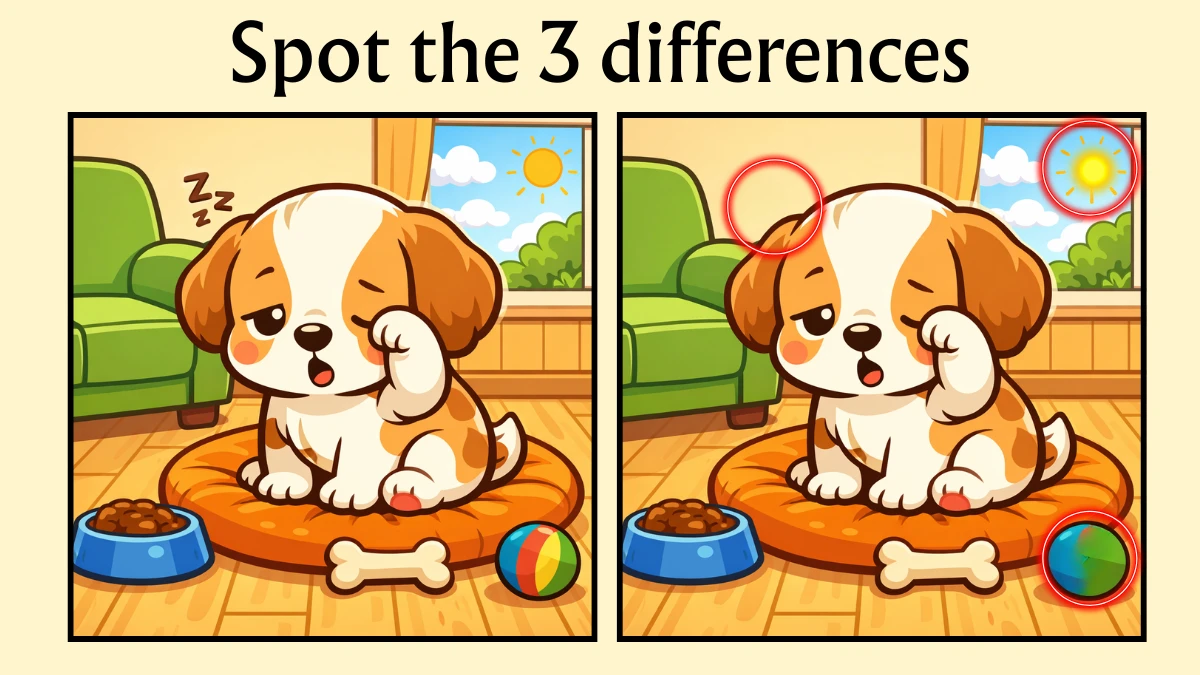
Here are the differences clearly marked:
- The sun in the window has added rays on the right image.
- The ball next to the bone is multicolored on the left, but solid green on the right.
- There is a missing "Z" in the sleeping bubbles above the dog’s head on the right.
What It Reveals About You
Finding all three differences quickly suggests strong visual attention, good working memory, and effective detail-oriented processing traits linked to success in fields like design, editing, medicine, and detective work.
It also indicates solid cognitive flexibility: the ability to shift from holistic (big picture) to analytic (detail-focused) viewing modes. Research shows regular engagement with such puzzles correlates with slower cognitive aging and better real-world observation skills (e.g., noticing changes in familiar environments).
Struggling doesn’t mean weak vision many highly intelligent people favor global processing and miss fine details. Ultimately, performance reflects your attentional style: detail hunters thrive here, while big-picture thinkers excel elsewhere.