
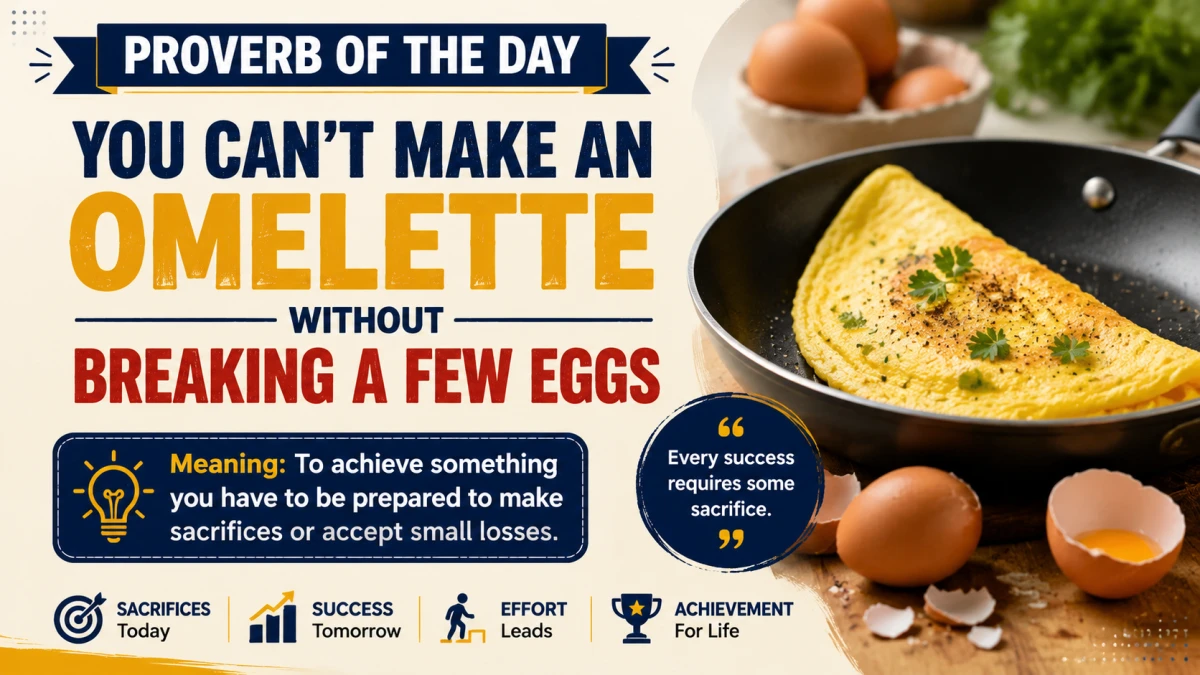
You Can’t Make an Omelette Without Breaking a Few Eggs – Meaning, Examples, Origin & Life Lesson
Proverb of the Day: You can’t make an omelette without breaking a few eggs.
This famous English proverb reminds us that achieving something worthwhile often requires sacrifices, effort, or accepting small losses along the way. Whether you're building a career, starting a business, preparing for exams, or making an important life decision, success rarely comes without challenges.
Understanding this proverb can help us develop patience, resilience, and a realistic outlook toward achieving our goals.
What Does "You Can’t Make an Omelette Without Breaking a Few Eggs" Mean?
The proverb "You can’t make an omelette without breaking a few eggs" means that it is impossible to achieve important results without making sacrifices, facing difficulties, or accepting some negative consequences.
Just as preparing an omelette requires breaking eggs, accomplishing significant goals often involves hard work, temporary setbacks, or uncomfortable decisions.
The proverb teaches that every worthwhile achievement has a cost, and minor losses should not discourage us from pursuing bigger objectives.
Simple Meaning
Sometimes you have to accept small problems or make sacrifices to achieve something better in the future.
Detailed Explanation
Life is full of situations where success requires effort and compromise. Students preparing for competitive exams sacrifice entertainment and leisure. Athletes train for years, often enduring injuries and failures before winning medals. Entrepreneurs invest money, take risks, and face setbacks before building successful companies.
The proverb encourages people to focus on the bigger picture instead of fearing temporary inconvenience. It reminds us that progress often comes through persistence rather than perfection.
However, it should not be used to justify unnecessary harm or unethical behavior. The "broken eggs" should represent reasonable sacrifices made for a worthwhile purpose.
Origin of the Proverb
The saying has been used in English for several centuries and is believed to have originated in Europe. Similar expressions appeared in French literature during the 18th century before becoming popular in English.
Over time, it became a common proverb used in politics, business, education, and everyday conversations to explain that success often requires accepting unavoidable costs.
Example Sentences
- Starting a new business meant investing all her savings. She knew you can’t make an omelette without breaking a few eggs.
- The team worked late every night to complete the project because you can’t make an omelette without breaking a few eggs.
- Preparing for the civil service exam meant giving up many weekends with friends.
- Renovating the house created a lot of mess, but the family knew the temporary inconvenience would be worth it.
- Learning a new skill takes time and mistakes before mastery is achieved.
Real-Life Examples
1. Education
Students preparing for competitive examinations often reduce their entertainment and social activities to concentrate on studying.
2. Business
Entrepreneurs invest capital, take financial risks, and overcome failures before achieving success.
3. Sports
Professional athletes endure years of rigorous practice, injuries, and disappointments before winning championships.
4. Career Growth
Employees may relocate, learn new skills, or work extra hours to achieve promotions.
Life Lesson
This proverb teaches us that:
- Every success requires effort.
- Small sacrifices can lead to greater rewards.
- Temporary difficulties should not stop long-term goals.
- Patience and perseverance are essential for success.
- Growth often comes through challenges rather than comfort.
Synonyms and Similar Proverbs
- No pain, no gain.
- Nothing ventured, nothing gained.
- Every rose has its thorn.
- Success demands sacrifice.
- Where there's a will, there's a way.
Opposite Thought
Some people believe that goals should be achieved without causing unnecessary harm or losses. Therefore, while sacrifices may be necessary, they should always be reasonable, ethical, and carefully considered.
When to Use This Proverb
Use this proverb when:
- Explaining why sacrifices are necessary.
- Motivating someone facing challenges.
- Talking about business, education, or career success.
- Discussing long-term goals.
- Encouraging perseverance despite temporary setbacks.
Key Takeaways
- Success often requires sacrifices.
- Temporary setbacks are part of progress.
- Hard work usually comes before achievement.
- Focus on long-term rewards rather than short-term discomfort.
- Wise sacrifices can lead to meaningful success.
The proverb "You can’t make an omelette without breaking a few eggs" teaches an important life lesson: meaningful achievements rarely come without effort, sacrifice, or temporary difficulties. Whether pursuing academic excellence, career success, personal growth, or business goals, accepting small challenges is often necessary to accomplish something greater. The key is to ensure that the sacrifices are thoughtful, ethical, and ultimately lead to positive outcomes.